






 Home
Home Products
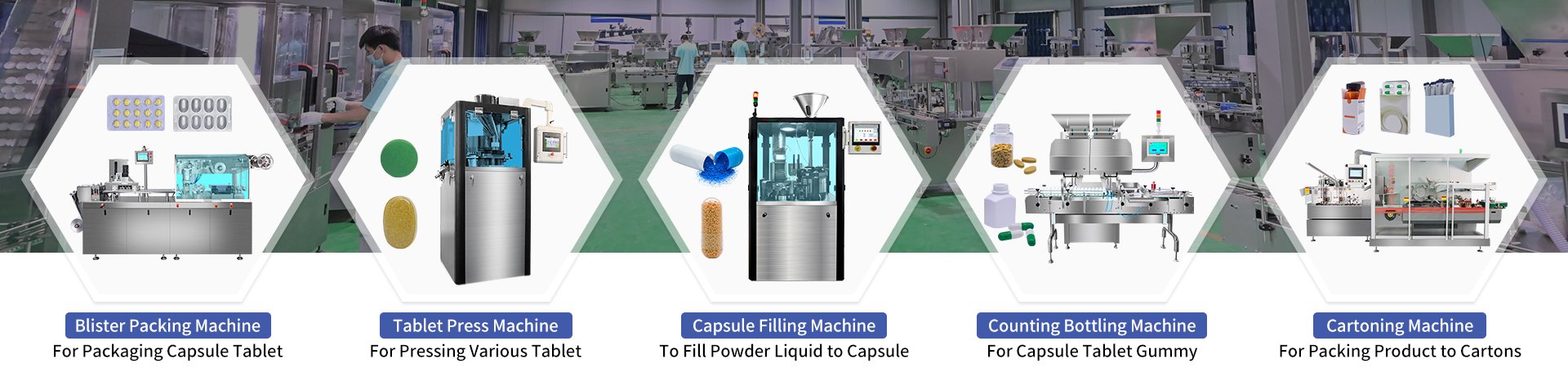
29+ years in pharmaceutical machinery, covering capsule filling, tablet pressing, blister packaging, tablet and capsule counting, cartoning, GMP production, and overseas machine service.
Categories
New Blog
Tags
How can you increase your tablet press output while maintaining product quality? This question represents one of the most significant challenges facing pharmaceutical manufacturers today as demand for tablet medications continues to rise globally.
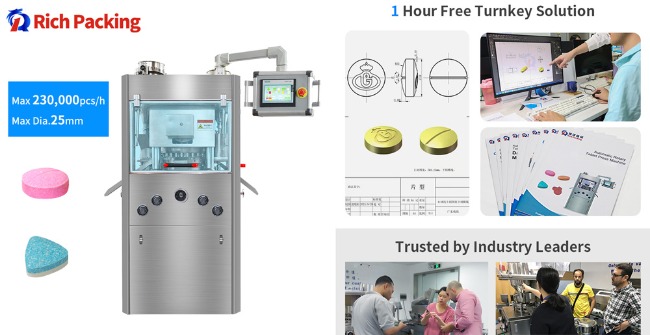
Tablet presses are sophisticated machines that convert powdered materials into compressed tablets through mechanical pressure. The basic principle involves filling a die with powder, compressing it between two punches, and ejecting the formed tablet. However, modern pharmaceutical tablet presses have evolved significantly from this simple concept.
Modern tablet presses can produce continuously because they have several stations on a revolving turret. High-speed rotary presses can produce hundreds of thousands of tablets per hour, making them critical assets in pharmaceutical manufacturing. Understanding the mechanics and capabilities of your specific equipment is the first step toward optimizing output.
Several components directly impact tablet press productivity:
Each of these components represents a potential area for improvement when seeking to increase output. A comprehensive approach to tablet press optimization requires attention to both mechanical performance and process parameters.
The quality and consistency of your powder blend significantly impacts tablet press performance. Poor-flowing materials cause feeding issues, weight variations, and frequent stoppages – all of which reduce output.
To improve powder characteristics:
Implementing a systematic approach to powder characterization helps identify optimal preparation methods for specific formulations. Investment in powder testing equipment often pays dividends through improved tablet press performance.
The punches and dies used in your tablet press represent critical components that directly impact both quality and output. Although premium tooling may cost more up front, it usually offers better performance and durability.
For maximum productivity:
Many manufacturers underestimate the impact of tooling quality on overall equipment effectiveness. One of the most economical ways to boost tablet press output is frequently through a thorough tooling management program.
Finding the ideal balance of speed and quality requires systematic investigation of process parameters. While increasing turret speed directly improves theoretical output, excessive speed often leads to quality issues and machine stoppages that reduce actual productivity.
Key parameters to optimize include:
Process parameter optimization requires a methodical approach. Design of experiments (DOE) methodologies help identify optimal settings while minimizing experimental runs. Modern tablet presses with integrated process analytical technology (PAT) tools facilitate real-time adjustment of these parameters.
Continuous production is gradually replacing batch processing in the pharmaceutical business. This approach offers significant advantages for tablet production, including:
While implementing continuous manufacturing requires significant investment and regulatory considerations, the potential productivity improvements make it worthy of serious evaluation for high-volume products.
Modern data analytics methods offer powerful tools for tablet press optimization. Machine learning algorithms can:
Leading pharmaceutical manufacturers have implemented these technologies with impressive results. Case studies indicate productivity improvements of 15-30% through AI-driven process optimization, representing a significant competitive advantage.
Human intervention in tablet press operations introduces variability and limits production speeds. Advanced automation systems address these limitations through:
Automation investments often deliver rapid returns through increased uptime, reduced labor costs, and improved compliance. The most successful implementations maintain human oversight while eliminating repetitive manual tasks.
Unplanned downtime represents one of the most significant obstacles to maximizing tablet press output. A strong program of preventative maintenance prolongs the life of equipment and helps prevent catastrophic failures.
Effective maintenance scheduling includes:
The cost of planned maintenance is invariably lower than the cost of emergency repairs and production losses. To maximize their maintenance operations, top manufacturers use computerized maintenance management systems (CMMS).
Even the most advanced tablet press cannot perform optimally without skilled operators. Comprehensive training programs and detailed procedures ensure consistent performance.
Key elements include:
Many organizations underestimate the impact of operator variability on tablet press output. Investment in training often delivers significant productivity improvements at minimal cost.
Increasing tablet press output must never compromise product quality. Regulatory requirements demand consistent adherence to specifications regardless of production rates.
Strategies for maintaining quality while increasing speed include:
The most successful manufacturers recognize that quality and productivity are complementary rather than competing objectives. Well-designed processes produce consistently high-quality tablets at maximum possible speeds.
Any modifications to the way the tablet press operates must abide by the relevant laws. Changes that could potentially impact product quality require appropriate validation.
Key considerations include:
Proactive engagement with regulatory expectations supports both compliance and productivity. Costly retrofitting can be avoided by incorporating quality and compliance concerns into improvement projects early on.
Not all improvement options deliver equal value. Systematic financial analysis helps identify the most promising initiatives.
Financial evaluation should consider:
Progressive implementation often provides the best balance between investment and return. Starting with high-impact, low-cost improvements builds momentum for more substantial initiatives.
Learning from others' experiences can accelerate your improvement journey. Several pharmaceutical manufacturers have achieved remarkable results through targeted optimization efforts:
These examples demonstrate that significant improvements are possible regardless of organization size or current technology level. The key lies in systematic analysis and focused implementation.
Increasing tablet press output requires a multifaceted approach combining mechanical optimization, process refinement, and innovative technologies. By addressing each element systematically, you can achieve significant productivity improvements while maintaining quality standards. What particular difficulties are you having using your tablet press? To discuss specialized solutions for your production environment, get in touch with us.

29+ years in pharmaceutical machinery, covering capsule filling, tablet pressing, blister packaging, tablet and capsule counting, cartoning, GMP production, and overseas machine service.

Email : manager@richpacking.cn
Building D, No. 226, Beishan Qiaotou Street, Haizhu District, Guangzhou City, Guangdong Province, China


 IPv6 network supported