






 Home
 Products
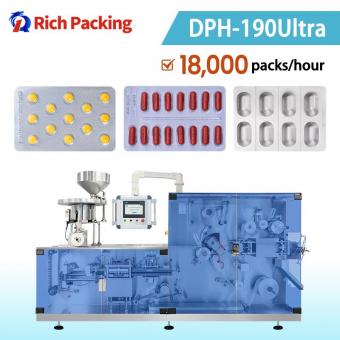
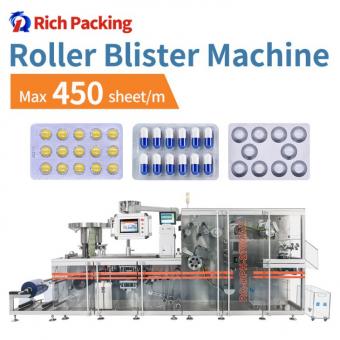
29+ years in pharmaceutical machinery, covering capsule filling, tablet pressing, blister packaging, tablet and capsule counting, cartoning, GMP production, and overseas machine service.


Pharmaceutical secondary packaging is the outer packaging used for a medicine that has already been sealed in its primary container. A carton holding blister packs and a patient information leaflet is a common example. Secondary packaging helps organize and protect the primary pack and provides space for information such as the product name, strength and batch details. Depending on the product and market, it may also include features for identification or tamper evidence.
Think of a tablet pack in three layers: the blister pack holds the tablets, the carton contains the blister pack and leaflet, and a shipping case groups finished cartons for distribution. The carton is secondary packaging; the blister is primary packaging, and the shipping case is generally tertiary packaging.
Secondary packaging takes different forms. A folding carton can hold blister cards or a medicine bottle, while an insert or tray can keep components in position. Labels and leaflets communicate information, and some products use wallet packs or grouped packages. The role of a material depends on how it is used: a wrap around a retail pack and a wrap used to secure cases on a pallet need not serve the same packaging level.
Packaging levels describe how each layer relates to the product and its distribution. The same material can serve different roles depending on where and how it is used.
|
Packaging level |
Typical example |
Main role |
|
Primary |
A blister pack holding tablets or a bottle containing capsules |
Holds the medicine and forms part of its immediate packaging system |
|
Secondary |
A carton holding the blister pack or bottle, often with a leaflet |
Organizes the primary pack, provides additional protection and carries product information |
|
Tertiary |
A shipping case containing cartons, or a pallet secured for transport |
Groups finished packs for storage, handling and distribution |
For a closer look at the layer that directly contains a medicine, see our guide to primary packaging for medicines.
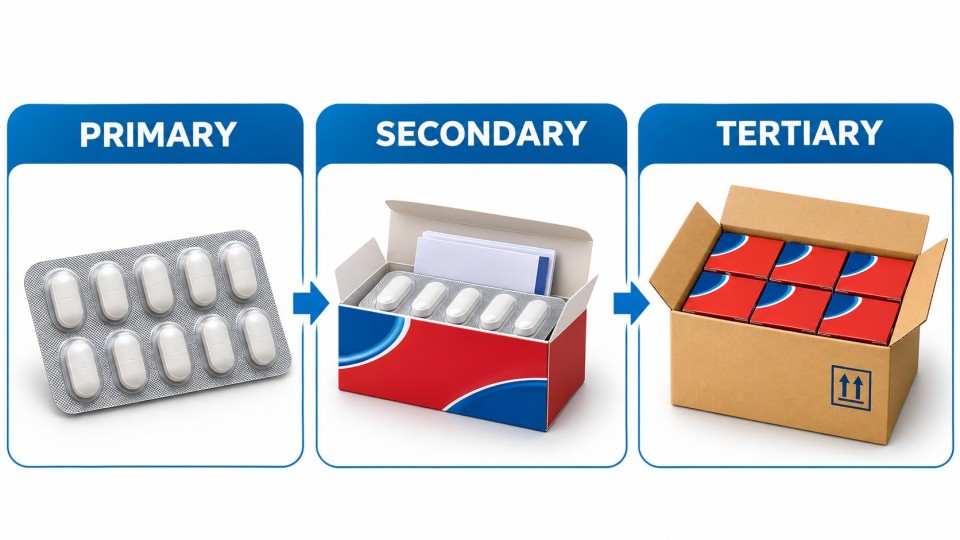
Primary blister pack, secondary carton and tertiary shipping case
Folding cartons are a common choice for products supplied in blister packs, bottles, tubes and other containers. A carton provides space for printed information and can hold multiple components in a single sales unit. Its dimensions must match the primary pack and any leaflet or insert: a carton that is too tight can make loading difficult, while excess space can allow contents to move during handling.
A tray or insert holds components in a defined position inside the outer pack. For example, a shaped insert can separate a vial from an accessory or keep a bottle from moving inside a carton. Paperboard and molded materials are options, but the appropriate design depends on the weight, fragility and handling needs of the components.
A wallet pack can organize blister cards in a folding format, making the sequence of doses or days easier to follow. A kit brings together items intended to be supplied as a unit, such as a medicine container and an administration accessory. The arrangement must suit the specific product and its approved instructions; a wallet or kit is not required for every medicine.
An overwrap adds a film layer around a finished pack, while a bundle groups packs together. For example, several cartons may be wrapped as one unit for handling. The packaging level depends on the function and configuration: film around a retail unit can be part of its secondary packaging, whereas wrap securing cases to a pallet is generally used for tertiary distribution. A film wrap does not automatically provide a validated barrier or a compliant tamper-evident feature.
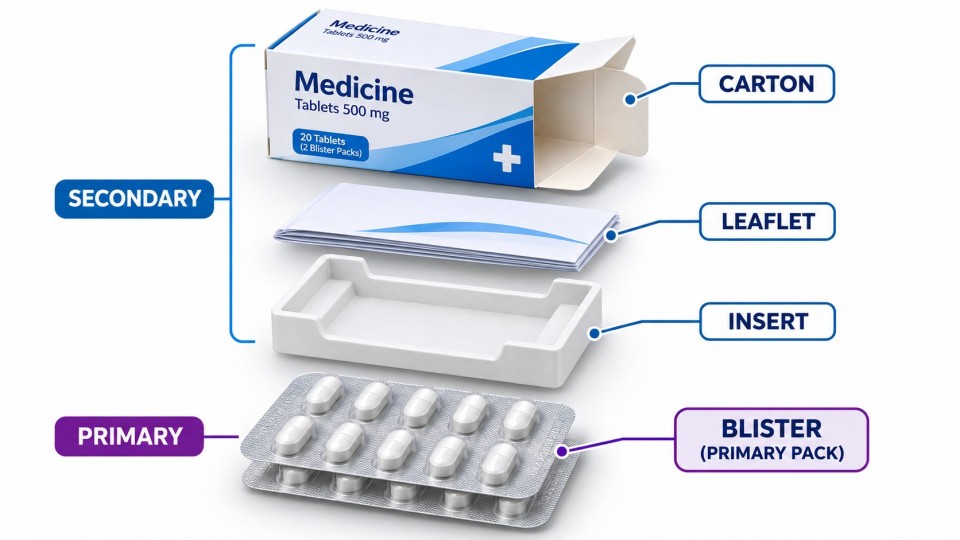
The outer carton is only one part of a finished pack. Other components may be added according to the product and market:
A leaflet is an informational component, not a protective container; a label can also be applied directly to a primary container. For that reason, describe each component by its function and placement rather than assuming that every label belongs to one packaging layer in every regulatory context.
Secondary packaging connects the physical product with the information and components needed to supply it. Its contribution is easiest to see in four practical areas:
Secondary packaging complements the primary container. It should not be treated as a substitute for a suitable container-closure system or as proof that a medicine will remain stable throughout its shelf life.
Packaging and labeling requirements vary by product and market. In the United States, drug products subject to current good manufacturing practice must follow applicable packaging and labeling controls, including procedures designed to prevent mix-ups. Certain prescription drugs are also subject to product identification and tracing requirements under the Drug Supply Chain Security Act. [1, 5]
In the EU, safety-feature rules apply to specified medicines, including most prescription medicines, subject to listed exceptions, and certain non-prescription medicines. For medicines within scope, the features include a unique identifier and an anti-tampering device. Manufacturers should check the rules for the particular product and destination before finalizing a pack design. [6]
Secondary packaging begins with a medicine that has already been sealed in its primary package. The exact sequence depends on the finished pack: a bottle may receive a label, a blister card may be placed in a carton with a leaflet, or finished cartons may be grouped in an overwrap.
Most processes involve preparing the correct packaging materials, bringing the primary pack and required components together, applying the specified identification, and checking the finished pack. Accepted packs then move to the next stage, which may include bundling or case packing. Not every product requires every operation.
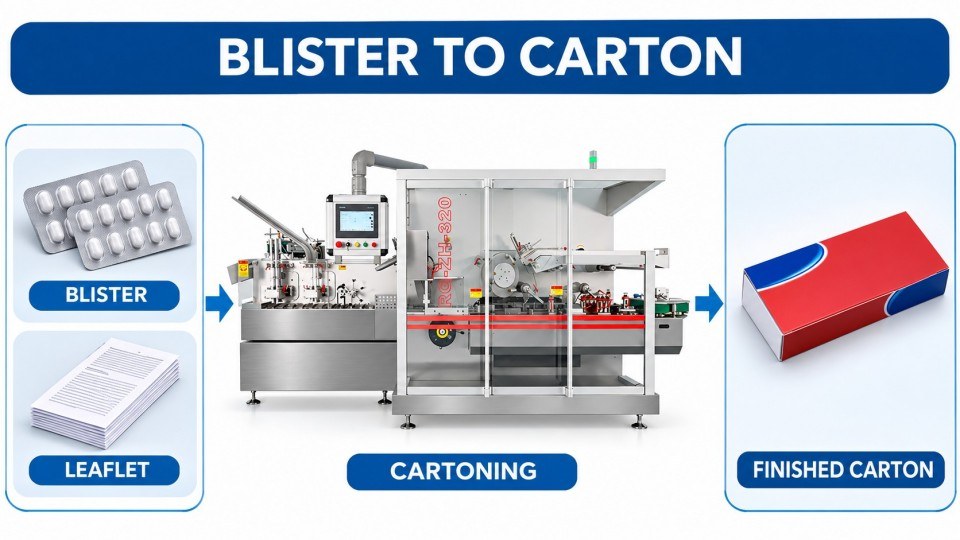
The following example describes a carton containing blister cards and a leaflet. Individual steps and their order vary with the product and equipment.
Operators prepare the correct cartons, leaflets and other components for the batch. Product identity, strength, artwork and pack configuration need to match the approved production documents. Before a new run, the area and line are checked to prevent materials from a previous product or batch being mixed with the next one.
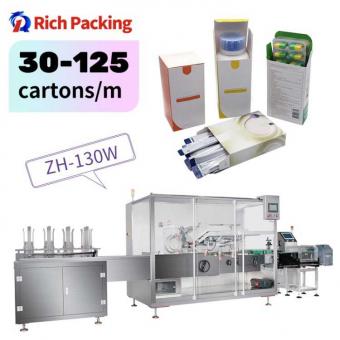
Blister cards, bottles or other sealed containers enter the secondary packaging line. A cartoning machine opens the flat carton and presents it for loading. The feeding system and carton dimensions must match the product configuration; for example, a carton designed for two blister cards must be set up to receive the intended count.
The primary packs are placed into the carton along with the leaflet or other specified components. Depending on the line, the leaflet may be folded and inserted automatically or handled separately. A missing leaflet or incorrect number of blister cards can make the finished pack incomplete even when the carton itself looks intact. A presence sensor can check whether a leaflet is present before carton closure; a vision system may check a printed code when that function is configured. Define the defect to detect, confirm that the device detects representative failures, and specify how rejected packs are handled.
Cartons are closed using the specified closure method. Coding or labeling equipment applies the required information at the appropriate point in the line. Inspection may check items such as the presence of a leaflet, carton closure or readability of a printed code. For example, a code that cannot be read by the line's configured inspection system can trigger rejection for review. The inspection method, rejection handling and coverage must follow the approved procedure and applicable requirements; a readable code alone does not establish traceability compliance.
Accepted cartons may be grouped, overwrapped or placed in shipping cases. These downstream operations can be manual or automated. A shipping case or pallet wrap usually serves a distribution function, so it should not be described as secondary packaging.
|
Equipment |
Typical role |
Practical consideration |
|
Opens cartons, loads products and closes the packs |
Check carton and product dimensions, changeover needs, required output and transfer from upstream equipment |
|
|
Applies a label to a container or package |
Check the surface, label dimensions, placement and inspection requirements |
|
|
Shrink-sleeve labeling machine |
Applies a sleeve to a container and uses heat to conform it to the container |
Check container shape, sleeve material and the product's tolerance of the heat process |
|
Shrink-wrapping machine |
Wraps an individual pack or group in shrink film and applies heat |
Define the desired wrap or bundle, film and product handling requirements |
The equipment list depends on the product and packaging plan. Leaflet folding and insertion, coding, inspection and rejection can be supplied as separate units or integrated into a machine or line. For each function, define the checks required and how rejected packs will be handled.
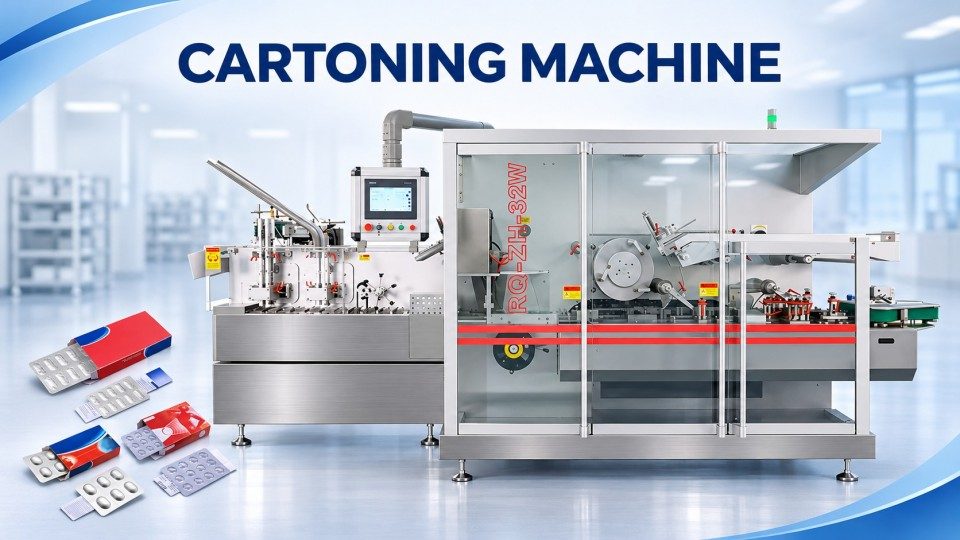
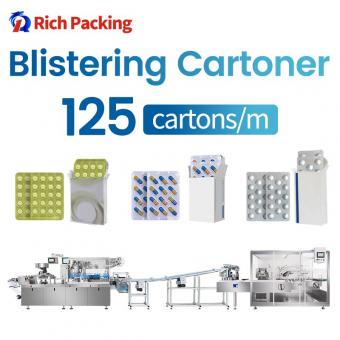
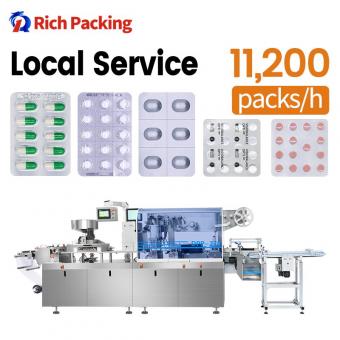
Rich Packing’s blister packaging and cartoning line connects blister packaging with automatic cartoning, transferring finished blister packs to the cartoning stage for packing with folded leaflets. Its easy-to-clean design supports WHO GMP’s emphasis on effective equipment cleaning and maintenance.
Start with the finished product and work backward through the packaging process. A suitable carton must hold the primary package and all required components, present the necessary information and run reliably on the chosen line.
For a broader view of how primary packaging, cartoning, coding and inspection fit together, see the pharmaceutical packaging line guide.
The right secondary pack brings the correct primary package, information and components together in a form that can be handled and supplied reliably. Begin with the product and its intended market, then check how the carton, leaflet, labels and other components fit both the packaging requirements and the production line. This makes it easier to identify practical problems—such as a poor carton fit or an unreadable code—before they disrupt a batch.
Examples include cartons holding blister packs or bottles, wallet packs, and trays or inserts used to organize components inside an outer pack. A leaflet or label provides information as part of the finished packaging configuration.
Some medicine bottles are supplied without an outer carton. The required packaging and information depend on the product and market; check the approved product configuration before changing a pack.
A label carries product information and can be applied to either a primary container or an outer carton. Its classification and required content should be assessed within the product's packaging system and the target market's rules.
Yes. A carton or insert can protect the primary pack during handling, and some outer packs provide light protection. The complete package must be assessed for the product; a carton does not replace a suitable primary container.
No. Film around a finished retail carton can serve as secondary packaging; film securing shipping cases on a pallet generally serves a tertiary distribution role. Tamper evidence depends on the package design and applicable requirements.
For drug products subject to U.S. current good manufacturing practice, 21 CFR 211.130 requires written packaging and labeling procedures; section 211.122 addresses packaging material controls. Section 211.132 sets tamper-evident requirements for certain retail OTC human drug products, with exceptions. [1–3]

29+ years in pharmaceutical machinery, covering capsule filling, tablet pressing, blister packaging, tablet and capsule counting, cartoning, GMP production, and overseas machine service.

Email : manager@richpacking.cn
Building D, No. 226, Beishan Qiaotou Street, Haizhu District, Guangzhou City, Guangdong Province, China


 IPv6 network supported