






 Home
Home Products
29+ years in pharmaceutical machinery, covering capsule filling, tablet pressing, blister packaging, tablet and capsule counting, cartoning, GMP production, and overseas machine service.
Categories
New Blog
Tags
In the pharmaceutical industry, maintaining consistent tablet weight is critical for ensuring dosage accuracy, regulatory compliance, and patient safety. Weight variations in tablets can lead to inconsistent therapeutic effects and potential product recalls, posing significant risks to both manufacturers and consumers. Understanding the causes of weight errors and implementing effective solutions is essential for achieving consistent production quality. This guide explores the common causes of tablet weight errors, practical troubleshooting steps, and preventative measures to ensure smooth operation of your tablet press.

Tablet weight is directly linked to the active pharmaceutical ingredient (API) dosage, which determines the drug’s efficacy and safety. Weight deviations can result in:
· Under-dosing or overdosing: Leading to therapeutic failure or adverse effects.
· Regulatory non-compliance: Resulting in rejected batches or penalties.
· Wasted resources: Higher rejection rates increase production costs.
Ensuring tablet weight consistency not only protects patients but also safeguards your brand reputation and operational efficiency.
Tablet weight errors typically arise from one or more of the following factors:
The flowability of the powder blend significantly affects the uniform filling of dies. Poor flow leads to inconsistent die filling, resulting in weight variations.
· Causes:
o Granule size irregularities.
o High moisture content in the powder.
o Use of poorly flowing excipients.
Die filling issues occur when the powder is unevenly distributed across the feed frame.
· Causes:
o Incorrect feeder settings.
o Worn or damaged feeder paddles.
o Obstructions in the feed frame.
Worn or misaligned punches and dies can cause uneven compression, leading to weight variability.
· Causes:
o Mechanical wear over time.
o Misaligned upper and lower punches.
o Inadequate lubrication of machine components.
Inconsistent compression forces can result in weight errors, especially in high-speed presses.
· Causes:
o Calibration issues with pressure sensors.
o Uneven force distribution due to mechanical faults.
o Variability in tablet thickness settings.
Ambient conditions such as temperature and humidity affect powder properties and machine performance.
· Causes:
o High humidity causing powder clumping.
o Temperature fluctuations impacting equipment accuracy.
Addressing tablet weight errors involves identifying the root cause and applying targeted solutions.
· Conduct flowability tests using methods like angle of repose and bulk density measurements.
· Adjust formulation with flow enhancers like glidants (e.g., silicon dioxide).
· Reduce moisture content through proper drying techniques.
· Check feeder paddles for wear or damage and replace if necessary.
· Clean the feed frame and ensure there are no obstructions.
· Calibrate the feeder speed and height to optimize powder distribution.
· Inspect punches and dies for wear, cracks, or deformation.
· Replace worn-out components to ensure uniform compression.
· Align punches properly and verify they move smoothly within the dies.
· Calibrate pressure sensors regularly to maintain consistent force application.
· Ensure the pre-compression and main compression forces are balanced.
· Test tablet thickness and hardness as part of in-process quality checks.
· Install humidity and temperature controls in the production area.
· Use dehumidifiers and air conditioning to maintain optimal conditions.
· Store powders and granules in sealed containers to prevent environmental exposure.
Implementing preventive strategies reduces the likelihood of recurring tablet weight issues.
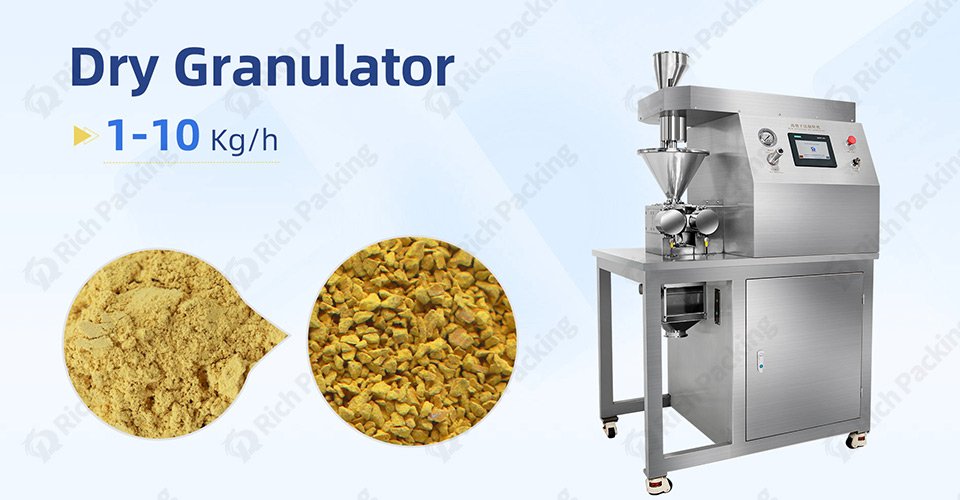
Granulation enhances powder flowability and compressibility, reducing weight variability.
· Wet granulation: Increases granule density and uniformity.
· Dry granulation: Ideal for moisture-sensitive formulations.
Routine maintenance of your tablet press ensures consistent performance.
· Lubricate moving parts to reduce wear.
· Inspect and replace worn punches, dies, and feeder components.
· Conduct periodic machine calibration.
Invest in real-time monitoring systems to detect weight deviations immediately.
· Use automated weight checking systems integrated with the tablet press.
· Conduct frequent in-process sampling for weight, thickness, and hardness.
Ensure operators are well-trained in machine setup, troubleshooting, and quality control protocols.
A pharmaceutical company experienced frequent weight variability in their high-speed tablet press. Initial troubleshooting revealed issues with powder flow and feeder settings.
· Reformulated the powder blend with additional glidants to improve flowability.
· Replaced worn feeder paddles and calibrated feeder height.
· Installed real-time weight monitoring to detect errors during production.
The company reduced weight variation by 95%, achieving consistent batch quality and minimizing rejects.
|
Issue |
Solution |
Outcome |
|
Poor powder flow |
Add glidants, improve granulation |
Enhanced die filling and uniform weight |
|
Feeder issues |
Replace paddles, calibrate settings |
Consistent material distribution |
|
Punch wear |
Replace worn punches and align properly |
Uniform compression and reduced errors |
|
Environmental factors |
Control humidity and temperature |
Improved powder stability and machine efficiency |
Conclusion
Tablet weight errors in pharmaceutical tablet presses can disrupt production and compromise product quality, but they are manageable with the right approach. By understanding common causes such as powder flow issues, feeder malfunctions, or environmental conditions, you can implement targeted troubleshooting and preventive measures. Regular maintenance, advanced in-process controls, and operator training will further enhance your ability to maintain consistent tablet weight. Ultimately, investing in quality processes ensures patient safety, regulatory compliance, and operational efficiency.

29+ years in pharmaceutical machinery, covering capsule filling, tablet pressing, blister packaging, tablet and capsule counting, cartoning, GMP production, and overseas machine service.

Email : manager@richpacking.cn
Building D, No. 226, Beishan Qiaotou Street, Haizhu District, Guangzhou City, Guangdong Province, China


 IPv6 network supported