






 Home
Home Products
29+ years in pharmaceutical machinery, covering capsule filling, tablet pressing, blister packaging, tablet and capsule counting, cartoning, GMP production, and overseas machine service.

In capsule manufacturing, achieving a consistent filling weight is one of the key challenges during the filling process. Even when a capsule filling machine is operating normally, significant variation between individual capsules can occur if the material properties, feeding conditions, dosing components, or mechanical movement are not properly controlled.
For pharmaceutical and nutraceutical manufacturers, excessive capsule filling weight variation can lead to inconsistent product quality, increased material waste, and difficulty maintaining the required in-process weight control.
The cause, however, is rarely limited to one component. Not only materials but also the capsule filler machine itself can affect filling weight. Therefore, when filling weight varies significantly, the problem should be investigated systematically rather than solved simply by changing one machine parameter.
This article explains the main causes of capsule filling weight variation and provides a practical troubleshooting approach, by machine and process solutions for improving filling consistency.
Capsule filling weight is a key indicator of product quality. Understanding what filling weight variation is and why it matters is the first step toward identifying its causes and improving filling consistency.
Capsule filling weight refers to the weight of the material contained inside a filled capsule. During production, the target filling weight is normally set according to the product formulation and capsule specification. However, the actual weight of individual capsules may fluctuate around the target value.
For example, if the target filling weight is 500 mg, the actual filled capsules may not all weigh exactly 500 mg. A small degree of variation can occur during a continuous mechanical filling process of capsule filler. Filling weight variation therefore refers to the difference in fill weight between capsules produced under the same conditions. The key is to check whether the variation remains within the requirements.
It is also important to distinguish capsule shell weight from filling weight. When investigating the filling process, the measurement method should account for the empty capsule weight so that the variation being evaluated actually reflects the filled material rather than differences in the capsule shell itself.
 Capsules filled with powders, granules and pellets
In capsule filling, a certain degree of weight variation is unavoidable. A filling weight error of ≤3% can generally be considered within an acceptable range for capsule filling machine performance, depending on the product, formulation, and applicable quality requirements. The key concern is not whether every capsule has exactly the same weight, but whether the variation remains small, stable, and controllable during continuous production.
When the filling weight difference consistently exceeds the expected range, it can create several practical problems on the production line.
First, it can affect dose consistency. If the capsule is intended to contain a specific amount of active ingredient or nutritional material, excessive variation in filling weight means that different capsules may contain noticeably different quantities of powder. For pharmaceutical products, this can create additional quality-control concerns because the filling process is expected to remain within the specified dosage and weight limits.
Second, excessive variation can increase material waste and production cost. When the filling weight fluctuates significantly, operators may need to repeatedly adjust the capsule filler machine. During these adjustments, rejections will occur until the filling weight returns to the target range. For expensive APIs, probiotics, or other high-value formulations, repeated rejects can result in a considerable loss of material over a long production run.
Third, unstable filling weight can lead to more frequent machine stoppages and lower production efficiency. Operators may need to stop the capsule filling machine to do overall check and readjustment. If the problem is caused by material properties or formulation, simply adjusting the capsule filler may not solve it, resulting in repeated stops and trial runs before stable production can be restored.
When the filling weight moves outside the required range, operators may have to stop the capsule filling machine to do overall check and readjustment. If the problem is caused by material properties or formulation, simply adjusting the capsule filler may not solve it, resulting in repeated stops and trial runs before stable production can be restored. This interrupts the production schedule and makes it difficult to maintain a consistent output over a long production cycle.
Therefore, the goal of capsule filling is not simply to achieve the target weight at one point in time. More importantly, the machine and material feeding system should maintain a stable filling condition throughout continuous operation, keeping the filling weight variation within the required range while minimizing rejects, manual adjustments, and unplanned downtime.
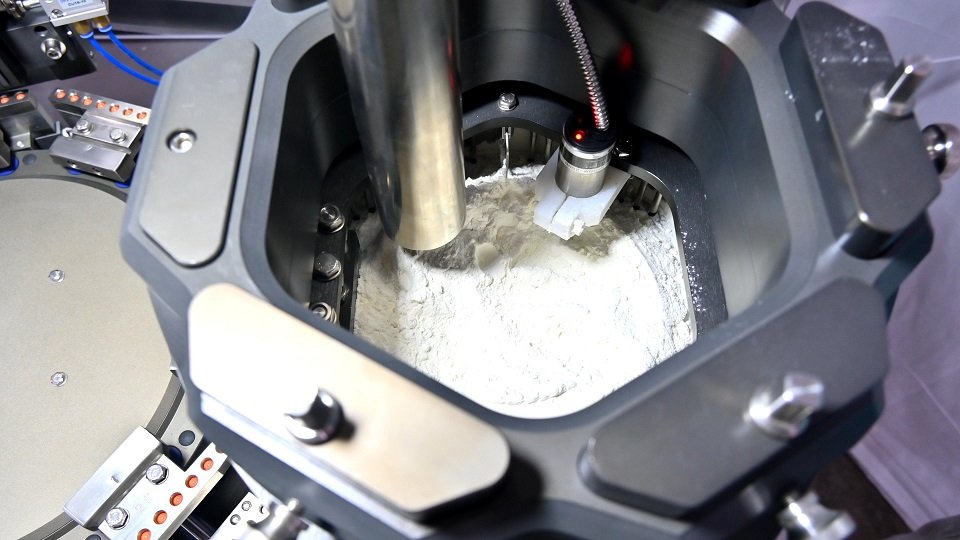 Filling station
When capsule filling weight varies significantly, troubleshooting should follow the sequence of the filling process. Start with the material, then check how the powder is fed into the dosing area, by the dosing disc and filling rods. Finally, examine the machine's running and indexing accuracy. This approach helps distinguish between a material-related problem and a machine-related problem.
The first factor to check is the powder itself. Different powders can behave very differently in a capsule filling machine. Flowability, bulk density, particle size distribution, moisture content, cohesiveness, and tendency to agglomerate can all affect how consistently the powder reaches and fills the dosing area.
The key point is that capsule filling machine cannot completely compensate for inconsistent material properties. If the powder itself does not flow or compact consistently, machine adjustments alone may not eliminate filling weight variation.
After confirming that the material is suitable, the next step is to check the powder feeding system. It supplies materials to the filling station consistently. If the supply fluctuates, the material level above the dosing disc can also fluctuate, affecting the dosing amount.
The key is to check whether the feeding system can handle material characteristics. The issue is not simply whether the feeding device can deliver powder, but whether it can provide a stable and continuous powder supply under the actual production conditions.
For example, a free-flowing powder may be relatively easy to feed, while a cohesive or poorly flowing material may require a different feeding system to prevent bridging, accumulation, or intermittent discharge. The material and feeding system need to be considered as a matched combination. A feeding method that performs well with one formulation may not provide the same stability with another.
Therefore, when troubleshooting, operators should check both the operating condition of the feeding system and the compatibility between the system and the material. The feeding device should be checked for unstable discharge, powder bridging or blockage, excessive accumulation, and inconsistent material supply. At the same time, it should be considered whether the selected feeding principle is appropriate for the material’s actual flow behavior.
After checking the material and powder feeding system, the next step is to examine the filling station. First above all, it is necessary to learn about how the process determines the filling weight.
For capsule filling machine, the filling weight is closely related to the volume of materials dosed into the cavities of the dosing disc. The filling rods play a key role in this process. As the dosing disc rotates, filling rods move downward and compress the powder in each cavity. The powder is compacted progressively through five tamping operations to reach required amount. Then during the sixth operation, it is transferred into the empty capsule body.
This means that filling weight is not controlled simply by how much loose powder enters the dosing disc. The effective powder volume and compaction condition inside the dosing cavities are also determined by the filling-rod adjustment. Therefore, when troubleshooting filling weight variation at the filling station, two mechanical settings require particular attention: the clearance between dosing disc and copper plate, and the height or depth of the filling rods.
The clearance needs to be adjusted within an appropriate range. If the clearance is too large, powder can leak or overflow from the gap, leading to unsatisfactory filling weight variation. If the clearance is too small, the dosing disc may come into excessive contact with the copper plate, increasing mechanical friction. This can increase running resistance, affect the smooth rotation of the dosing disc, and in severe cases interfere with stable machine operation.
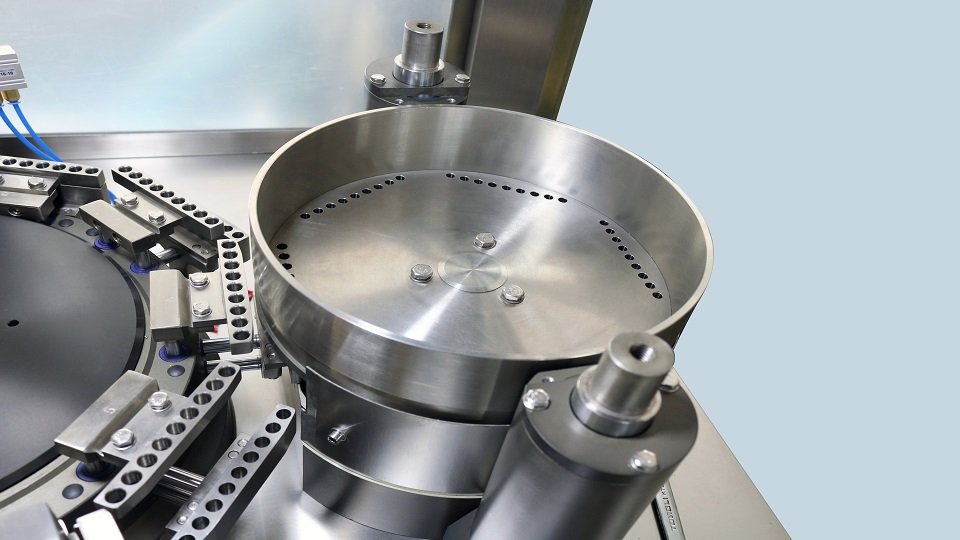 Dosing disc
The filling rod setting directly affects how deeply the rods enter the dosing cavities and how much the powder is compressed during each tamping operation. Set too high results in a lower filling weight, and too low causes excessive compaction and thus higher filling weight.
The final area to check is the intermittent rotation and indexing accuracy of capsule filling machine. The capsule filler does not rotate continuously at a constant speed. Instead, the main turntable operates through an intermittent indexing motion, stopping briefly at specific positions so that each capsule processing operation can be completed at the corresponding station.
Multiple stations are distributed around the turntable, including the capsule feeding station, separation station, filling station, rejection station, locking station, discharge station, and cleaning station. Each must work at a precisely defined position relative to the turntable.
If the indexing angle of turntable deviates from the designed position, the alignment can shift. Materials may not be transferred into the capsule body at the intended position, leading to filling weight variation and powder leakage around the filling area.
Indexing deviation can also create mechanical problems. When components are repeatedly forced to operate outside their intended alignment, unnecessary contact and friction may occur between mechanical parts. Over time, this can accelerate component wear, increase vibration or running resistance, and further reduce indexing accuracy. If the deviation becomes significant, it may prevent the machine from operating normally and eventually result in an unplanned machine stop.
Once the cause of capsule filling weight variation has been identified, the next step is to apply targeted solutions. These solutions can be considered from two main aspects, the machine and the material. This part is to discuss about the former first and then the latter.
The feeding system should be selected on the basis of material properties. In automatic capsule filling, auger feeding and pneumatic feeding are two common feeding approaches, but neither one is universally better. The appropriate choice depends on how the material flows, its bulk density and cohesiveness, and whether the material is supplied as powder, granules, or pellets.
An auger feeding system uses a rotating screw installed inside the feeding hopper to move the material toward the discharge outlet. As the screw rotates, its flights continuously push the material forward while also gently stirring and redistributing it.
The screw can also provide relatively controllable and repeatable material delivery because the feeding rate can be adjusted through parameters such as screw speed and screw geometry. This makes auger feeding particularly useful when the material is light, relatively fine, or has a tendency to accumulate or bridge under gravity feeding. In general, powders with a bulk density of roughly 0.3–0.5 g/mL can be considered for auger feeding. This range should be regarded as a practical screening reference rather than a universal specification.
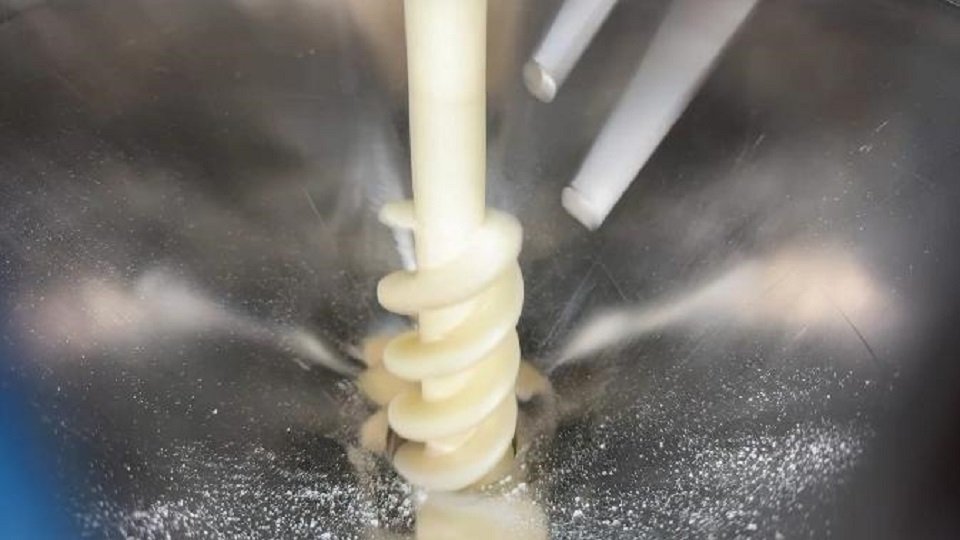 Auger feeding system
Pneumatic feeding uses an assisted discharge mechanism to help the material move from the hopper into the filing station. The system is equipped with a vibrating pneumatic cylinder and a butterfly valve. The pneumatic cylinder provides vibration to help loosen and mobilize the material, while the butterfly valve controls the discharge path. Together, they accelerate material discharge and help reduce the risk of powder accumulating or blocking at the outlet.
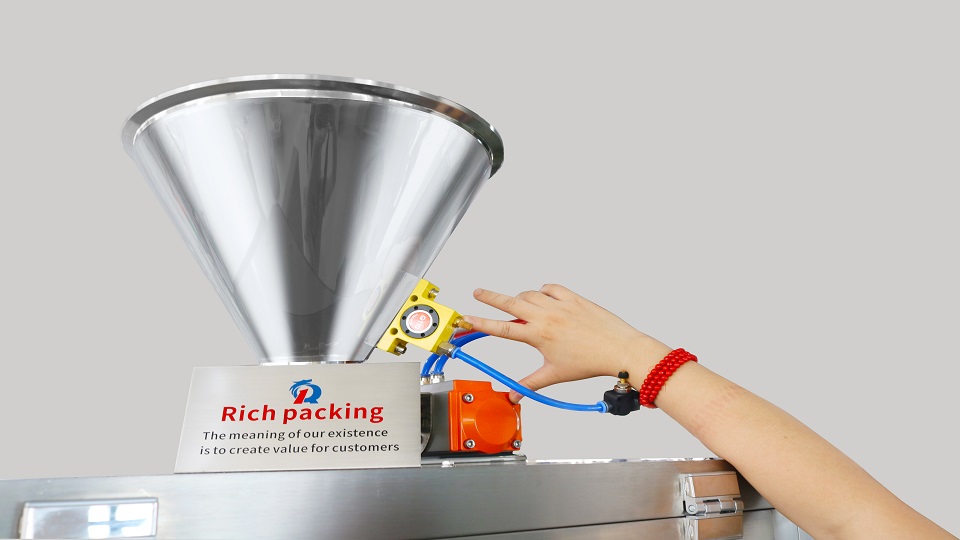 Pneumatic feeding system of Rich Packing’s capsule filler
This type of feeding can be advantageous when the material does not discharge smoothly under gravity. It can be particularly useful for slightly cohesive or mildly sticky materials, where the vibration helps break up local accumulation and improve material movement. Pneumatic feeding is also a useful option for granules and pellets. Unlike a screw, the feeding path can reduce continuous mechanical contact with the product. This can be important when the formulation contains particles whose shape or integrity needs to be preserved.
However, pneumatic feeding should not be regarded as a solution for every poorly flowing powder. Highly cohesive powders can still form bridges or compact in the hopper even when vibration is applied. For especially sticky materials, semi-automatic capsule filling machine is a better solution.
Rich Packing’s CGNT-209 Semi-Auto Capsule Filling Machine
There is therefore no absolute winner between auger feeding and pneumatic feeding. The selection should follow the material characteristics and the actual feeding behavior observed during testing.
As discussed in Section 2.3, the clearance between the dosing disc and copper plate and the filling-rod depth are two important mechanical settings that can affect filling weight consistency. To make these adjustments more accurate and easier to perform during machine setup and changeover, our capsule filling machine incorporates dedicated adjustment structures for both components.
To precisely adjust the clearance, the capsule filler machine uses a multi-dimensional adjustment structure, with five support columns installed on the copper plate. These five columns provide distributed and stable support for the dosing disc, helping maintain more uniform force across the dosing area during adjustment.
This structure allows the dosing disc clearance to be adjusted more evenly and precisely. Operators can make fine adjustments to the clearance while maintaining stable support of the dosing disc, making the setup process more accurate and faster. Once the appropriate clearance has been established, the dosing disc can maintain more consistent positioning during operation, helping reduce powder leakage and filling weight variation.
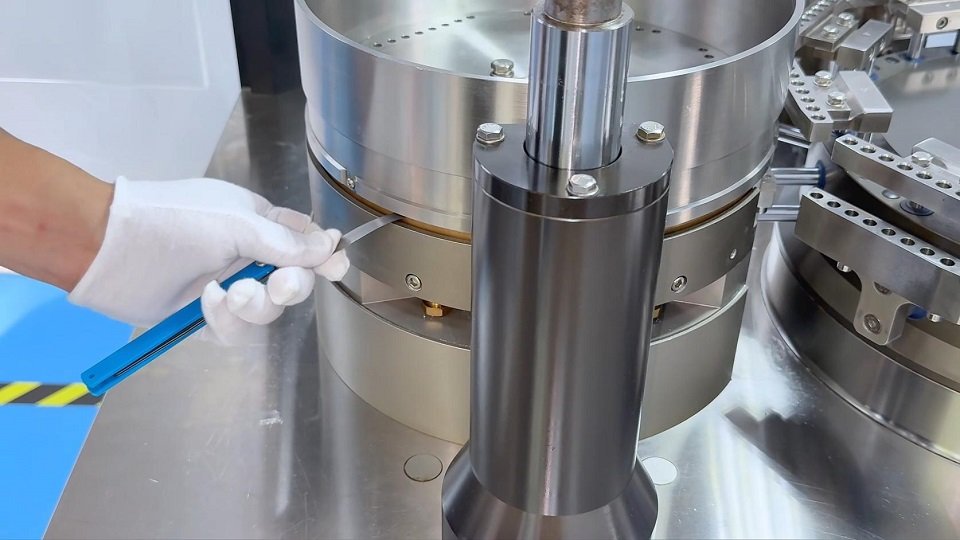 Adjustment of the dosing disc clearance
With the filling rod holder, filling-rod modules can be removed and installed conveniently, making it easier to secure and adjust the rods during setup. The filling-rod adjustment is also equipped with calibration, allowing the operator to set the rod height according to a clear reference position rather than relying only on visual judgment. This makes height adjustment more precise and repeatable, particularly when different filling weights or formulations require different filling-rod settings.
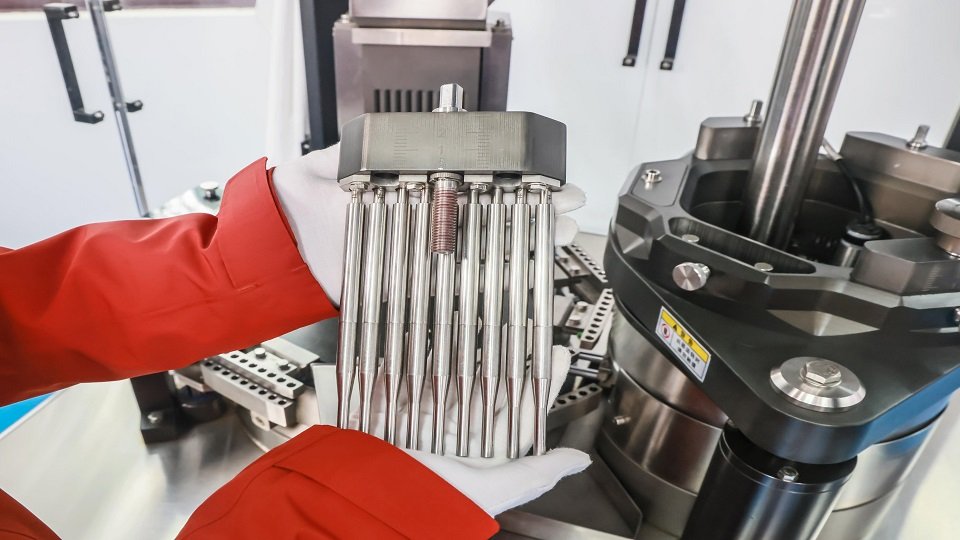 Filling rod holder
Together, the multi-dimensional dosing-disc adjustment and modular filling-rod structure make the filling station easier to adjust and helps operators establish a more consistent filling condition while address excessive filling weight variation.
To reduce filling weight variation caused by unstable machine rotation, the capsule filling machine needs to maintain a precise and repeatable indexing angle throughout continuous operation. Our machine addresses this through two key mechanical designs: the 100DS indexing box and the built-in cam design.
The 100DS indexing box uses a German Zeiss optical indexing head with 3-arc-second angular indexing accuracy to achieve precise angular division of the turntable. In addition, the indexing shaft is machined as a one-piece component in a single machining setup, helping maintain its dimensional accuracy and alignment. These features allow the turntable to repeatedly stop at the designated angular positions, ensuring accurate alignment between the different processing stations.
For our D-type capsule filling machine, a built-in cam design provides a stable transmission structure for repeated indexing movements and supports high-speed, stable operation. This helps reduce unnecessary mechanical fluctuation during continuous running and allows the machine to maintain stable movement even at high production speeds.
By ensuring that the turntable reaches the correct position repeatedly and moves smoothly between indexing cycles, the capsule filler machine can reduce mechanical deviations that may otherwise contribute to filling weight variation.
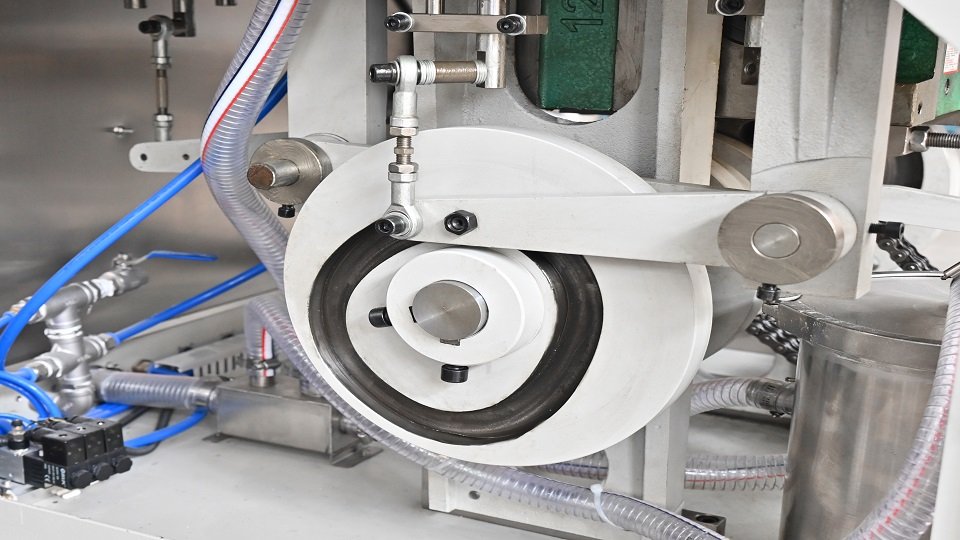 Built-in cam
Material characteristics can be an important cause of filling weight variation, but the formulation itself is normally determined by customer's product requirements. As a professional capsule filling machine supplier, what we can do is to evaluate the material, match the machine configuration to its characteristics, and optimize the filling process through actual testing.
Before selecting the feeding system, we can help customers test the flowability of their actual material and evaluate how the material behaves during feeding. Based on material characteristics and test results, we can then recommend a suitable feeding method.
During the trial run, our engineers can adjust the relevant machine parameters according to the material's performance. This practical trial allows potential filling problems to be identified before production and provides a more reliable basis for configuring and adjusting the machine.
For particularly sticky or highly cohesive materials, however, achieving stable automatic feeding may be more challenging. Such materials can adhere to feeding components, form bridges, making continuous automatic feeding difficult even after parameter optimization. In these cases, we can recommend a semi-automatic capsule filling machine according to material characteristics and production requirements. This provides an alternative when the formulation is not well suited to high-speed automatic feeding.
In other words, although we cannot change the customer's formulation, we can work with the formulation that the customer has selected and help find a suitable solution through material testing, actual machine trials, and parameter optimization, thus helping customer reduce filling weight variation as possible as we can.
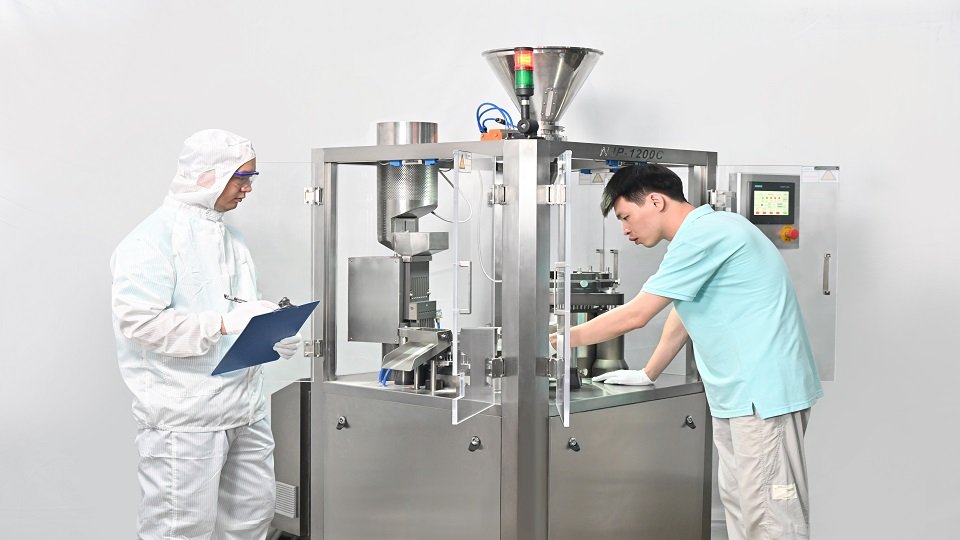 Rich Packing’s engineering team is doing trial run for customer
Capsule filling weight variation is usually not caused by a single factor. A systematic troubleshooting process should start with the material characteristics, by the powder feeding system, filling station, and finally the machine's indexing and rotational accuracy. The corresponding solutions should therefore address both the material and the machine.
As a professional capsule filling machine supplier and packaging solution expert, Rich Packing do more than provide a standard machine. Our capsule filler designs are developed to support accurate and stable filling, while our engineering team can provide customized recommendations and services according to the customer's material, production requirements, and actual application. From material testing to machine configuration, trial production, and parameter adjustment, the objective is to help each customer establish a capsule filling process that is accurate, stable, and suitable for continuous production.
Common causes include inconsistent material properties, unstable powder feeding, incorrect dosing disc clearance, improper filling-rod adjustment, and inaccurate machine indexing.
Start by checking the material and feeding system, then adjust the dosing disc, filling rods, and machine indexing system. Actual material testing can also help identify the most suitable feeding method and machine settings.
A filling weight error of ≤3% can be used as a practical reference for machine filling performance, but the applicable limit depends on the product, formulation, and relevant quality requirements.
It depends on the material. Auger feeding can be suitable for lightweight powders, while pneumatic feeding can be considered for slightly cohesive materials and granules. Actual material testing is recommended before making a final choice.
Highly cohesive or sticky materials can be difficult to feed consistently with a fully automatic system. Depending on the material and production requirements, a semi-automatic capsule filling machine may be considered.

29+ years in pharmaceutical machinery, covering capsule filling, tablet pressing, blister packaging, tablet and capsule counting, cartoning, GMP production, and overseas machine service.

Email : manager@richpacking.cn
Building D, No. 226, Beishan Qiaotou Street, Haizhu District, Guangzhou City, Guangdong Province, China


 IPv6 network supported