






 Home
Home Products


29+ years in pharmaceutical machinery, covering capsule filling, tablet pressing, blister packaging, tablet and capsule counting, cartoning, GMP production, and overseas machine service.

Do you like eating gummy bears? Think about the last time you ate a gummy bear. Maybe it was a handful of colorful candies from a bag, or perhaps a daily vitamin gummy that has become part of your morning routine. No matter the form, nowadays gummies are everywhere in our life. You can find them in supermarkets, pharmacies, convenience stores, and even on your desk as a quick sweet treat. Their soft texture, vibrant colors, and various flavors make them a favorite among both children and adults.
But have you ever wondered how manufacturers ensure that every bottle contains exactly the right number of gummies? Whether purchasing a bottle of multivitamin gummies or a package of gummy bears, we consumers always expect accurate counts, consistent quality, and hygienic packaging. Behind this seemingly simple process lies a significant manufacturing challenge.
In this article, you’ll discover how gummy counting machines work, what challenges this process faces, and why outstanding supplier of counting machine for gummies can provide perfect solutions.
When you think of gummy bears, colorful fruit-flavored candies probably come to mind. Originally developed as a confectionery treat, gummy bears have been enjoyed for generations thanks to their chewy texture, appealing appearance, and wide variety of flavors. Today, however, gummies have evolved far beyond the candy aisle and become one of the fastest-growing product formats in the global health and wellness market.
From a functional perspective, gummy can be divided into several categories:
Confectionery Gummies: Traditional sweet treats enjoyed as snacks.
Vitamin Gummies: Containing vitamins such as Vitamin C, Vitamin D, and B-complex vitamins.
Multivitamin Gummies: Providing a combination of essential nutrients in a convenient format.
Probiotic Gummies: Supporting digestive and gut health.
Functional Nutrition Gummies: Designed for immunity, energy, stress relief, cognitive support, and other wellness goals.
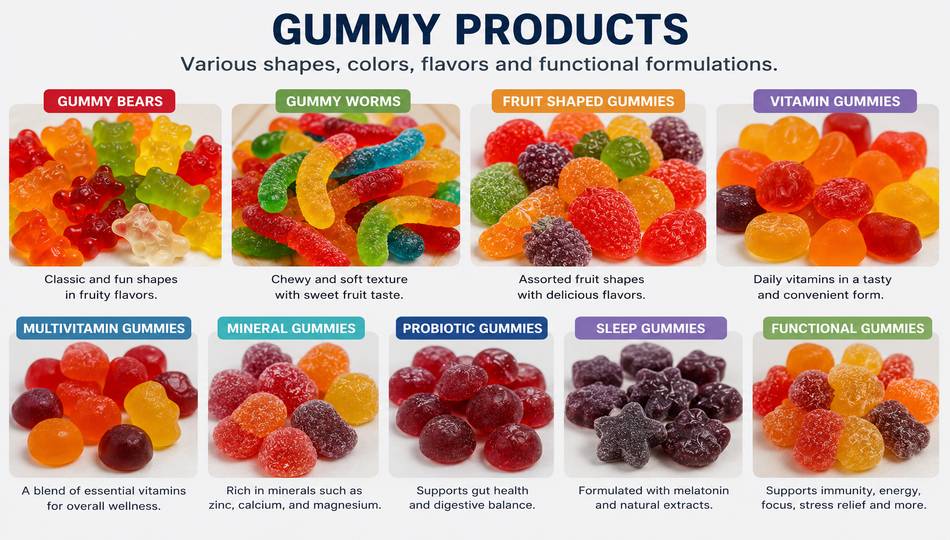
Different gummy products
One of the biggest reasons for the success of gummies is their convenience. Unlike traditional tablets and capsules, gummies are easy to consume and often provide a more enjoyable user experience. Many consumers find swallowing pills difficult or unpleasant, while gummies offer familiar flavors and textures that make daily supplementation feel less like a chore.
For children, gummies can improve compliance with vitamin routines. For adults, they provide a convenient and portable way to maintain wellness habits. As health-conscious consumers increasingly seek products that combine effectiveness with convenience, gummies have emerged as an attractive delivery format.
In addition, gummy products offer tremendous flexibility for manufacturers and brands. They can be produced in countless shapes, colors, and flavors, allowing companies to create distinctive products that stand out on crowded store shelves.
The continued success of these products reflects a broader shift toward preventive healthcare, personalized nutrition, and consumer-friendly supplement formats. As more people prioritize wellness while seeking convenience, gummies have become one of the most dynamic and rapidly expanding segments of the dietary supplement market.
When you open a bottle of gummy vitamins or gummy bears, you probably don't think much about how those gummies got there. Yet behind every bottle is a highly automated process of gummy counting machine designed to ensure that each container receives the exact number of gummies required—whether that's 30, 60, 90, or even 120 pieces.
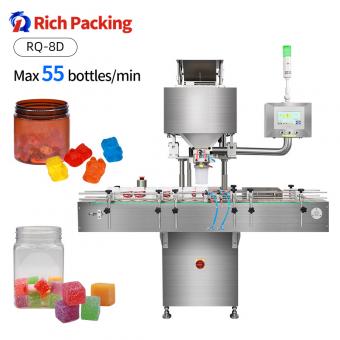
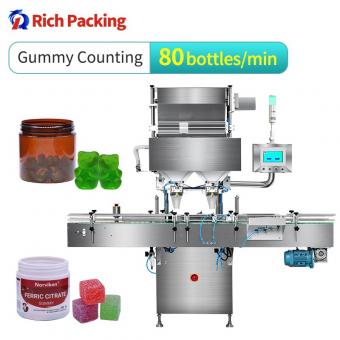
For manufacturers, this is no simple task. Gummies are soft, sticky, and often produced in different shapes and sizes. Unlike tablets or capsules, they can easily cling together or become damaged during handling. To overcome these challenges, modern production facilities rely on gummy counting machines to accurately count and fill gummies into bottles at high speed, ensuring sustainable packaging.
Let's follow the journey of a single gummy bear through the counting and bottling line for gummies.
Step 1: Product Feeding
The process begins when bulk gummies are transferred from upstream production equipment or storage containers into the feeding system of the gummy counting machine. At this stage, thousands of gummies may enter the machine simultaneously. The feeding system is designed to distribute the gummies evenly while preventing excessive piling or clogging. Gentle handling is essential to avoid deforming the soft products.
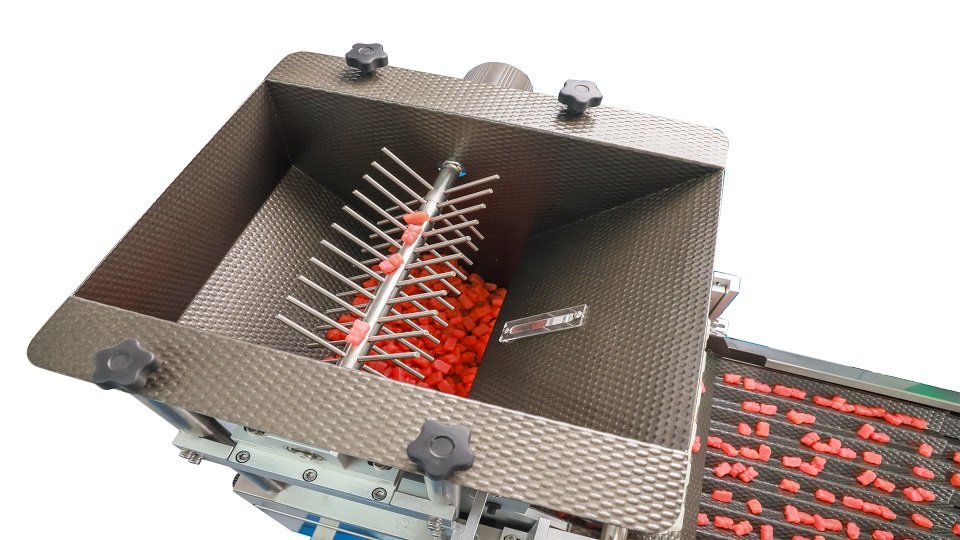
Feeding
Step 2: Gummy Separation and Alignment
Before counting can take place, gummies must be separated from the bulk product flow. The gummy counter machine uses vibrating channels to spread sticky gummies into organized streams. This ensures that each gummy travels independently through the machine rather than sticking together in clusters. For gummy products, this separation stage is particularly important because inaccurate separation can lead to counting errors.
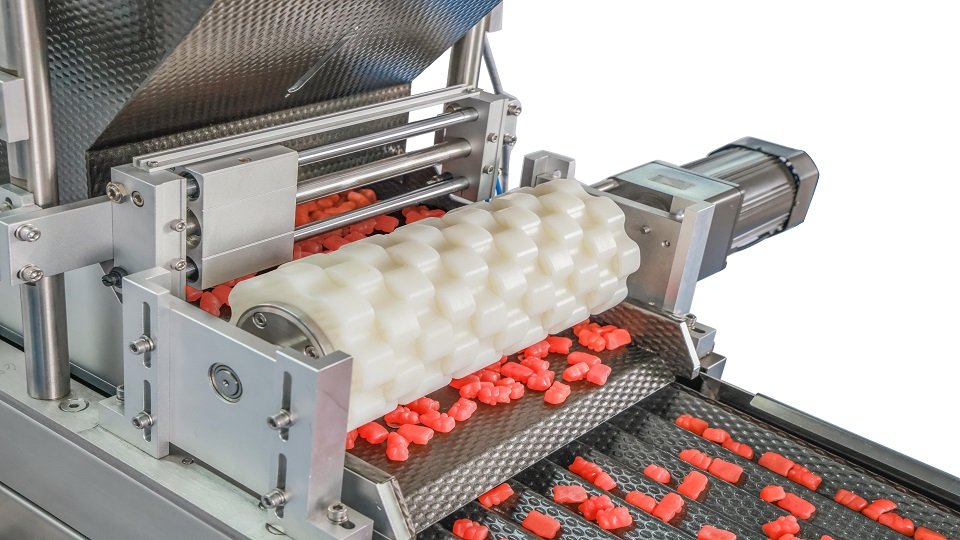
Gummy Separation and Alignment
Step 3: Detection and Counting
Once the gummies are traveling individually through the channels, they pass through high-speed photoelectric sensors or camera detection head. As each gummy passes the detection point, the photoelectric sensor or camera records its presence and sends a signal to the control system of counting machine. Advanced counting software processes these signals in real time, ensuring that every gummy is counted accurately.
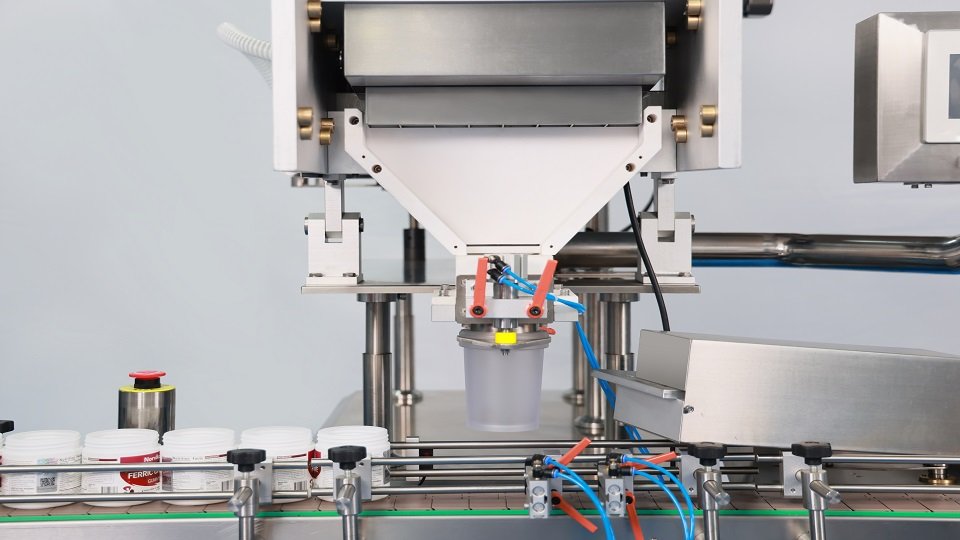
Detection and Counting
Step 4: Bottle Positioning and Filling
Meanwhile, empty bottles are automatically conveyed into position beneath the discharge nozzles. When the set quantity is reached, the gummy counter machine releases counted gummies into the waiting bottle. The filling process is carefully synchronized with the counting system to ensure that each container receives the correct number of gummies.
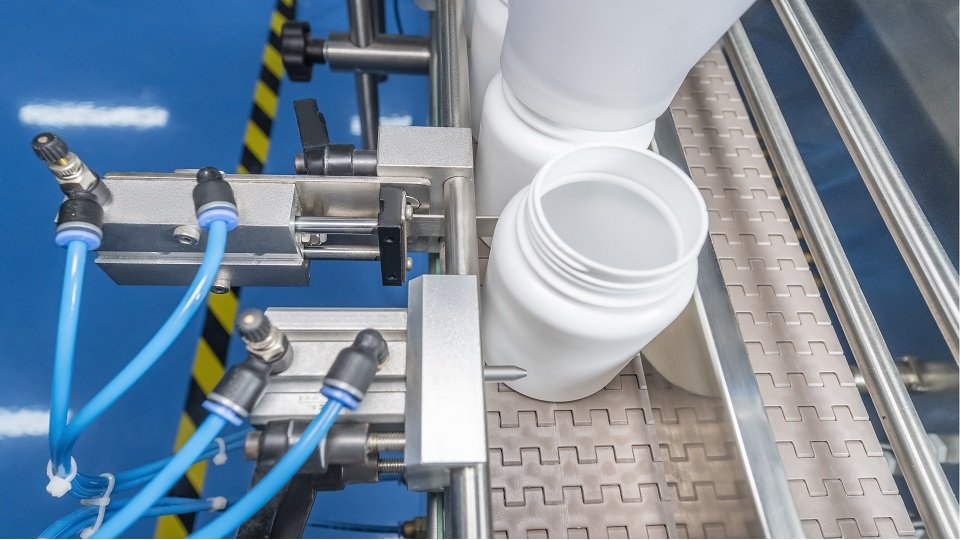
Bottle Positioning and Filling
Step 5: Inspection and Verification
After filling, many production lines incorporate additional inspection systems to verify product quality. These systems may include:
Under-count and over-count inspection (check weigher)
Material sticking detection
Vision inspection system (in vision counting machine for gummiies)
Any bottle that fails to meet predefined standards can be automatically removed from the production line before reaching consumers.
Step 6: Desiccant inserting, Capping, sealing, Labeling and Packaging for Gummy
Once the correct number of gummies has been filled, the bottles proceed to downstream packaging machines to complete the whole gummy counting and bottling line, including desiccant inserting machine, capping machine, induction sealing machine, and labeling machine. Furthermore, after cartoning and case packing, a single gummy bear that entered the counting machine as part of a bulk batch has become part of a precisely packaged retail product ready for consumption.
Today, the two most common technologies used in gummy counting are photoelectric counting and vision counting. While both are designed to count gummies accurately and efficiently, they operate on different principles and offer distinct advantages.
Photoelectric counting is the traditional and most widely used counting method in the pharmaceutical and nutraceutical industries. In a photoelectric gummy counting machine, gummies first pass through a series of vibrating channels that separate them into individual lanes. As each gummy moves through a detection zone, by measuring the area of the gummy that blocks the photoelectric eye, photoelectric sensors generate signals processed by the control system. Each signal corresponds to a single gummy, allowing the machine to calculate the exact quantity before releasing the products into the bottle.
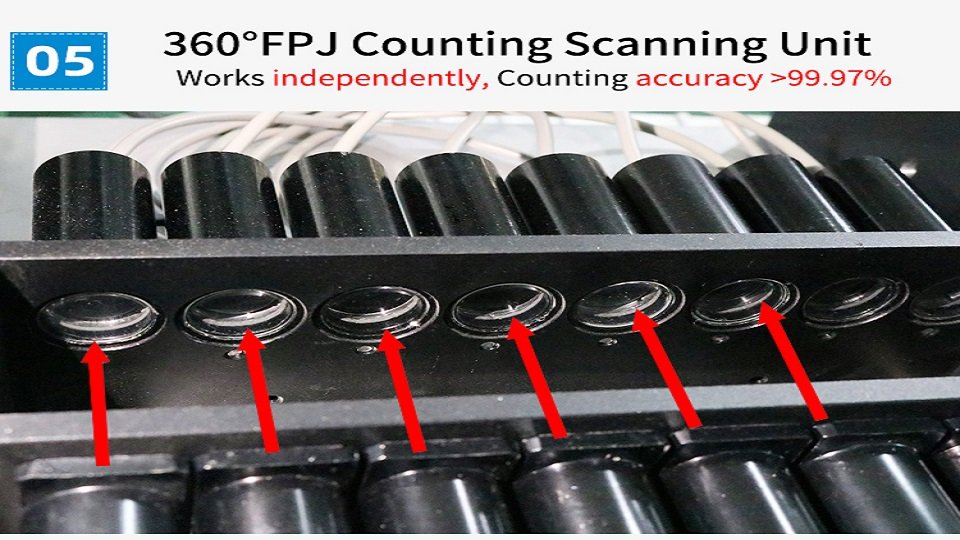
Photoelectric eyes
Instead of relying primarily on photoelectric sensors, vision counting machines for gummies utilize industrial cameras, intelligent imaging systems, and advanced software algorithms to identify and count individual gummies. As gummies move through the machine, high-resolution cameras continuously capture images of the product stream. The software analyzes these images in real time, distinguishing individual gummies based on shape, size, position, and movement. This also allows the system to detect products that may be touching, overlapping, or irregularly positioned.
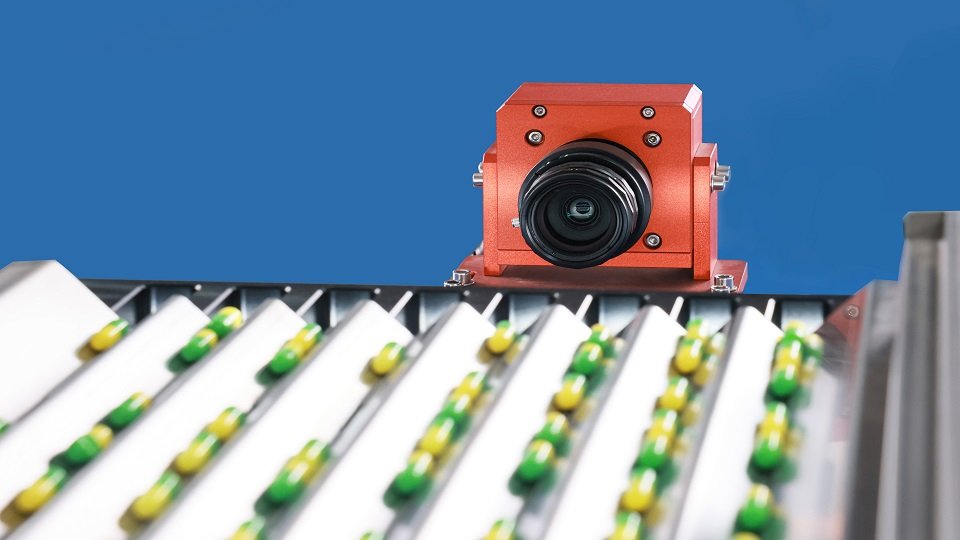
Industrial camera
|
Feature |
Photoelectric Counting machine |
Vision Counting machine |
|
Counting Principle |
Photoelectric sensors |
Industrial cameras and image processing |
|
Technology Maturity |
Highly mature |
Emerging and rapidly developing |
|
Inspection capability |
Limited |
Advanced |
|
Unique Advantage |
High counting speed |
Immune to dust from materials |
|
Best Applications |
Standard gummy bears; High-volume supplement production |
Irregularly shaped gummies; Products requiring advanced quality inspection |
Unlike tablets or capsules, gummies are soft, sticky, and available in many shapes and sizes. Accurate counting is critical to gummy packing, because consumers expect every bottle to contain exactly the quantity stated on the label. A single counting error may seem insignificant, but across thousands of bottles per day, even small inaccuracies can lead to substantial product loss, customer complaints, and regulatory concerns.
Here are two major challenges during gummy counting.
One of the biggest challenges in gummy counting is stickiness. Due to their gelatin- or pectin-based formulations, gummies tend to adhere to one another. When multiple gummies travel through the counting system as a cluster rather than as separate pieces, counting errors can occur. The gummy counter machine may detect two attached gummies as a single one, which resulting in inaccurate counting.
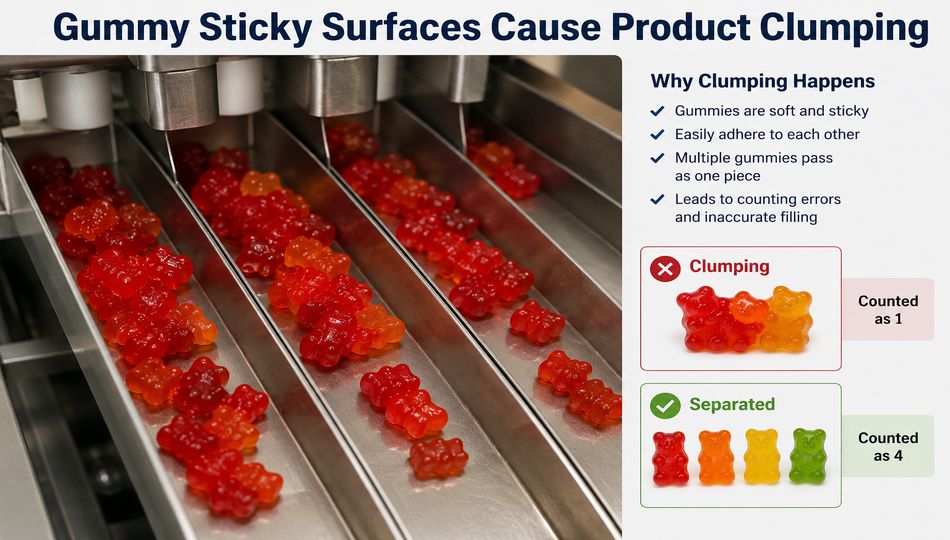
Gummy sticky surfaces cause clumping
Unlike tablets and capsules, which are typically round and uniform, gummies are available in countless shapes and designs, including gummy bears, gummy worms, fruit-shaped gummies, etc.. This can affect how gummies move through detection zones. Some shapes may tilt, overlap, or even block the channel, making precise counting more challenging.
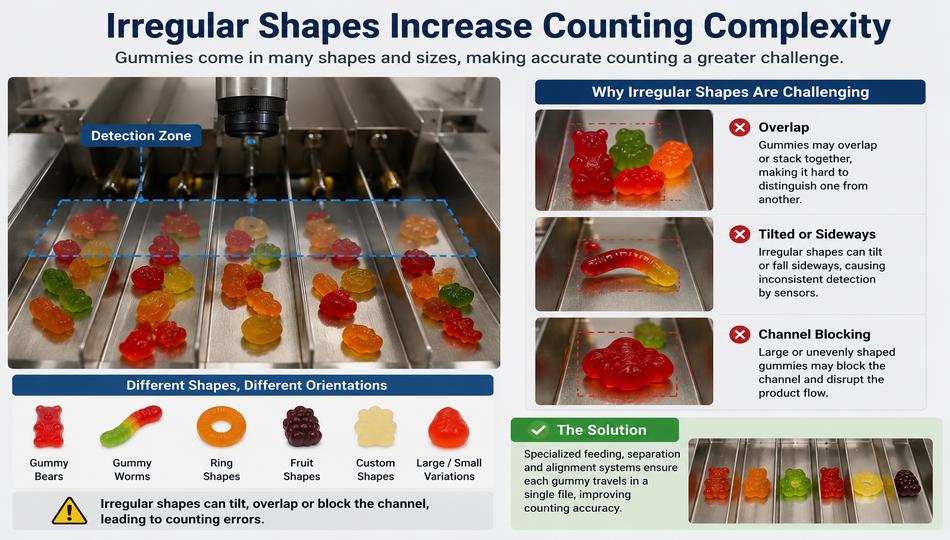
Irregular Shapes Increase Counting Complexity
As gummy products continue to evolve, manufacturers are increasingly choosing gummy counting solutions based not only on speed and accuracy, but also on product complexity, production scale, and long-term automation goals. Therefore, counting gummies quickly and accurately requires specialized design for automatic gummy counting equipment. That is, excellent suppliers for gummy counter machine is of highly importance. In this sense, Rich Packing’s gummy counting machine provides targeted and applicable solutions in response to these challenges.
Aiming to better separate sticky gummies, Rich Packing’s gummy counting machines are equipped with specially designed Teflon-coated rollers and vibration tracks in the feeding stage. Teflon, known for its exceptionally low friction coefficient and non-stick properties, helps minimize product adhesion during transportation and separation.
As gummies move through the machine, the rollers gently rotate and separate clustered products while reducing contact resistance. Also, teflon dimpled vibration track ensures gummies flow more smoothly. This can reduce the risk of product blockage and counting inaccuracy.
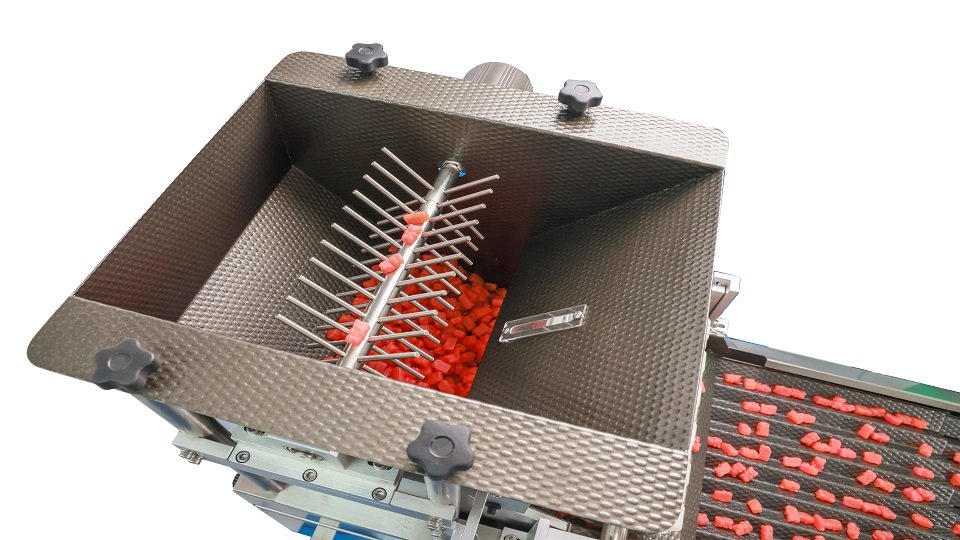
Teflon hopper and vibration track with a stainless steal stirring stick
Special cylinder design can effectively separate gummies and orderly drop them on the vibration dimpled panels. Through continuously rotating and guiding the gummies, it can gently breaking up gummy blocks and distributing the gummies into the vibration dimpled panels, where further alignment and spacing take place. By distributing the gummies uniformly across the vibration tracks, the feeding cylinder helps reduce gummy overlap, improve separation efficiency, maintain stable product flow and enhance counting accuracy.
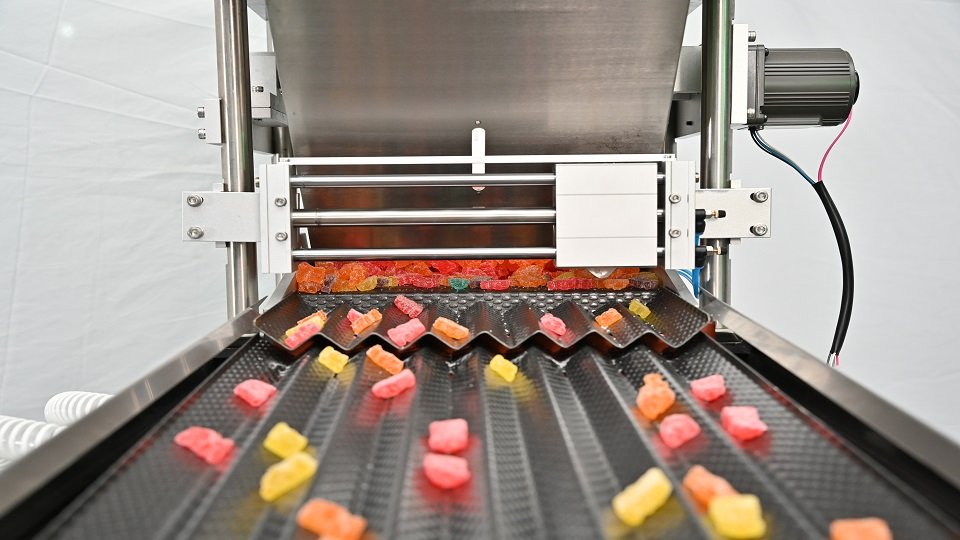
feeding cylinder
The separation roller specially designed for gummies with different shapes and sizes can prevent gummies from stacking.
Similar to feeding cylinder, the separation roller is positioned between the feeding system and the vibration tracks, and continuously rotates to gently s
pread and distribute gummies. Rather than allowing products to move forward in stacked layers, the roller helps break up clusters and guides gummies into a more uniform, single-layer flow. What’s more, customized design cater to different manufacturing requirements.
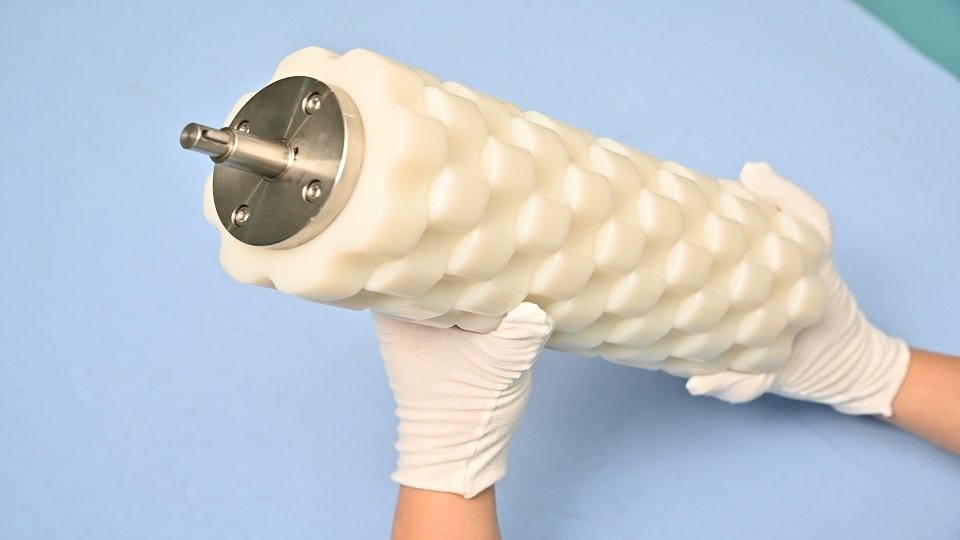
Special Gummies separation roller
After gummies have been accurately counted, they must be discharged smoothly into the bottle. Due to the soft texture and sticky surfaces, gummies can become lodged in normal discharge ports, leading to blockage and counting inaccuracies. In response, Rich Packing’s advanced counter machines for gummies feature enlarged PTFE discharge ports.
The outlet provides a wider discharge path, allowing gummies to pass through more freely and reducing congestion during high-speed operation. In addition, the discharge port is coated with PTFE (Polytetrafluoroethylene), renowned for its exceptional non-stick properties and low coefficient of friction. This can ensure gummies falling smoothly into bottles without clogging.
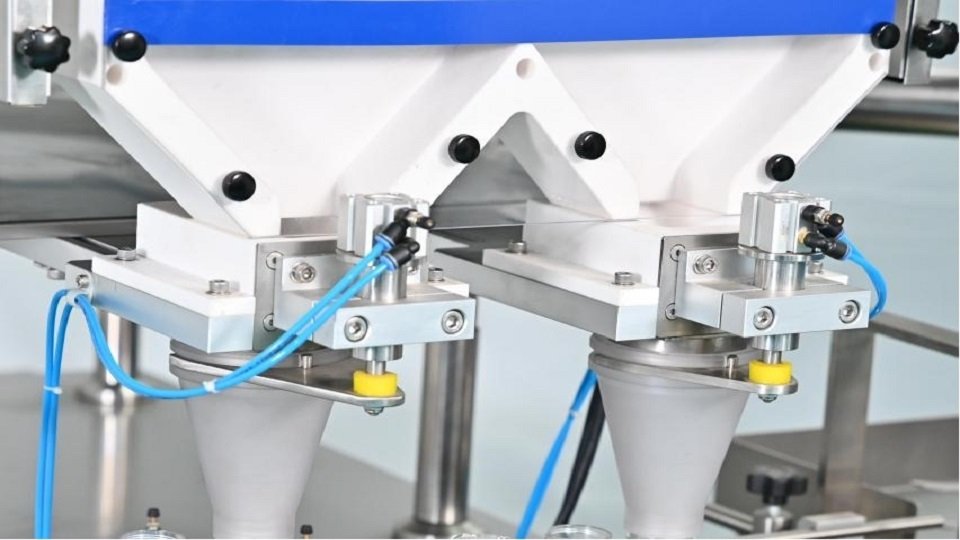
Enlarged PTFE discharge port
A little gummy bear may look simple, but efficiently manufacturing gummy products through an entire gummy counting line requires complex and advanced technology. With the development of gummy products in both pharmaceutical and nutraceutical industries, choosing convincing and outstanding suppliers of gummy counting machine are becoming more and more essential to achieve counting accuracy, enhance productivity, and improve competence. In this sense, Rich Packing’s counter machine for gummies with innovative solutions to gummy counting challenges becomes an advisable choice for manufacturers to maintaining high production efficiency, reducing labor costs, and ensuring consistent product quality.
Gummy Counting Solution From Rich Packing
Q1: Why is counting gummies more difficult than counting tablets or capsules?
Unlike tablets and capsules, gummies are soft, sticky, and available in many shapes and sizes. They can easily adhere to one another, overlap, or become blocked during counting.
Q2: How accurate is a gummy counter machine?
Modern gummy counter machines can achieve extremely high counting accuracy when properly configured. Advanced feeding systems, vibration tracks, separation rollers, and intelligent detection technologies help ensure that each bottle contains the exact number of gummies specified.
Q3: What is the difference between photoelectric counting and vision counting?
Photoelectric counting uses sensors to detect gummies as they pass through a detection zone, making it ideal for high-speed production of standard gummy products. Vision counting uses industrial cameras and image-processing software to identify individual gummies based on their shape and position. It is particularly suitable for irregularly shaped gummies and applications requiring advanced quality inspection.
Q4: How do gummy counter machines prevent counting errors caused by sticky gummies?
Advanced gummy counting machines incorporate specialized designs such as Teflon-coated rollers, dimpled vibration tracks, feeding cylinders, and separation rollers. These components help separate gummies, prevent stacking, and maintain a stable product flow before counting begins.
Q5: Why are Teflon components used in gummy counting machines?
Teflon (PTFE) has excellent non-stick properties and a very low coefficient of friction. Teflon-coated rollers, vibration tracks, and discharge ports help prevent gummies from sticking to machine surfaces, ensuring smooth transportation and accurate counting.

29+ years in pharmaceutical machinery, covering capsule filling, tablet pressing, blister packaging, tablet and capsule counting, cartoning, GMP production, and overseas machine service.

Email : manager@richpacking.cn
Building D, No. 226, Beishan Qiaotou Street, Haizhu District, Guangzhou City, Guangdong Province, China


 IPv6 network supported