






 Home
Home Products
29+ years in pharmaceutical machinery, covering capsule filling, tablet pressing, blister packaging, tablet and capsule counting, cartoning, GMP production, and overseas machine service.

Wondering whether fish oil is truly beneficial—and how it’s actually made into those smooth softgel capsules you see on the shelf?
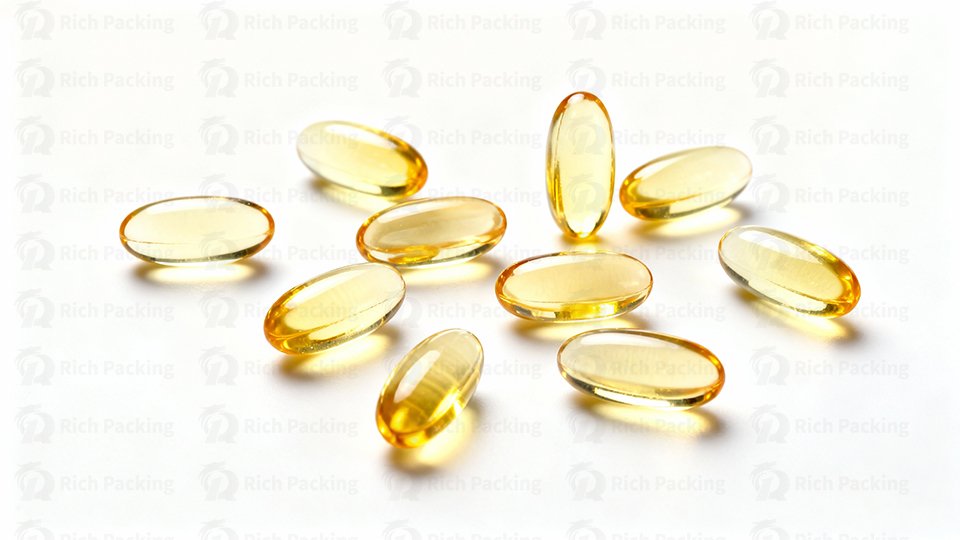
Fish oil, extracted from fatty fish such as salmon, mackerel, sardines, and anchovies, is rich in omega-3 fatty acids (EPA and DHA) and vitamins that support heart, brain, joint, and eye health. The global fish oil supplement market was worth over $10 billion in 2025 and is expected to more than double by 2035 as demand for omega-3 supplements grows.
Although millions of people take fish oil capsules every day, many are unsure about the real benefits, the right dosage, or possible side effects. At the same time, producing these softgels is not as simple as it seems. Fish oil is sensitive to oxygen, temperature changes, and handling, which makes manufacturing a consistent and reliable product a real challenge.
This article delves into the contents, packaging forms, benefits, recommended dosage, the production process, and Rich Packing’s production solutions behind the stable and effective fish oil softgels.
Key Takeaways
● Overview of fish oil contents and packaging forms
● Insights into benefits and potential side effects.
● Recommended dosage guidance by user group
● Raw materials, equipment, and production process of fish oil softgel.
● Rich Packing’s solutions for softgel manufacturing
Fish oil comes from fatty fish like salmon, mackerel, sardines, and anchovies. Its star nutrients are omega-3 fatty acids, which our bodies cannot make enough of on their own. Think of them as the “good oils” your body needs, they help keep your heart pumping, your brain sharp, your joints moving smoothly, and your eyes healthy. According to the U.S. National Institutes of Health (NIH), key components and benefits include:
● EPA (eicosapentaenoic acid): Supports cardiovascular health, helps regulate inflammation, and may improve joint comfort.
● DHA (docosahexaenoic acid): Critical for brain development and function, memory, and cognitive performance. Makes up roughly 30–40% of brain fatty acids and over 50% of those in the retina.
● Vitamins and Minor Nutrients: Some fish oil formulations contain vitamins A, D, and E, supporting immune function, vision, and antioxidant protection.
These components make fish oils widely used for heart health, cognitive support, joint comfort, and eye health across all age groups.
Despite the same content, fish oil is available in several formats, including liquid oil, emulsions, softgels, and chewable gummies. Each form has advantages and limitations:
● Liquid fish oil: Easy to measure and adjust your dose, but very sensitive to air and light. It can taste strongly fishy and usually needs refrigeration, so it’s not the most convenient for daily use.
● Emulsions: Made to improve taste and absorption. They are easier on the stomach, but they are often more expensive and don’t keep as long as capsules.
● Gummies: Popular with children and adults who dislike capsules, but precise dosing is challenging, and the omega-3 content per gummy is usually lower.
● Softgels: Offer the best balance of convenience, stability, and accurate dosing, making them the dominant choice for both consumers and manufacturers.
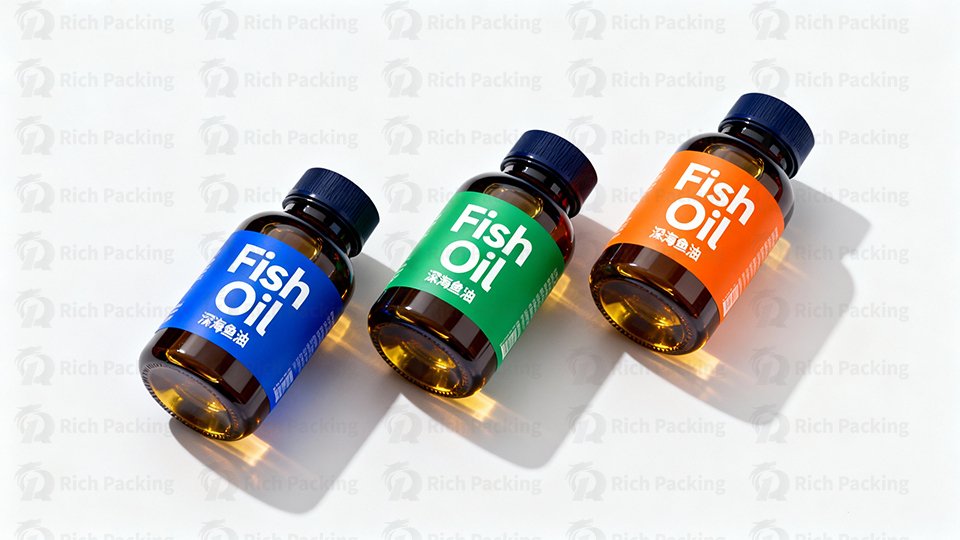
Although you can take liquid fish oil directly, omega-3 softgel capsules are by far the most popular option. he gelatin shell shields the oil from oxygen, light, and moisture, which helps prevent spoilage and the familiar fishy smell. No matter fish oil softgel for kids or that for adults, each softgel also delivers a consistent dose, so users reliably get the right amount of EPA and DHA.
For everyday use, softgels are convenient and easy to swallow. From a manufacturing perspective, they allow consistent quality, precise dosing, and better shelf stability, while masking taste and odor, making it simple to include fish oil in daily routines.
◼ Cardiovascular Health
Among various fish oil benefits, supporting heart health is the most well-known one. Studies cited by the American Heart Association show that omega-3s can lower triglyceride levels by 15-30%, depending on how much you take and your starting levels.
Dr. Dariush Mozaffarian, former dean of the Friedman School of Nutrition Science and Policy at Tufts University, has noted in public interviews that omega-3 softgel “don’t work like a drug that fixes one issue, but like a nutrient that supports multiple pathways including inflammation and lipid metabolism.”
In other words, fish oil works quietly behind the scenes, helping your body in several ways rather than giving instant dramatic effects.
◼ Brain and Cognitive Support
DHA is a building block for brain cells. During pregnancy and early childhood, getting enough DHA helps babies’ brains and eyes develop properly. Studies from Verywell Health and the NIH show that moms who take fish oil softgel with DHA may give their children a boost in vision and early thinking skills.
For adults and older people, omega-3s like DHA can help keep the brain sharp over time, though they won’t magically reverse any existing issues.
◼ Joint and Eye Comfort
EPA works like a tiny traffic cop for inflammation, helping keep the body’s traffic flowing smoothly. That is why fish oil is often linked to keeping joints comfortable and moving freely over time. For the eyes, omega-3s act like natural eye drops, supporting tear film stability, which is ideal for anyone whose eyes feel dry from staring at screens or wearing contact lenses all day.
Fish oil is generally safe, but “natural” does not mean risk-free.
Common fish oil side effects include mild gastrointestinal discomfort, bloating, nausea, or fishy aftertaste. These effects are often related to dose size, oxidation, or capsule quality.
More importantly, omega-3 fatty acids exhibit mild antiplatelet effects. At higher doses, fish oil can slightly increase bleeding tendency. U.S. News Health advise caution for individuals who:
● Take anticoagulant or antiplatelet medications
● Have diagnosed bleeding disorders
● Are preparing for surgery
To avoid fish oil overdose, most authoritative guidelines suggest keeping combined EPA + DHA intake below 3 grams per day unless supervised by a medical professional. At this level, dosage accuracy becomes not just a nutrition issue, but a safety one.
Fish oil dosing varies significantly depending on age, health status, and nutritional goals. This variability directly impacts capsule design, fill volume, and production accuracy. The following table provides an overview of the dosage guidelines, highlighting different user groups and key consideration.
Table 3.1 Typical Fish Oil Dosage Guidelines
|
User Group |
Typical Daily EPA+DHA Range |
Key Consideration |
|
Healthy adults |
250–500 mg |
Maintenance and prevention |
|
Pregnant/lactating women |
200–300 mg DHA |
Fetal and infant development |
|
Children |
Age- and weight-adjusted |
Avoid excessive intake |
|
High-risk cardiac users |
≥1 g (supervised) |
Medical monitoring required |
For manufacturers, this table is not marketing but technical reality. Each dosage tier demands different capsule sizes, pump calibration, and quality controls. Even small deviations can result in mislabeled products or regulatory non-compliance.
◼ Fish Oil
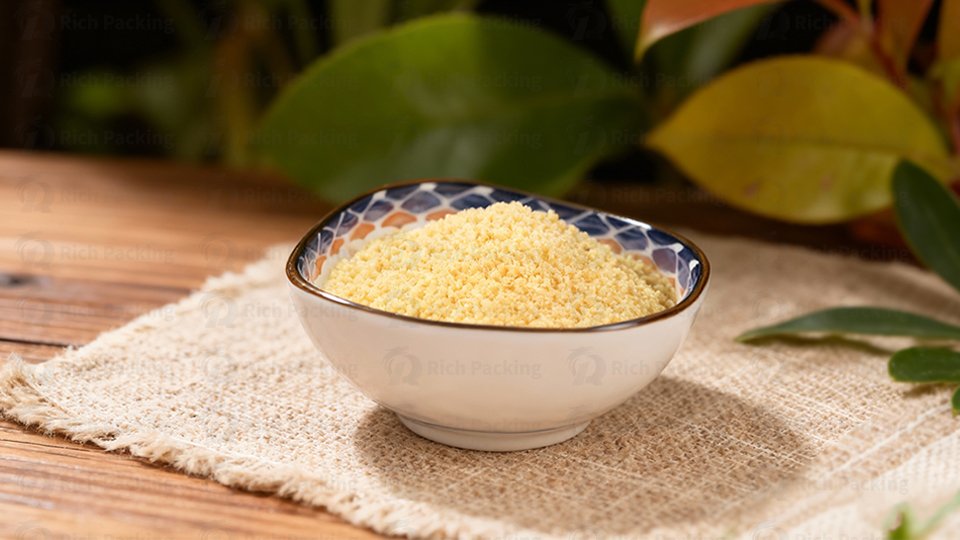
Good-quality fish oil is refined and deodorized before going into softgels, so it stays fresh and tastes better. Manufacturers also check indicators to make sure the oil is stable and effective when it reaches you.
◼ Gelatin Shell Materials
Softgel shells are usually made from gelatin, glycerin, and purified water. Glycerin works like a softener, keeping the shell flexible. If there is too little, the capsule can break easily. If there is too much, it becomes sticky and hard to handle.
◼ Optional Additives
Some softgels include extra ingredients like vitamin E, vitamin D, or flavoring agents. These help slow down oxidation and reduce fishy taste, making the capsules easier to swallow and enjoy.
◼ Gelatin Melting & Storage Tank
Gelatin is melted, mixed, and degassed to achieve uniform viscosity. Trapped air may seem minor, but it often leads to weak seams or ribbon defects.
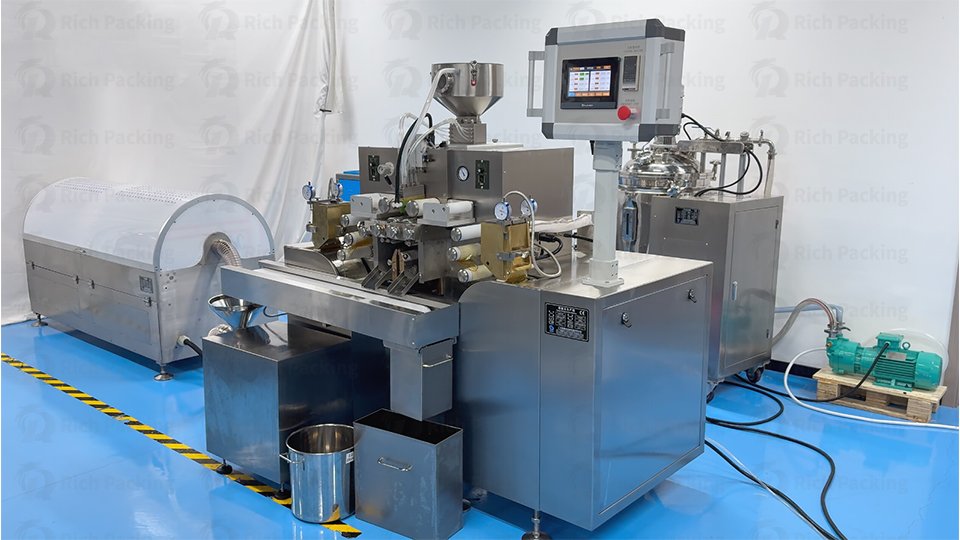
◼ Softgel Encapsulation Machine (Main Machine)
This is the heart of the entire process. The machine forms gelatin ribbons, injects fish oil, seals and shapes the capsules, and finally separates them from gelatin ribbon in one continuous operation. Temperature here must remain stable, typically 35–45°C, to ensure proper fish oil gelcap sealing without leakage.
◼ Rotary Drying Drum
Freshly formed softgels contain a lot of moisture. The rotary drying drum removes moisture efficiently, helping fish oil capsules gradually gain their final shape and mechanical strength.
◼ Auxiliary Systems
Water-circulation vacuum pumps, chillers, conveyors, and automated PLC control system stabilize temperature, pressure, and flow. These systems quietly determine whether production runs smoothly or becomes operator-dependent.
Having a basic understanding of equipment allows for easier grasp of the nutritional fish oil gel production process which the author will break down step by step.
a. Gelatin Delivery to the Main Machine
Gelatin is melted and kept warm in the storage tank before being transferred to the main softgel machine through a heated, pressure-sealed tube. The temperature is maintained around 40–50°C to prevent solidification during transfer.
b. Ribbon Formation and Filling
● Gelatin enters the spread box and reaches the proper level for forming.
● The casting drum spreads and cools the gelatin into thin ribbons.
● A lubrication roller smooths the ribbons before they reach the die rolls.
● The injector fills the capsules with precise amounts of fish oil (accuracy ±2%) and seals them with heat.
● The two ribbons are molded and cut into individual Omega-3 softgels.
c. Separation of Finished Softgels and Residual Gelatin
Finished Omega-3 fish oil softgels drop onto a conveyor, while the leftover gelatin is guided away, keeping the production clean and efficient.
d. Air-Drying in Rotary Drum
Softgels then move into the drying drum via a conveyor and blower system. Cool air circulates continuously while fish oil gel capsules rotate for 6–8 hours until fully dried and stable. The drum rotates forward to discharge capsules or reverses to prolong drying if needed.
Due to the complexity of the manufacturing process, a high-quality softgel encapsulation machines matters. Therefore, understanding common challenges in high-strength fish oil softgel capsules production and choosing reliable, precise machines is crucial for manufacturers to deliver stable, effective, and safe products to consumers.
Many manufacturers encounter the same set of issues over time:
◼ Inconsistent filling and dosage variation
◼ Uneven or streaked gelatin ribbons
◼ Heavy reliance on manual adjustment
◼ Difficulty handling viscous oils like fish oil
◼ Lengthy cleaning processes that meet complicate GMP compliance
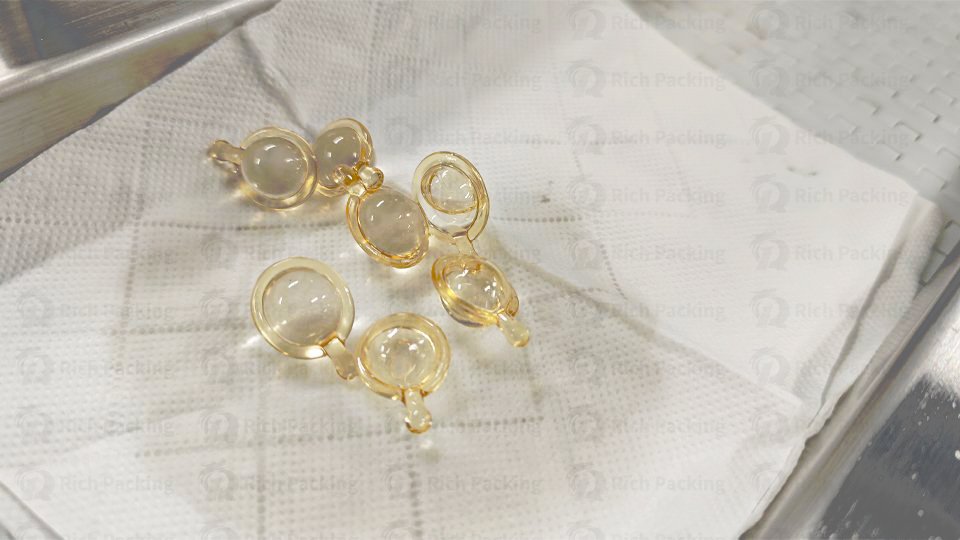
These problems don’t always cause immediate failure, however, they quietly reduce yield, increase waste, and introduce quality risk. To address these issues, Rich Packing offers professional fish oil pill production solutions from softgel capsule filling machine to whole producing line solutions.
● SNJP-150 Softgel Capsule Filling Machine Advantages
Rich Packing’s SNJP-150 softgel capsule making machine is designed around these real issues rather than ideal lab conditions.
High Filling Accuracy: Capsule weight variation controlled within ±1.5%
Stable Ribbon Formation: Water-cooled system combined with micro-lubrication
Higher Efficiency: Mold cavity count increased from 80 to 85, delivering roughly 11% higher output
Advanced Automation: Omron control system, Siemens touchscreen, PLC conveyors, and PID temperature control are combined together to reduce operator dependency
with auto softgel capsule filling machine
Viscous Oil Compatibility: Optimized pump design ensures smooth fish oil filling
Easier Cleaning: Modular pipelines and non-metallic gear transmission support cGMP standards
● How Rich Packing Supports Manufacturers
Upholding the belief that delivering customer value is how we create our own, Rich Packing provides more complete service than just softgel capsule filler machine. Manufacturers receive:
a. Online and on-site installation and commissioning support
b. Preventive maintenance and one-year free spare parts supply
c. cGMP and CE standards compliant
d. Customized flexible production line solutions
With experience across North America, Europe, and Asia, Rich Packing helps producers move from pilot production to long-term, stable, and compliant scalability.
Fish oil gel capsule may look simple, but each capsule is the result of careful formulation and precise manufacturing. In this article, we covered the main nutrients in fish oil, health benefits, recommended dosages for different user groups, and potential side effects. We also went behind the scenes to explain how high-quality fish oil softgel supplements are made, from refined fish oil and gelatin preparation to ribbon formation, accurate filling, capsule sealing, drying, and quality control.
For consumers, this helps you make smarter choices. For manufacturers, this highlights the importance of stable processes, precise dosing, and reliable capsule filling machines for oil .That’s where Rich Packing comes in — providing advanced softgel production lines, technical support, and solutions to make fish oil products that consumers can trust.
[1] National Institutes of Health (NIH): Omega-3 Fatty Acids Fact Sheet
[2] American Heart Association: Fish and Omega-3 Fatty Acids
[3] Healthgrades: Fish Oil Benefits and Side Effects
[4] Verywell Health: EPA and DHA Health Functions
[5] U.S. News Health: How Much Fish Oil Should You Take

29+ years in pharmaceutical machinery, covering capsule filling, tablet pressing, blister packaging, tablet and capsule counting, cartoning, GMP production, and overseas machine service.

Email : manager@richpacking.cn
Building D, No. 226, Beishan Qiaotou Street, Haizhu District, Guangzhou City, Guangdong Province, China


 IPv6 network supported