






 Home
Home Products
29+ years in pharmaceutical machinery, covering capsule filling, tablet pressing, blister packaging, tablet and capsule counting, cartoning, GMP production, and overseas machine service.

Have you ever noticed that the tablets you take can look completely different from one another? Some are white, while others are yellow, pink, blue, green, or even brown. At first glance, these colors may seem like a simple design choice, but there is often much more behind them.
Tablet coating itself serves a variety of purposes. But how is a tablet coating color chosen? And how does a tablet coating machine create a smooth, uniform colored film around thousands of tablets? This article explores the reasons behind tablet coating, the factors that influence coating color selection, and the complete tablet coating process.
Before discussing about tablet coating color, this part is to take a brief glance at the definition and major types of tablet coating.
Tablet coating is a pharmaceutical manufacturing process in which one or more layers of coating material are applied to the surface of a tablet. The tablet before coating is usually referred to as the plain tablet. After tablets have been produced by tablet press machine, they are loaded into tablet coating machine, where they are continuously moved and exposed to a coating liquid.
Main coating materials include film-forming materials, colorants, plasticizers and solvents.
Film-forming materials are the most important component of coating formulation. Their main function is to form a continuous layer on the surface of the tablet. The type of material selected can influence important properties such as strength, solubility, and drug-release behavior. Common examples include HPMC, HPC, PVA, PVP, ethyl cellulose, and methacrylic acid copolymers.
Colorants can be used to create coating colors such as white, yellow, pink, red, blue, green, orange, or brown. The color of the tablet core, the coating thickness, and how evenly the colorant is dispersed can all affect the final appearance.
Plasticizers are used to improve the flexibility of the coating layer. Without sufficient flexibility, a coating film may become brittle and crack or peel during subsequent processing. Plasticizers help tablet coating maintain its integrity. Common examples include polyethylene glycol (PEG), triethyl citrate, and triacetin.
Solvents are used to carry the coating materials through the spray system and onto the tablet surface. Water is commonly used, and other suitable solvents may be used depending on the formulation. During tablet coating process, solvents are gradually removed by hot-air drying. The remaining materials then form the final coating layer.
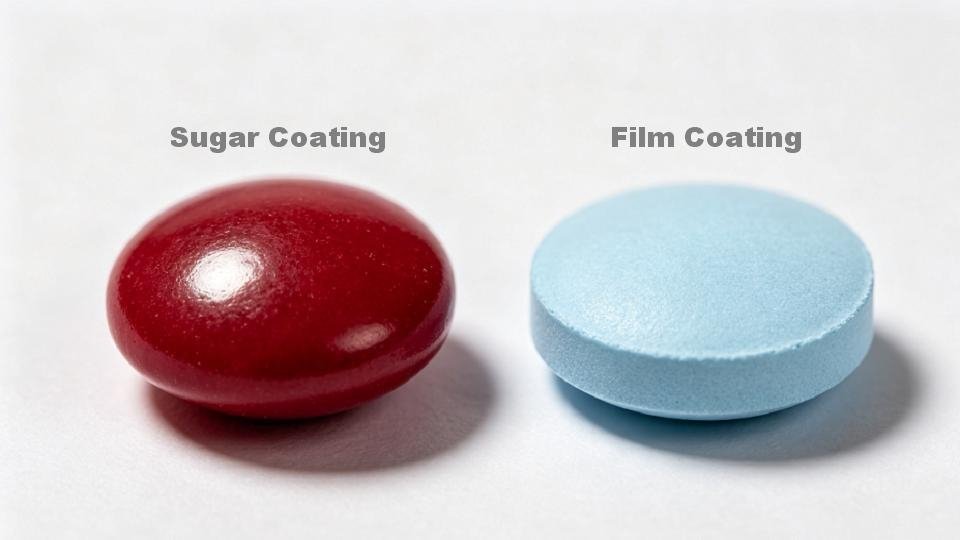
Sugar coating and film coating
Film coating and sugar coating are two major types of tablet coating.
Film coating is the application of a relatively thin layer of polymer-based coating material to the tablet surface. Because the coating layer is relatively thin, film coating generally has a limited impact on the size and weight of the tablet. This makes it a widely used coating method in pharmaceutical production.
Unlike film coating, sugar coating usually produces a much thicker outer layer. Also, sugar-coated tablets are generally smoother, more rounded, and often have a high-gloss surface. Sugar coating can also provide excellent taste masking because the thicker coating creates a substantial barrier between the tablet core and the mouth.
| Comparison | Film Coating | Sugar Coating |
|---|---|---|
| Coating structure | Thin polymer-based film | Thick, multi-layer coating |
| Main materials | Film-forming polymers and functional excipients | Sugar-based coating materials and related excipients |
| Impact on tablet size | Limited increase in size and weight | Significant increase in size and weight |
| Appearance | Smooth and uniform; can be glossy or matte | Smooth, rounded, and typically highly glossy |
| Taste masking | Good, depending on the formulation | Generally excellent because of the thicker coating |
| Production efficiency | Generally more efficient and suitable for production | More time-consuming because multiple layers are required |
| Process complexity | Relatively streamlined | More complex and involves multiple coating stages |
| Typical applications | Functional coatings, vitamins and supplements | Taste masking and products requiring a traditional, glossy appearance |
Different types of tablet coatings are designed to solve different problems. Some are intended to control drug release, while others focus on improving the physical properties and appearance of the tablet.
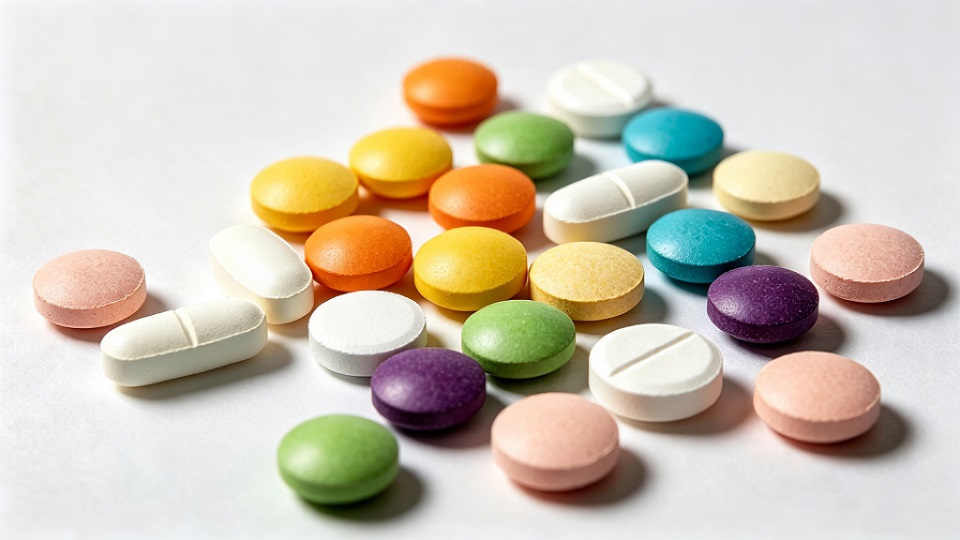
Tablets with different sizes and coating colors
One of the most important functions of tablet coating is to influence where the active ingredient is released. A conventional immediate-release tablet is generally designed to disintegrate and release its active ingredients after administration. However, some tablets need more specific release behavior. This is where tablet coating becomes particularly important.
For example, enteric coated tablets are designed not to take effect in the stomach but to dissolve only in the intestine. Other formulations may use coating systems as part of a modified-release design. Depending on the formulation, the coating can help slow down or regulate the penetration of fluids and the release of the active ingredient.
In these applications, tablet coating is much more than an outer decorative layer. Its composition, thickness, uniformity, and integrity can directly affect the tablet's intended performance.
Swallowing a tablet may seem simple, but the tablet's surface can make a noticeable difference to the patient experience.
Uncoated tablets may have a relatively rough or powdery surface. During manufacturing, handling, and storage, the surface may also be subject to minor abrasion. A properly applied coating can create a smoother outer layer, helping the tablet move more easily when swallowed. This is particularly valuable for larger tablets that are already difficult for some patients to take.
Also, tablet coating can cover unpleasant odors. Some active ingredients have a strong bitter taste, an unpleasant smell, or other sensory characteristics that may be noticeable if the tablet remains in the mouth before being swallowed. By creating a physical barrier, tablet coating can improve the overall administration experience.
Tablet coating also plays an important role in the physical appearance and durability of the finished product.
The coating makes tablet surface smoother and visually appealing. It can also help cover minor variations in the appearance of the tablet core. In addition, the coating layer can provide a degree of protection to the tablet surface during downstream handling.
Tablets may pass through multiple stages after compression, including conveying, inspection, tablet counting, tablet bottling, blister packaging, and transportation. Repeated contact between tablets and equipment surfaces can cause abrasion or surface wear. A suitable coating can help improve resistance to minor rubbing and handling damage, contributing to a more consistent finished appearance.
Common tablet coating colors include white, yellow, pink, red, blue, green, orange, and brown. Due to its simple appearance, white is considered as one of the most common choices. Yellow is also widely seen, while pink, blue, and green can provide stronger visual differentiation. Orange and brown may be used when a product requires a more distinctive appearance. The final color is usually selected based on several practical considerations.
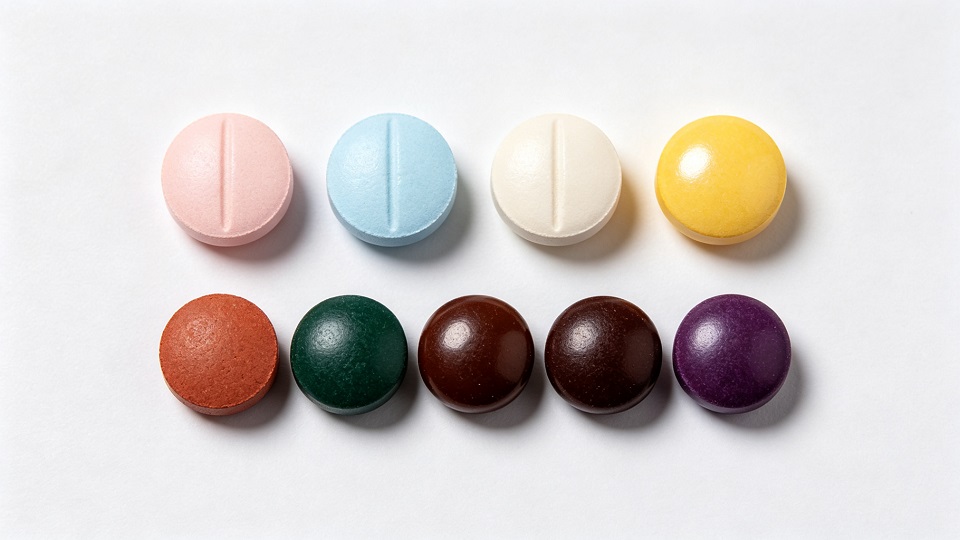
Different Tablet Coating Colors
One reason for using different tablet coating colors is product identification. A pharmaceutical manufacturer may produce multiple products that are similar in size or shape. Different strengths of the same medication may also have nearly identical tablet cores. Color provides an additional visual feature that can help distinguish one from another.
Color should not be considered the only means of identification, but it can work together with tablet shape, size, imprinting, packaging, and labeling to create a clearer visual distinction. From a product-design perspective, the goal is that the finished tablet should be recognizable and less likely to be confused with another product.
Color can also become part of a product's visual identity. Just as consumer products often use recognizable packaging colors, pharmaceutical and healthcare products may use consistent colors to create a recognizable appearance across a product line.
However, branding cannot be the only consideration. A color that looks attractive in a design concept must also be achievable in large-scale production. It must remain sufficiently consistent from batch to batch and work with the selected tablet core and coating formulation.
The choice of tablet coating color is also subject to regulatory requirements. The coloring agents used in pharmaceutical coatings are not selected solely on the basis of appearance. Manufacturers need to consider whether a particular colorant is permitted for pharmaceutical use in the target market.
Manufacturers also need to consider the quality requirements associated with the colorant. Depending on the applicable standards and product requirements, this may include factors such as identity, purity, impurities, and consistency.
The tablet color must also be compatible with the actual tablet coating process. Different colors and shades may place different demands on the coating process.
For example, highly saturated or darker colors may make uneven coating more noticeable, while some colorants may require particularly uniform dispersion to avoid spots or shade variation. The color of the tablet core and the amount of coating applied can also influence the final appearance.
For this reason, manufacturers need to consider whether the selected color can be reliably achieved under actual production conditions. Factors such as tablet movement, coating solution spraying, drying, and moisture removal all influence the consistency of the final color.
So, how does a tablet coating machine coordinate these processes to create a smooth and uniform coating? The next chapter is to take a closer look at the working principle of tablet coating machine.
To ensure a uniform coating and consistent tablet color, tablet coating machine takes coordinated control of tablet movement, coating solution spraying, heated air, and exhaust.
The coating process begins with the tablet tumbling. As the coating pan rotates, the tablets are continuously lifted, moved, and allowed to tumble. Internal baffles help create a controlled movement pattern so that the tablets do not simply slide together as one mass. The purpose of this movement is to expose different surfaces of the tablets to the spray zone.
If tablet movement is poor, some tablets may receive more coating than others, causing uneven coating and color inconsistency. On the other hand, excessively aggressive movement may increase the risk of unnecessary tablet-to-tablet contact or surface damage.
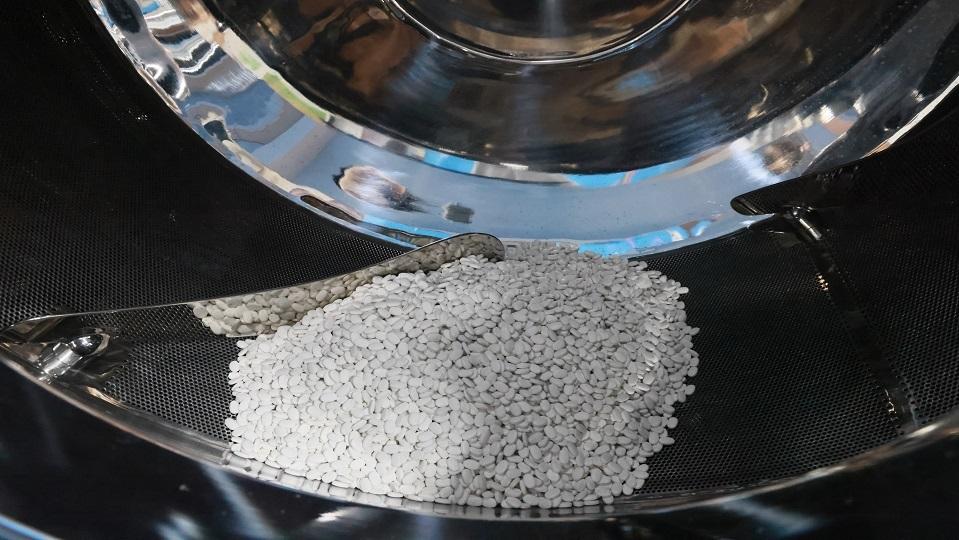
Tumbling and Mixing
Once the tablets are tumbling properly, the coating solution is delivered to the spray system. The coating liquid is atomized through spray guns into fine droplets and directed toward the moving tablet bed. Each tablet receives small amounts of coating as it repeatedly passes through the spray zone.
Uniform spraying depends on several factors, including the coating solution flow rate, atomization conditions, spray pattern, spray gun position, and the relationship between the spray system and the moving tablet bed.
If too much liquid is applied to a localized area, tablets can become excessively wet. In this case, tablet sticking and uneven coating might occur. If the droplets are not properly atomized or distributed, the final surface may show defects or color variation. Therefore, uniform spraying performance of tablet coating machine is particularly important for coating color consistency.
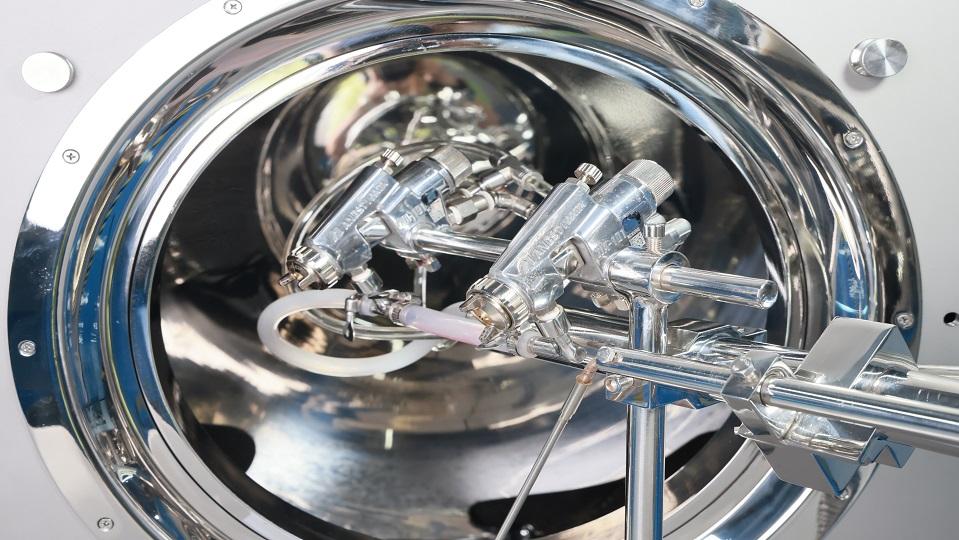
Spraying System
The liquid portion of the coating must be removed so that the coating material can form a stable film on the tablet surface. This is achieved through the hot-air system of tablet coating machine.
Conditioned air enters the coating chamber and passes through the moving tablet bed. The air can evaporate the solvent or water from the freshly applied coating of tablet.
The drying process must be carefully balanced with the spray process. If tablets remain too wet because the spray rate is too high or drying is insufficient, they may stick to one another. If drying is too aggressive, the coating droplets may dry too quickly before they have the opportunity to spread properly across the tablet surface.
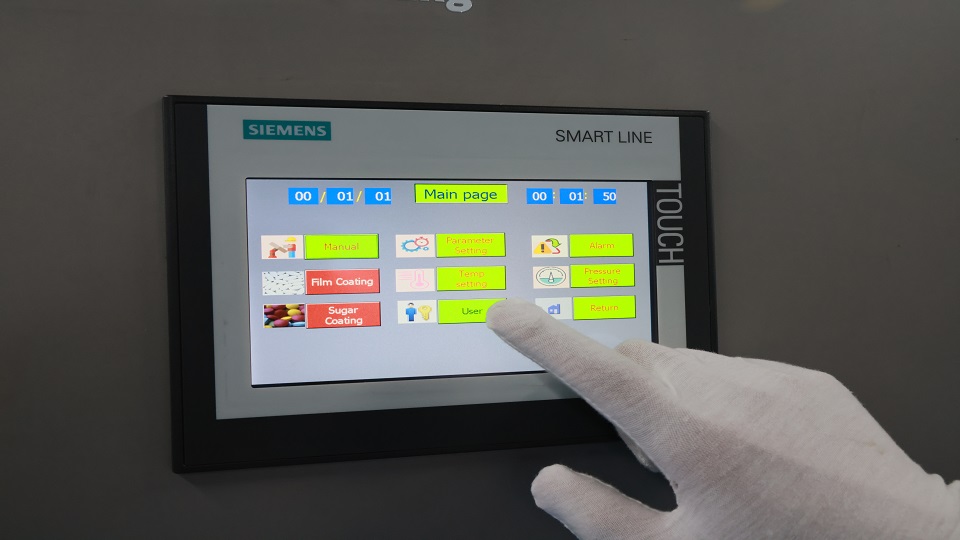
Siemens Touchscreen of rich packing’s Tablet Coating Machine
A complete tablet coating is normally built up gradually rather than applied in one thick layer. The process is repeated many times:
With each cycle, the coating gradually builds into a continuous film. This repeated process helps improve coating uniformity and allows the control system to manage the total amount of coating applied. The process continues until the required coating weight gain, film quality, and visual appearance have been achieved.
Once the tablet coating process is complete, the finished tablets can be discharged from the coating pan.
Before discharge, the coating pan is typically kept rotating for a short period to allow the remaining surface moisture to be removed and to ensure that the tablets are sufficiently dry. This helps prevent coated tablets from sticking together during discharge. Then the pan rotates in the designated direction, causing the tablets to move toward the discharge port. Internal baffles guide the tablets toward the outlet as the pan continues to rotate.
Once the coating pan is emptied, the discharge operation is stopped and the finished tablets are transferred to the next packaging stage, such as inspection, dedusting, tablet counting and blister packaging.
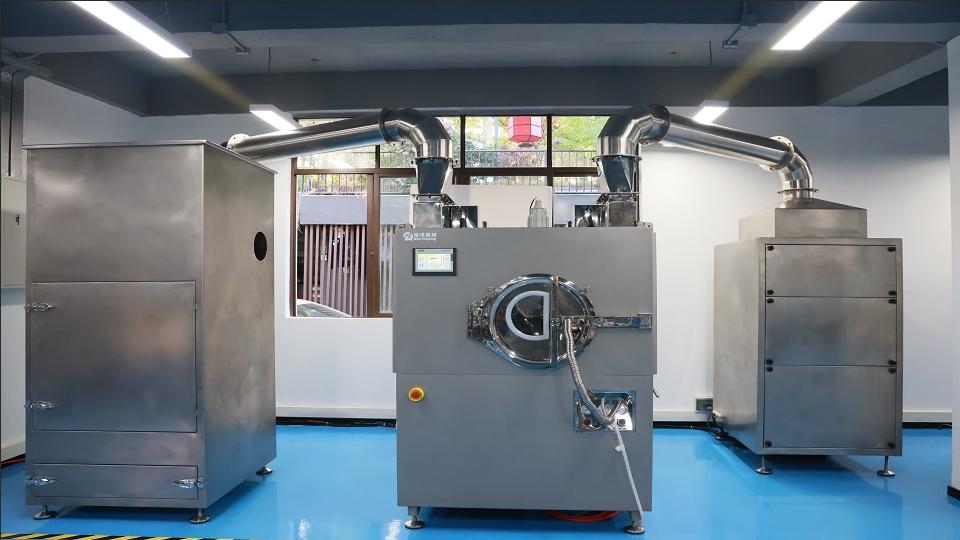
rich packing’s Tablet Coating Machine
Tablet coating serves multiple purposes, and the choice of coating color depends on several factors such as product identification, brand recognition, regulatory requirements, and the coating process to achieve a consistent result.
At the heart of this process is the tablet coating machine, which coordinates tablet tumbling, coating solution spraying, and hot-air drying to form a uniform and consistent coating layer. Therefore, selecting a tablet coating machine that matches the product and production requirements is essential for achieving stable coating quality.
Equally important is choosing an experienced and reliable supplier. A professional supplier should not only provide suitable tablet coating machine, but also offer technical guidance on coating formulation and color selection, and help optimize key process parameters. Rich Packing, as a reliable supplier, remains ready to give clients customized and professional tablet coating solution.
Working Process of rich packing’s Tablet Coating Machine
Different tablet coating colors can help improve tablet identification, distinguish products or strengths, and support brand recognition.
No. Tablet coating can also help control where the active ingredient is released, improve swallowability, mask unpleasant tastes and odors, and improve the tablet's resistance to minor abrasion during downstream handling.
Key factors include tablet identification, brand recognition, regulatory requirements, and whether the selected color can be consistently achieved during the actual tablet coating process.
Yes. Factors such as tablet movement, coating solution spraying, drying, moisture removal, tablet core color, and coating amount can all affect color uniformity and the final appearance of the tablet.
A tablet coating machine coordinates tablet tumbling, coating solution spraying, hot-air drying, and repeated coating cycles to gradually build a uniform coating layer on the tablet surface.

29+ years in pharmaceutical machinery, covering capsule filling, tablet pressing, blister packaging, tablet and capsule counting, cartoning, GMP production, and overseas machine service.

Email : manager@richpacking.cn
Building D, No. 226, Beishan Qiaotou Street, Haizhu District, Guangzhou City, Guangdong Province, China


 IPv6 network supported