






 Home
Home Products
29+ years in pharmaceutical machinery, covering capsule filling, tablet pressing, blister packaging, tablet and capsule counting, cartoning, GMP production, and overseas machine service.
Categories
New Blog
Tags
Are you looking to understand how powder tablet press machines transform loose powder into solid tablets? These sophisticated pieces of equipment are fundamental to pharmaceutical, food, nutritional supplement, and chemical industries. Understanding their working principles and proper installation procedures is crucial for ensuring optimal performance, product quality, and operational efficiency.

A powder tablet press machine is specialized equipment designed to compress powder materials into tablets of uniform size, weight, and density. These machines apply mechanical pressure to transform loose powders into compact solid forms with precise specifications. You will find these machines extensively used in pharmaceutical manufacturing, food processing, chemical production, and numerous other industries where uniform tablet production is required.
When selecting a tablet press machine for your production needs, you should be aware of the different types available on the market:
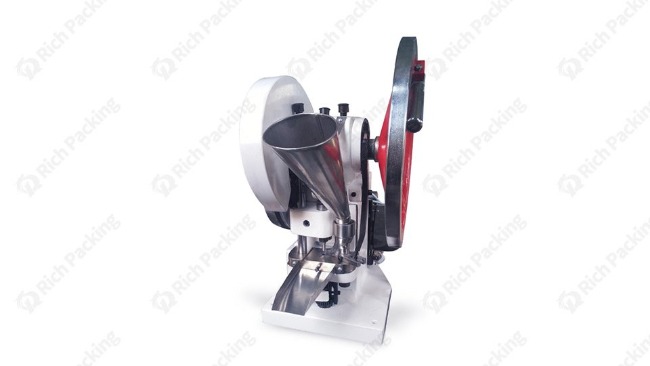
This is the simplest form of tablet press machine, consisting of one set of punches and dies. You will find these machines ideal for:
Single punch machines operate at lower speeds but offer excellent flexibility when you need to produce small batches or frequently change formulations.
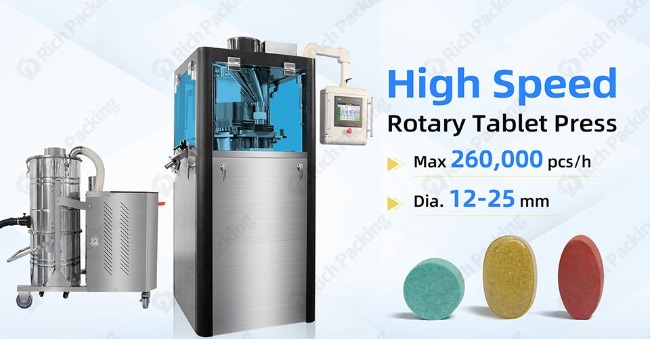
For higher production volumes, rotary tablet press machines offer significant advantages. These machines feature multiple sets of punches and dies arranged in a circular pattern on a rotating turret. You can choose from:
With a rotary tablet press, you can achieve production rates ranging from thousands to hundreds of thousands of tablets per hour, making them ideal for industrial-scale manufacturing.
The fundamental working principle of a tablet press machine involves four critical stages that you need to understand:
Let's examine each of these steps in detail to give you a comprehensive understanding of the tablet compression process.
During the feeding stage, your powder material is transferred from a hopper into the die cavity. Two primary feeding mechanisms are employed:
Gravity Feeding:
Force Feeding:
Proper feeding ensures that a precise amount of powder enters each die cavity, which is critical for maintaining tablet weight uniformity.
The compression stage is where powder transformation truly occurs. You will observe that this process happens in two distinct phases:
During pre-compression, lower pressure is applied to:
This preliminary compression step is particularly important when you're working with air-sensitive or difficult-to-compress formulations.
The main compression phase applies full pressure to the powder, typically ranging from 500kg to several tons, depending on:
During this phase, several physical phenomena occur simultaneously:
The compression force profile can be adjusted to optimize tablet properties based on your specific requirements.
After compression, the tablet must be removed from the die through:
Ejection: The lower punch rises to push the tablet upward out of the die cavity.
Scraping: A scraper blade (also called a take-off bar) removes the tablet from the surface of the die table and directs it to a collection chute.
These final steps must be carefully controlled to prevent tablet damage. You should ensure that ejection forces are not excessive, as this can lead to defects like sticking, picking, or capping in your final product.
Proper installation begins with thorough site preparation. Before your tablet press machine arrives, you should ensure:
Once your tablet press machine arrives at your facility, proper positioning and leveling are crucial:
A perfectly level machine is essential for consistent tablet quality and reduced wear on mechanical components.

When your tablet press machine arrives, you should follow these steps:
Modern tablet press machines often come partially disassembled to protect sensitive components during shipping. You will need to:
Always refer to the manufacturer's installation manual for specific assembly sequences and torque specifications.
With the machine assembled, you can proceed to connect necessary utilities:
Modern tablet press machines feature sophisticated control systems that require proper configuration:
Before putting your machine into production, several calibration procedures must be performed:
Remember that regular recalibration is necessary to maintain accuracy over time. You should establish a calibration schedule based on your production volume and regulatory requirements.
Before beginning production, operational qualification testing verifies that all systems function as intended:
Document all test results for regulatory compliance and future reference.
Performance qualification demonstrates that your tablet press machine can produce tablets meeting your specifications:
| Parameter | Acceptance Criteria | Testing Method |
|---|---|---|
| Weight Variation | ±5% of target weight | Statistical sampling |
| Hardness | Within specified range | Hardness tester |
| Thickness | ±0.1mm of target | Digital micrometer |
| Friability | <1% weight loss | Friability tester |
| Content Uniformity | 90-110% of label claim |
To keep your powder tablet press machine in optimal condition, you should perform these daily maintenance tasks:
Implement a preventive maintenance schedule including:
Proper maintenance extends machine life and ensures consistent tablet quality.
If you experience alignment issues during installation:
For electrical problems:
If compression force readings are inconsistent:
To maximize the efficiency of your tablet press machine:
For superior tablet quality:
Protect machine operators by ensuring:
Maintain product quality and safety through:
Understanding the working principles and proper installation procedures of powder tablet press machines is essential for achieving optimal performance and product quality. By following the guidelines outlined in this article, you can ensure your tablet press operates efficiently and produces consistent, high-quality tablets. Would you like to learn more about optimizing your tablet production process? Contact our experts for personalized consultation.

29+ years in pharmaceutical machinery, covering capsule filling, tablet pressing, blister packaging, tablet and capsule counting, cartoning, GMP production, and overseas machine service.

Email : manager@richpacking.cn
Building D, No. 226, Beishan Qiaotou Street, Haizhu District, Guangzhou City, Guangdong Province, China


 IPv6 network supported