< img height="1" width="1" style="display:none" src="https://www.facebook.com/tr?id=860012012932429&ev=PageView&noscript=1" />
capsule counting machine
  • Jun 25, 2026 From Gummy Bears to Gummy Counting Machine: How Accurate Counting Is Ensured
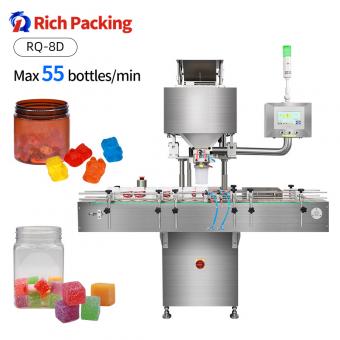
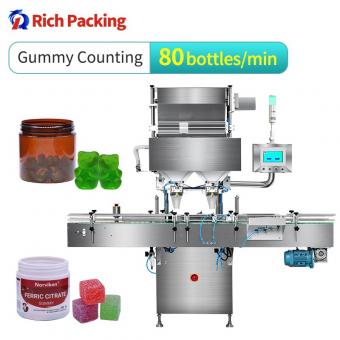
    Do you like eating gummy bears? Think about the last time you ate a gummy bear. Maybe it was a handful of colorful candies from a bag, or perhaps a daily vitamin gummy that has become part of your morning routine. No matter the form, nowadays gummies are everywhere in our life. You can find them in supermarkets, pharmacies, convenience stores, and even on your desk as a quick sweet treat. Their soft texture, vibrant colors, and various flavors make them a favorite among both children and adults.   But have you ever wondered how manufacturers ensure that every bottle contains exactly the right number of gummies? Whether purchasing a bottle of multivitamin gummies or a package of gummy bears, we consumers always expect accurate counts, consistent quality, and hygienic packaging. Behind this seemingly simple process lies a significant manufacturing challenge. In this article, you’ll discover how gummy counting machines work, what challenges this process faces, and why outstanding supplier of counting machine for gummies can provide perfect solutions.   1. Why Are Gummy Bears So Popular?   When you think of gummy bears, colorful fruit-flavored candies probably come to mind. Originally developed as a confectionery treat, gummy bears have been enjoyed for generations thanks to their chewy texture, appealing appearance, and wide variety of flavors. Today, however, gummies have evolved far beyond the candy aisle and become one of the fastest-growing product formats in the global health and wellness market.   Categories of Gummies in Terms of Function     From a functional perspective, gummy can be divided into several categories: Confectionery Gummies: Traditional sweet treats enjoyed as snacks. Vitamin Gummies: Containing vitamins such as Vitamin C, Vitamin D, and B-complex vitamins. Multivitamin Gummies: Providing a combination of essential nutrients in a convenient format. Probiotic Gummies: Supporting digestive and gut health. Functional Nutrition Gummies: Designed for immunity, energy, stress relief, cognitive support, and other wellness goals.   Different gummy products   Reasons for Success of Gummies    One of the biggest reasons for the success of gummies is their convenience. Unlike traditional tablets and capsules, gummies are easy to consume and often provide a more enjoyable user experience. Many consumers find swallowing pills difficult or unpleasant, while gummies offer familiar flavors and textures that make daily supplementation feel less like a chore. For children, gummies can improve compliance with vitamin routines. For adults, they provide a convenient and portable way to maintain wellness habits. As health-conscious consumers increasingly seek products that combine effectiveness with convenience, gummies have emerged as an attractive delivery format. In addition, gummy products offer tremendous flexibility for manufacturers and brands. They can be produced in countless sha...
    View More
  • Jun 24, 2026 What Affects Pill and Capsule Dissolution Time? 8 Factors from Formulation to Manufacturing
    Two pills can look almost identical yet follow very different paths after swallowing. When people search "how long for pills to dissolve," they usually expect one simple number. Yet one pill may break apart soon after contacting stomach fluid, while another remains intact until it reaches a different environment in the digestive tract. Appearance alone reveals little about what controls the difference.   Inside each product is a deliberately designed structure. Tablet compression force changes the pore spaces through which fluid must travel. Capsule shell material and shell moisture affect how a hard capsule responds. Tablet coatings, binders, disintegrants, particle properties, and capsule fill materials determine what happens after the outer structure begins to open.   Pill and capsule dissolution time is therefore shaped across the entire product journey, from formulation and tablet compression or capsule filling to coating, storage, packaging, and the conditions encountered after swallowing.     No Single Clock Starts When You Swallow   People often expect a simple answer: ten minutes, twenty minutes, perhaps an hour. The useful answer is less tidy. A swallowed product may first soften, split, swell, or allow fluid through microscopic pores before its active ingredient begins entering solution. That sequence creates three separate milestones: Stage What you would observe What it does not prove Disintegration The tablet or capsule breaks into smaller parts That all active ingredient has dissolved Dissolution Active ingredient enters surrounding fluid That it has already been absorbed Absorption Dissolved material crosses into the body That every person will respond identically A capsule shell opening is not the finish line, and a tablet disappearing is not proof that every ingredient has entered solution. The intended release design controls what follows.   Factor 1: The Dosage Form Sets the First Route   Imagine a conventional tablet, a hard capsule, and a softgel placed beside one another. The tablet is a compact of compressed particles. The hard capsule is a two-piece shell holding powder, granules, or pellets. The softgel is a flexible sealed shell around a liquid or semi-solid fill. They may be swallowed in the same way, but fluid reaches their contents through three different structures.   A conventional tablet must become wet internally and lose enough structural strength to break apart. A hard capsule shell must hydrate before exposing its fill. A softgel shell must lose integrity while remaining compatible with the material sealed inside it. Modified-release products add another route. Enteric-coated forms are designed to resist the acidic stomach environment. Extended-release tablets or capsules may use polymer matrices or coated pellets to spread release across a longer period. A delayed start is not automatically a defect; sometimes it is the central purpose of the product. Dosage form First ...
    View More
  • Jun 22, 2026 How to Choose Desiccant Inserter for Tablet Counting?
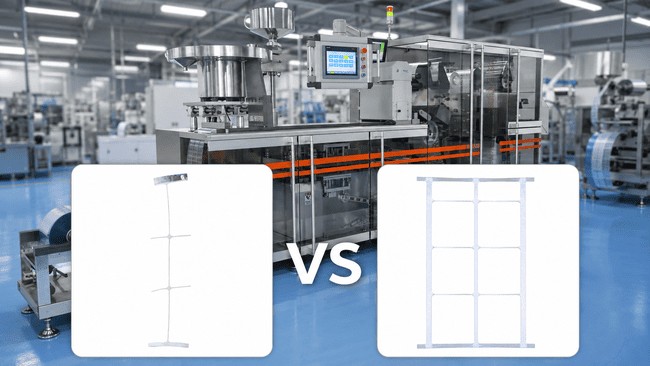
    1. Introduction   In pharmaceutical packaging production, every tiny process detail determines the final product quality and market compliance level. While most manufacturers focus on upgrading core equipment such as tablet counting machines, bottle unscramblers and capping machines, they often overlook the critical supporting link: desiccant insertion. As a key barrier against moisture, oxidation and microbial contamination, desiccants effectively stabilize the efficacy of tablets and capsules, extending product shelf life and reducing scrap rates.   However, mismatched desiccant inserting machine has become a common bottleneck restricting pharmaceutical production efficiency. Many pharmaceutical and health product enterprises face recurring problems in actual production: low line running speed, high desiccant breakage rate and debris contamination risks. These issues not only increase production and maintenance costs but also cause hidden dangers for GMP compliance and product quality stability.   Currently, the pharmaceutical counting line market is dominated by three mainstream desiccant insertion solutions: roll stock cutting type, pre-cut single pouch type, and cylindrical type. Each type has unique working principles, performance characteristics and applicable production scenarios. Let's take a look at which type of deoxidizer inserting machine is the best for you.   2. Working Principles and Core Characteristics   To select the most suitable equipment for personalized production needs, it is necessary to first clarify the structural logic and core positioning of the three types of desiccant inserting machines. Different design concepts fundamentally determine their differences in efficiency, cost, stability and applicability.   2.1 Roll Stock Cutting Desiccant Inserter   The roll stock cutting desiccant pouch inserter is designed for continuous and large-scale automated production, adopting integrated coiled desiccant without pre-cutting or manual sorting. The machine drives the continuous desiccant roll through a high-precision stepping motor, realizing stable and uniform feeding. Equipped with a real-time detection of the highest and lowest points of the desiccant, it achieves accurate fixed-length positioning, and the customized high-hardness cutter completes instantaneous cutting and separation. The whole process of feeding, cutting and inserting is highly coordinated, perfectly matching the high-speed operation rhythm of pharmaceutical counting lines.   Its core feature is one-stop integrated automatic processing. It eliminates the intermediate link of manual or mechanical sorting of finished desiccants, reduces equipment stations and failure points, and realizes seamless connection from desiccant to bottle. The cutting length can be freely adjusted according to production needs, adapting to multiple desiccant dosage specifications, with strong production flexibility for standardized products. ...
    View More
  • Jun 22, 2026 Photoelectric vs Vision Counting Packing Machine: Which Solution Fits Your Production Line?
    1. Introduction: Why Counting & Inspection Technology Matters for Modern Packaging    1.1 Strict Global Regulatory and Quality Requirements   In the global pharmaceutical, nutraceutical, and food packaging industries, precise counting and zero-defect quality control are no longer optional advantages—they are mandatory standards. With increasingly stringent cGMP, FDA, and CE regulatory requirements, manufacturers are facing unprecedented pressure to eliminate counting errors, reduce defective product rate, and achieve full-process production traceability. Even a small number of miscounted bottles or mixed defective particles can lead to huge economic losses and irreversible damage to brand reputation.   1.2 Common Production Pain Points in Traditional Counting Lines   For decades, automatic counting machines have replaced inefficient error-prone manual counting and become the core equipment of bottle packaging lines. However, many production managers still struggle with equipment selection confusion. Traditional photoelectric capsule counting machines and emerging vision counting packing machines dominate the current market, yet most enterprises cannot accurately distinguish their applicable scenarios, technical limitations, and long-term value. Choosing inappropriate equipment often results in low production efficiency, frequent quality risks, and wasted investment costs.   2. Working Principle: Essential Differences Between Traditional Induction and AI Intelligent Recognition   The fundamental performance gap between photoelectric counting and AI vision counting stems from their completely different underlying technical logic. Understanding the working mechanism is the premise of accurate equipment selection, as it directly determines the equipment’s detection limit, functional boundary, and production adaptability.   2.1 Technical Logic of Photoelectric Counting Technology   RQ-DSL-16H photoelectric tablet counter machine adopts mature and stable infrared laser photoelectric induction technology, which has been optimized and iterated for decades in the packaging industry. The equipment is equipped with imported high-sensitivity independent photoelectric sensors for each detection channel, forming a stable and continuous laser detection light beam. When materials such as tablets and capsules fall vertically through the detection channel, the particles will instantly block the laser beam, causing real-time changes in the optical signal received by the sensor. The high-stability Panasonic PLC system quickly converts the optical signal fluctuation into electronic pulse signals, completes accurate single-particle counting through algorithm logic judgment, and cooperates with the pneumatic system to realize quantitative bottling. photoelectric counting module   2.2 Technical Upgrade Logic of Rich Packing Vision Counting Packing Machine   Completely different from the single-functi...
    View More
  • Jun 17, 2026 Changeover Time in Pharmaceutical Packaging: How to Reduce Downtime Between Batches
    Changeover time in pharmaceutical packaging is the period between the last acceptable pack of one batch and the first stable acceptable pack of the next batch. It may involve a new product, bottle size, blister format, carton size, label, leaflet, batch code, or inspection setting. For factories running many SKUs, this downtime can quietly remove hours of available production time every week.   A packaging line changeover is not only a mold swap or guide rail adjustment. It usually includes line clearance, cleaning, format-part replacement, recipe setup, code verification, inspection adjustment, trial running, and confirmation of the first acceptable packs. Most changeovers move through four stages: stopping the previous run, clearing and cleaning the line, setting up the next format, and restarting until stable output is confirmed.   The challenge is sharper in pharmaceutical packaging because speed cannot come at the cost of product identity or quality control. A faster changeover still needs clean contact parts, correct labels, correct batch and expiry codes, reliable counting or sealing, and inspection systems that match the new format.   tablet press machine fast mold change   1. What Does Changeover Time Mean in Pharmaceutical Packaging   In general manufacturing, changeover time is often measured from the last good unit of the previous run to the first good unit of the next run. In pharmaceutical packaging, the next good pack must also contain the right product, count, package, label, batch code, expiry date, and inspection result.   A tablet bottle line may change from 60-count round bottles to 120-count square bottles. The electronic counting machine, bottle guides, filling nozzles, capping station, induction sealer, labeling machine, checkweigher, and reject timing may all need adjustment. A blister line may change cavity layout, forming depth, sealing temperature, printing position, and cutting layout. A cartoning line may change carton size, leaflet folding, pusher position, product guides, and batch code location.   This is why changeover time is not the same as mechanical adjustment time. A mold may be replaced quickly, but the full batch-to-batch changeover may still take longer if cleaning, line clearance, printed material control, and restart checks are not organized well.   2. Why Pharma Packaging Changeover Takes Longer   Pharmaceutical packaging changeover takes longer than ordinary packaging because the line must control product identity, printed materials, cleanliness, and inspection settings at the same time.   Product similarity is a common problem. Two tablet batches may look almost the same but use different strengths, counts, labels, or export languages. Two capsule products may use similar shells but require different batch coding or carton artwork. A production team cannot treat these as simple packaging changes because any mix-up can affect batch release.   Print...
    View More
  • Jun 09, 2026 Tablet Coating Defects: 12 Common Problems and Practical Fixes
      Tablet coating defects can affect more than appearance. A rough film, unreadable logo, cracked surface, or uneven color may indicate poor adhesion, unstable drying, weak tablet cores, or inconsistent spraying. Some defects are cosmetic, while others may affect identification, handling, moisture protection, or the expected performance of the coated tablet.   Troubleshooting works best when the defect is treated as evidence rather than a diagnosis. The same visible problem may come from the tablet core, tablet coating formulation, spray system, drying conditions, or movement inside the tablet coating machine. The investigation should identify the defect, check the most likely variables, and change one major factor at a time. [1][2]     What Are tablet coating Defects?   tablet coating defects are unwanted changes in the film, color, surface, edge, logo, or physical condition of a tablet during or after tablet coating. They may appear during spraying, drying, curing, discharge, or final inspection.   They are not always the same as tablet compression defects. Capping, lamination, weak edges, or high friability may begin during tablet compression. tablet coating can make these weaknesses more visible because tablets are exposed to heat, moisture, repeated movement, and contact with other tablets.   Before changing the tablet coating recipe or machine settings, inspect uncoated cores from the same batch. Check hardness, friability, dust, moisture, shape, embossing, and surface condition. This helps separate defects created during tablet coating from problems carried into the process. [2]   What Should You Check Before Adjusting the tablet coating Process?   Place the problem into one of four groups:   1. Tablet core quality: hardness, friability, porosity, moisture, dust, shape, or weak edges.   2. tablet coating formulation: polymer, plasticizer, solids content, viscosity, pigment dispersion, or adhesion.   3. Spray and drying conditions: spray rate, atomization, gun distance, inlet air, exhaust, and product temperature.   4. Equipment setup: gun alignment, baffles, pan speed, airflow balance, sensors, and control stability.   The defect name alone does not reveal the root cause. Sticking may result from excessive spray, insufficient drying, a tacky formulation, or low product temperature. Cracking may come from a brittle film, an expanding core, or mechanical stress.   Defect pattern First check Likely cause Avoid doing first Tablets stick together Product temperature and spray rate Overwetting or slow drying Raising heat sharply Surface is rough or dusty Atomization and gun distance Spray drying or large droplets Increasing spray rate Film cracks or peels Core condition and film flexibility Poor adhesion or excessive stress Changing pan speed only Color is uneven Spray pattern and tablet mixing Poor distribution or pigment migration Adding more pigment Edges chip or erode ...
    View More
  • Jun 05, 2026 Pharmaceutical Metal Detector Guide: How Tablets and Capsules Are Checked Before Packaging
      Metal fragments in tablets and capsules can come from worn punches and dies, sieves, screws, transfer parts, capsule filling stations, dedusters, or other product-contact components. A pharmaceutical metal detector checks products before they enter bottles, blister packs, cartons, or other final packs, then rejects units that may contain ferrous metal, non-ferrous metal, or stainless steel particles. In solid dosage production, metal detection works best when the machine is placed where tablets or capsules are still loose, controlled, and easy to reject. Product size, line speed, aperture size, dust level, vibration, static electricity, and reject timing all affect the result. A detector after tablet compression may need a different chute and reject method from one installed before a counting line or blister packaging machine. For solid dosage lines, the key points are detector position, product flow, sensitivity by metal type, and reliable rejection before final packaging.     What Is a Pharmaceutical Metal Detector?   A pharmaceutical metal detector is an inline inspection machine used to find metal contaminants in pharmaceutical and nutraceutical products. In solid dosage production, it is commonly used for tablets, capsules, pills, softgels, granules, and similar small products. Most systems create an electromagnetic field inside a detection aperture. As products pass through, the detector monitors signal changes. If a metal particle changes the signal beyond the accepted limit, the machine sends a reject command. The reject system may use a flap, chute, air jet, or diverter for loose tablets and capsules. Larger bottles or cartons may need a conveyor reject device. The machine does not check label text, barcode readability, tablet color, capsule fill weight, carton completeness, or cap tightness. Those checks belong to other inspection systems. Metal detection has a narrower job: find metal contamination and keep suspect products out of the accepted product flow.   How Does a Pharmaceutical Metal Detector Work? The detector reads changes caused by metal passing through the inspection field. Ferrous metal usually gives a strong response. Non-ferrous metals such as aluminum, copper, and brass behave differently. Stainless steel can be harder to detect, especially some non-magnetic grades. Real performance depends on more than the detector head. Product size, aperture size, speed, vibration, static electricity, dust, and the position of the metal particle all affect detection. A narrow product path usually supports better sensitivity because tablets or capsules pass closer to the detection field. Sample testing is important. Round tablets, oblong tablets, coated tablets, hard capsules, softgels, dusty products, and mineral-containing formulas may not behave the same way. Testing with real products helps confirm sensitivity, product flow, false reject behavior, and reject accuracy before full production.     ...
    View More
  • Jun 02, 2026 What Is a Cartoning Machine: A Comprehensive Guide for Pharmaceutical Packaging
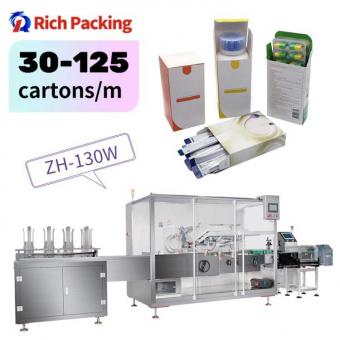
    1. Introduction The pharmaceutical industry has always maintained strict production and packaging standards worldwide, because packaging quality is directly linked to medicine safety, shelf life, and regulatory compliance. Secondary cartoning, a critical procedure after bottling, blistering, and labeling, used to rely heavily on manual operation in traditional pharmaceutical workshops. As pharmaceutical packaging moves toward full automation and intelligent upgrading, automatic cartoners have become core equipment for standardized pharmaceutical packaging lines. This guide explains the definition, classification, working flow, main strengths, selection criteria, and daily maintenance of pharmaceutical-specific cartoners, helping plant teams make more practical equipment decisions and improve overall packaging performance. 2. What Is a Pharmaceutical Cartoning Machine? 2.1 Core Definition A pharmaceutical cartoning machine is a specialized automatic secondary packaging device designed for clean pharmaceutical workshops. It automatically completes a full set of procedures, including carton feeding, carton opening, product feeding, leaflet folding and insertion, batch number coding, carton folding and sealing, detection, and finished box output without manual intervention. 2.2 Multi-industry Applicability and Design Advantages Cartoning machines are engineered for cross-industry deployment, serving pharmaceutical, food, chemical, and related packaging sectors. Their universal design balances hygiene, safety, durability, and regulatory compliance to meet different production requirements. ● Premium hygienic construction: The main body is usually made from stainless steel or carbon steel, with fewer sharp edges and sanitary dead corners. This helps resist corrosion, supports thorough cleaning, and meets hygiene demands for pharmaceuticals and food products. ● Compliance and data traceability: Integrated data recording supports batch tracking, helping manufacturers meet GMP standards, food safety requirements, and production management needs. ● Robust universal structure: Reinforced mechanical components support stable operation when packaging different products, from delicate medicines to chemical supplies. 2.3 Applicable Pharmaceutical Packaging Products This equipment covers mainstream finished pharmaceutical packaging forms, including tablet or capsule blister plates, bottles, sachets, ointments, disposable syringes, cosmetics, and other common pharmaceutical and medical supplies. 3. Main Types of Pharmaceutical Cartoning Machines According to structural layout, automation degree, and production capacity requirements, pharmaceutical cartoning machines are usually divided into several mainstream types for different production scenarios. 3.1 Vertical Cartoning Machine Vertical cartoning machines use vertical feeding and vertical carton opening structures. They have a compact footprint and a relatively simple layout. This model fits small-batch produc...
    View More
  • May 29, 2026 How to Solve Uneven Powder Filling in Capsule Production?
    1. Introduction: Real Pain Points for Pharmaceutical Factories 1.1 Common Industry Status In the pharmaceutical and health supplement manufacturing industry, capsule production occupies an irreplaceable market share due to its convenient administration, high performance sealing and stable medicine preservation characteristics. Nevertheless, countless production factories, especially small and medium-sized pharmaceutical plants and health supplement processing enterprises, are constantly troubled by a common technical problem: uneven powder filling. In many traditional capsule production workshops, manual capsule filling equipment and outdated semi-automatic capsule filling machines are still in use. These backward capsule production devices cannot achieve precise filling, resulting in obvious inconsistent capsule weight within a single production batch. In severe cases, the weight gap between individual capsules can be clearly distinguished by naked eyes. This non-standard production phenomenon is not an occasional accident, but a widespread common problem in the low-end and mid-end capsule production industry, which has been restricting the standardized development of numerous manufacturers. Powder granule pellet fill in capsules 1.2 Core Questions to Arouse Resonance For production managers and factory owners, uneven powder filling has become an intractable industrial pain point that cannot be ignored. Have you ever encountered such confusing situations in daily production? Why does the weight of finished capsules always exceed the industry deviation standard after batch production? Why do finished products frequently fail sampling inspections, leaving plenty of faulty goods to be reworked manually? Why are high-cost raw materials constantly wasted due to uncontrollable filling accuracy? These problems sound trivial, but they will bring continuous economic losses and operational risks to the factory in actual production. If these hidden dangers cannot be eliminated in time, manufacturers will fall into a vicious cycle of high cost, low efficiency and unstable quality. 2. Harm & Losses Caused by Uneven Powder Filling 2.1 Quality Risk: Fail GMP Inspection Pharmaceutical production is one of the most strictly regulated industries in the world, and all production links must comply with GMP production specifications. Uneven powder filling directly leads to unqualified weight deviation of capsules. Whether it is overweight or underweight, the finished products will not meet international pharmaceutical production standards. During regular sampling inspections by regulatory authorities, batches of capsules with unqualified filling weight will be detained directly, resulting in delayed product delivery and disrupted sales plans. In addition, long-term unstable product quality will leave adverse records in factory qualification audits. Once the audit fails, the factory will face the risk of production suspension and rectification, which will cause i...
    View More
1 2 3 4 ... 23

A total of 23 pages

Leave A Message
Leave A Message
Please tell us your requirements such as product, model, speed, etc. We will contact you immediately and give you equipment information and quotation。

Service Online

WhatsApp

Email