< img height="1" width="1" style="display:none" src="https://www.facebook.com/tr?id=860012012932429&ev=PageView&noscript=1" />
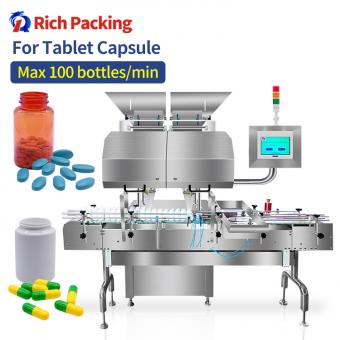
capsule counting machine
  • Jan 31, 2026 Capsule Filling Machine Working Principle: The Complete Buyer Guide (Checks + Troubleshooting)
    In pharmaceutical and nutraceutical manufacturing, capsule filling must deliver repeatable dosing and reliable closure quality at production throughput. Fully automatic hard capsule filling machines achieve this by running a fixed station sequence—orientation, cap/body separation, metering, closing, and discharge—synchronized by turret timing and control logic.   This guide explains the capsule filling machine working principle at station level, so you can see what each module controls, what conditions destabilize the cycle, and which checks (weight trend, closure consistency, reject patterns) show the run is in control.     Capsule Filling Basics in 60 Seconds (For First-Time Buyers)   What a fully automatic capsule filler does   A fully automatic cycle repeats the same operations in the same order: 1. Rectify (orient) capsules 2. Separate cap and body 3. Meter and transfer the dose 4. Close and lock 5. Discharge and reject   “Stable performance” should mean the station cycle stays consistent over time—not only that the machine reaches a headline speed.   Quick context: manual vs semi-auto vs fully automatic   Manual systems suit trials and small batches; control is largely operator-driven. Semi-automatic machines automate parts of the flow but remain interrupted and less comparable to continuous station control. This article assumes fully automatic capsule filling machines: turret-based, continuous cycles, integrated sensing, and reject logic.   Key terms (used consistently later)   ● Rectification: aligning capsules for correct entry. ● Cap/body separation: splitting using vacuum/air timing plus mechanical guidance. ● Dosing disc + tamping pins: forms a packed, repeatable metering volume before transfer. ● Dosator: uses a dosing tube/nozzle to pick up and transfer a powder charge. ● Locking integrity: consistency of cap–body engagement after closing. ● IPC: in-process checks (weight, closure, rejects) during the run.   Capsule Filling Machine Working Principle   A fully automatic capsule filler runs two flows in parallel: the capsule flow and the powder (fill) flow. When results drift, the root cause is typically separation timing, metering stability, or closing alignment—often triggered by capsule condition or powder behavior.   Capsule flow   Feed/rectify → separate → close → discharge/reject ● Rectification affects how consistently shells enter separation and dosing. ● Separation relies on mechanical support plus vacuum/air timing; partial splits and shell stress often reappear later as closing defects. ● Closing depends on alignment and cleanliness. Powder on the cap/body interface is a common cause of loose lock and leakage. ● Reject/discharge should show a stable pattern over time; a rising reject rate usually signals buildup or drift upstream.   Powder ...
    View More
  • Jan 28, 2026 Blister Packaging vs Strip Packaging: What’s the Better Choice for Modern Pharma?
    Those pop-out plastic bubbles or slim foil strips — which one actually keeps your medicine safer? Driven by stricter stability rules and wider adoption of blister and strip packs, the global unit-dose packaging market is expected to exceed USD 60 billion in the coming years. Millions of pills and capsules leave factories every day, and most of them travel in either blister packs or strip packs. You probably don’t think much about it when you grab a vitamin or a medicine, but understanding what is blister packaging in pharmacy and the differences with strip packaging can help manufacturers and patients alike choose the right blister strip or medicine strip format for safety and convenience.. In this article, we’ll explore how blister and strip packaging work, what makes each format outstanding, and how manufacturers choose the right pack and machine for smooth production.     Key Takeaways ● What blister packaging means, how it’s made and FAQs. ● What strip packaging is and how strip packs are made. ● A manufacturer-focused comparison between blister packaging and strip packaging formats. ● How to choose blister pack machines and strip pack machines and what machine features matter.   1. What Is Blister Packaging?   Ever notice the little plastic-and-foil packs for your vitamins or painkillers? Those are blister packs. Blister packaging means sealing tablets or capsules into individual cavities, usually backed with foil. It is one of the most common forms of medicine blister packaging in pharmaceuticals and nutraceuticals, designed to protect medicines from moisture, light, and contamination. Here are some facts about blister pack medication formats: ● They can be made with rigid or semi-rigid plastic, often PVC or PVDC, forming individual cavities. ● Each cavity is sealed with a foil or film to protect the medicine. ● Many medicine blister packs can be designed for single-dose use, improving patient adherence.   ➤ Blister Packaging Types   There are several blister pack types, each designed for a specific need. Manufacturers select among different types of blister pack based on product sensitivity, line speed, and patient handling requirements. Therefore, knowing the main types makes it easier to balance protection, convenience, and efficiency. 1. Formed Cavity Blisters Also known as heat-sealed blisters, these blister packaging examples use heat to shape a plastic sheet into cavities that snugly fit each tablet or capsule. This type is widely used in medicine blister packaging and capsule blister packs because it offers excellent protection against moisture and light. Typical uses: ♦ Moisture-sensitive tablets ♦ Capsules with fragile coatings ♦ Products requiring long shelf life   2. Cold-Form Blisters     Cold-form blisters use aluminum-based laminate...
    View More
  • Jan 26, 2026 Pharma & Packaging Machines: Pre-Holiday Preparation and a Safe Restart After the Break
        When a long holiday approaches, production teams usually focus on final orders, shipment deadlines, and workforce planning. Machines are often shut down quickly once production stops, with the assumption that they can simply be restarted after the break.   In reality, Long holidays are often when hidden machine problems begin — not because the equipment is running, but because it isn’t. In many packaging and pharmaceutical plants, unexpected failures after a long break are caused not by machine quality, but by improper shutdown and restart procedures.   Machines may remain idle for days or even weeks, exposed to humidity, dust, and temperature fluctuations. Without proper preparation, this idle time can lead to corrosion, contamination, mechanical degradation, and unexpected faults during restart.   Experienced engineers understand one simple principle:a smooth restart always begins with a correct shutdown.   In today’s article, we’ll show you how to properly shut down packaging and pharmaceutical machines before a long holiday, and how to restart them safely when production resumes, take our workshop as an example.   Why “Simply Turning Off the Machine” Is Not Enough   Once production stops, many teams believe the job is done.Power off, lock the door, and wait for the holiday to end.   However, as a manufacture, I can tell you that packaging and pharmaceutical machines are not designed to remain idle without preparation.   During normal production, machines operate regularly. Moving parts stay lubricated, surfaces remain dry, and operators can quickly notice abnormal conditions.   During a long holiday shutdown, however:   ● Machines stop moving for extended periods ● Factory ventilation and air conditioning may be reduced ● Humidity levels often increase   For precision equipment like tablet press and capsule filling machines, even small environmental changes can have a significant impact. Metal surfaces may oxidize, powder residue can harden, and lubricants may dry out or separate.   Many post-holiday problems—such as abnormal noise, unstable operation, sensor errors, or rusted tooling—are not caused by machine quality, but by insufficient shutdown preparation.   These issues rarely appear immediately.They often surface only after production restarts — when schedules are tight and problems become costly.   This is why experienced engineers treat long-term shutdown as a controlled process, not a pause.   Possible Problems During Long Idle Periods     When machines sit unused for days or weeks, several risks quietly build up. 1. Dust accumulates more easily 2. Residual powders may absorb moisture 3. Bare metal surfaces may oxidize 4. Lubricants may settle or dry   Moisture in the air can lead to corrosion on exposed metal parts, especially like filling zones an...
    View More
  • Jan 22, 2026 Mastering Hard Capsule Manufacturing: From Shell to Pack
    Hard capsules are popular in both pharmaceuticals and supplements because they handle a wide range of fills—powders, granules, pellets, or blends—and they scale without changing the dosage form. The challenge is that hard-capsule lines can be sensitive to small shifts. Shell condition affects opening and closing. Fill flow and blend behavior affect weight variation. Humidity, static, and feeding practice often show up quickly as rejects and downtime.   In this guide, capsule manufacturing means producing filled hard capsules using purchased empty shells. The workflow runs from shell selection and controlled handling through fill readiness, blending, hard capsule filling, in-process control, inspection, compliance and troubleshooting basics, and finally primary packaging and storage protection.     Stage 1 — Capsule Manufacturing: Shell Selection & Incoming Handling (Gelatin vs HPMC)   Shell choice sets the limits for the rest of hard capsule manufacturing. For filled hard capsules, the common decision is between gelatin and HPMC (vegetarian) shells.   A practical selection usually comes down to three points: ● Formulation sensitivity: Hygroscopic or humidity-sensitive fills raise the risk of clumping, sticking, and weight drift, so shell choice and handling matter more. ● Market requirements: Vegetarian positioning or region-driven expectations often point to HPMC. ● Cost and supply consistency: Gelatin is widely used and often more cost-effective when handling conditions are stable.   Incoming shells should be treated as a controlled material. Storage conditions during transit, batch-to-batch consistency, and how shells are staged before production can show up later as brittleness, softening, static issues, or closing problems—issues that are easy to blame on the filler but often start upstream.   Table A — Gelatin vs HPMC (Quick Comparison) Factor Gelatin Capsules HPMC Capsules Common reason to choose Cost-effective, widely used Vegetarian positioning; broad market fit Moisture sensitivity More sensitive to handling swings Often more tolerant, still needs control Typical best fit Stable powders/granules with controlled storage Hygroscopic or “tricky” fills; vegetarian requirement Typical handling risks Brittleness (too dry) or softening (too humid) Variation by grade; align performance expectations Dissolution notes Common baseline behavior Can differ by grade/formulation; verify if critical Practical takeaway Strong choice with stable handling conditions Strong choice when formulation/market needs push it     Stage 2 — Store & Condition Empty Capsules (Material Handling)   Even the right shell can fail if it’s handled poorly. In capsule manufacturing, shell conditioning is one of the fastest ways to prevent early-run rejects without changing any filler parameters. Empty hard capsules should be ...
    View More
  • Jan 16, 2026 Which Pharmaceutical Machinery Manufacturer Is Best for You? 10 Smart Checks to Find a Trusted Supplier
    Choosing a pharmaceutical machinery manufacturer sounds simple—compare specs, get quotes, pick a name you recognize. In real life, most of the pain shows up later: missed timelines, weak documentation, slow service, and “small” design gaps that turn into big validation and uptime problems. This guide is a practical way to decide who’s truly the best fit for you—whether you’re new to pharma equipment or you’ve bought plenty and just want fewer surprises. We’ll walk through 10 smart checks you can use to compare any pharma machinery supplier or pharmaceutical equipment manufacturer—from your first shortlist to FAT/SAT and long-term support. First, though, you need one thing that many teams skip.   Pharmaceutical Machinery Manufacturer Check #1: Define Your Scope (Before You Compare Anyone)   If you want clean comparisons, you need a clean scope. Otherwise, every supplier “looks good” on paper because you’re not asking the same question in the same way. Think of this step as turning a fuzzy idea (“we need a line”) into a simple, buyer-friendly URS (User Requirement Specification). It doesn’t need to be formal or scary—just specific enough that two manufacturers would give you comparable answers. What to lock down (the minimum that actually matters) ● Product & process realityDosage form (tablets, capsules, powders, granules, pellets, liquids), packaging format (blister packs, bottles, stick packs/sachets, cartons), plus material behavior (humidity-sensitive, dusty, sticky, brittle). ● Output and batch rhythmTarget packs/hour, shift pattern, batch sizes, and how often you change formats. High speed means nothing if changeovers eat the day. ● Quality and compliance destinationWhere the product will be sold and what standards you must follow (cGMP/GMP expectations, documentation depth, data requirements). This directly affects what a manufacturer must deliver—not just the machine. ● Facility constraintsFootprint, ceiling height, access paths, utilities (power, compressed air, vacuum, cooling), and cleanliness requirements. These are common deal-breakers. ● Automation level and people planDo you want “operator-friendly with guardrails” or “engineer-tuned performance”? Who will run it day-to-day, and how comfortable are they with troubleshooting? ● Timeline and integrationRequired ship date, installation window, and whether this must integrate with upstream/downstream equipment (for example, blister → cartoner, or counting → capping → labeling).   A quick scope table you can copy into your URS Scope input you define What it changes in the quote and design Dosage form + package format Machine type, tooling, sealing method, changeover parts Target output + batch sizes Drive system sizing, buffers, reject logic, OEE expectations Compliance/document needs IQ/OQ readiness, traceabil...
    View More
  • Jan 09, 2026 Tablet Counting Machine 101: How Tablet & Capsule Counting Works, Accuracy Factors, and Smart Selection
    A tablet counting machine looks like an easy station on a packaging line: solids in, numbers out, bottles filled. In real factories, “counting” is a chain—single-piece separation, clean sensing, bottle timing, and reliable rejects. If tablets or capsules arrive overlapped, burst from static, or fall into a bottle that is slightly off-position, you’ll see rechecks and spills that get blamed on “the sensor.” This article is written for manufacturing teams building or upgrading a tablet bottling line, and for beginners who want clear basics before talking to suppliers.   The real job of a tablet counter in a bottling line   On a production line, the counter is a controlled feeding-and-verification station. It must turn bulk solids into a repeatable, one-by-one stream, then synchronize that stream with bottle indexing so each bottle receives the target count without mix-ups. That’s why a unit can look perfect in a short demo yet struggle after two hours of dusty tablets, frequent stop/start, or downstream backpressure from a capper.   Most plants run some variation of the same flow: bottles arrive and index under the discharge chute; the counter releases the set quantity; downstream modules cap, seal, label, and code. What matters most is how the tablet counts machine behaves when the line is not “perfect”—when conveyors pause, when bottles are inconsistent, and when operators must clean quickly and resume without re-tuning.     Classification that actually helps buyers   Catalogs can list dozens of tablet counting machine types, but three practical distinctions predict what will work in your plant: where the unit sits, how it counts, and how difficult the product is.   First is scope: benchtop (desktop) vs production-line. Benchtop units are typically used for small batches, QC sampling, or simple workflows where operators place containers manually. Production-line counters are built for conveyors, bottle sensors, no-bottle-no-drop logic, and clean stop/start behavior at speed.   Second is sensing: photoelectric vs vision. A photoelectric tablet counting machine detects each piece as it interrupts a beam at the sensing window and is often the best value when flow is clean and products are not optically tricky. Vision systems use cameras and processing to interpret objects; this becomes valuable for clear capsules, glossy coatings, or fragment-prone products. You’ll see this sold as a vision tablet counting machine, and some designs combine controlled illumination, shielding, and software filters to reduce false triggers from reflections. When you compare a vision vs photoelectric tablet counter machine, the better question is whether your product and environment require that extra discrimination.   Third is product difficulty. A standard tablet and capsule counting machine can be excellent for tablets and hard capsules, but g...
    View More
  • Dec 31, 2025 Sachet Packaging vs Pouch Packaging vs Stick Pack: What's Different and What to Choose
    Single-serve formats are everywhere—coffee, electrolyte powders, collagen, probiotics, sauces, shampoo samples, and many nutraceutical and pharmaceutical products. But “sachet,” “pouch,” and “stick pack” are used loosely, so teams often pick a format based on appearance first and only discover the hard constraints later: seal leaks, wrinkling, unstable portion weights, or output targets that can’t be met without constant line tuning. This article clarifies the differences and gives you a practical way to choose a format that works in real production.   Clear definitions: sachet, pouch, and stick pack   A helpful starting point is flexible packaging: packages made from flexible materials (often paper, plastic film, foil, or combinations) that can change shape when filled, and commonly include bags, pouches, rollstock, wraps, and similar formats. Within that umbrella, the three terms in this title don’t sit at the same level. Sachet packaging is best treated as a “use case” category—small, usually single-serve packs that are flat, easy to tear, and simple to distribute in cartons or displays. A sachet might be a 3-side seal, 4-side seal, or a back-seal style depending on how it’s formed and sealed. Pouch packaging is broader: it can be a flat pouch, stand-up pouch, zipper pouch, spout pouch, and many other structures, often chosen for larger volumes, shelf presence, and better dispensing or reclose features. A stick pack is a specific narrow, long shape—usually a type of sachet packaging —designed for portability and controlled pouring. In everyday usage, many teams use ‘sachet’ as a catch-all term for small single-serve packs, so you’ll often hear stick packs described as sachets too.   sachet packaging    The fastest way to choose: start with your product   Most debates become easy once you focus on product behavior at the moment of filling and sealing. Powders, liquids, and granules create very different risks. Powders often decide the format. Fine powders can be dusty, static-prone, hygroscopic, or prone to bridging, which affects both dosing stability and seal cleanliness. A flat sachet is a straightforward, familiar option for powders when the pack is poured into a cup or mixed directly. Stick packs become attractive when the user needs controlled pouring into a narrow bottle opening or when the brand wants a premium “single-dose ritual.” For multi-serve use, pouches often win because one larger pack can replace many single-serve units. Liquids and gels are usually limited by seal contamination. A sticky syrup, cosmetic serum, or foaming liquid can creep into the seal zone and create microchannels that look sealed but leak after shipping. Liquids can still run well in sachet packaging or stick packs, but the format must be chosen together with filling method (pump type, anti-drip ...
    View More
  • Dec 29, 2025 ACV Capsule Manufacturing: Process, Quality Challenges, and Solutions
    ACV capsules are widely sold, but how many manufacturers can truly control quality consistency in mass production? Apple cider vinegar (ACV) has become a mainstream supplement thanks to claims about appetite control, digestion, and blood glucose support. But here’s the twist: not all ACV supplement are created equal. The ingredient, powder behavior in a factory, and the capsule-filling machines all determine whether a product is trustworthy. Imagine two brands side by side on shelf: one consistently delivers the promised dose with minimal odor and easy swallowing; the other varies batch to batch, sometimes clumps, and may leave a bitter aftertaste. Which one would you trust? Therefore, this passage will explore ACV capsule production, reveal the common challenges and provide some advice on quality control.     Key Takeaways   ● ACV basics and benefits ● What “good quality” means from a consumer and manufacturer perspective ● Common production challenges ● Practical solutions at the machine and process level ● How Rich Packing ensures reliable production   1. ACV Basics: From Apple to Capsule   ➤ What is ACV? Apple cider vinegar is produced by fermenting apple juice into alcohol and then into acetic acid. Household ACV usually contains 4–7% acetic acid and sometimes a mixture of enzymes, pectin by-products. In supplements, ACV is commonly processed into spray-dried powder or concentrated extract, making it easier to fill into capsules or tablets. The powdered form allows for precise dosage and stable shelf life, which is essential for nutraceutical manufacturers.   ➤ Benefits You Can Expect Scientific studies suggest ACV can support metabolic health in small but measurable ways: Weight management: several randomized trials found that daily ACV for weight loss intake produced statistically significant reductions in body weight and BMI in overweight or type-2 diabetic adults. Post-meal blood glucose control: Research indicates that ACV intake around mealtime can moderate post-meal blood sugar spikes by slowing gastric emptying and carbohydrate digestion, resulting in a more stable glucose release. Lipids: Minor improvements in fasting blood fat and cholesterol after regular ACV use, although evidence here is less sufficient than for glucose and weight outcomes. ◆ Important Note: ACV is a supportive dietary tool, not a medicine. Benefits are modest and cumulative, best combined with a healthy diet, and excessive long-term intake may cause side effects such as low potassium or enamel erosion.   ➤ ACV Supplement Forms     Commercially, ACV comes as: Liquid: strong taste, risk of throat irritation, must be refrigerated. Powder/stick packs: portable, mixable, but moisture-sensitive. Gummies: ACV gummies are tasty but harder to dose precisely. Capsules/tablets: usually handled as powder with accurat...
    View More
  • Dec 25, 2025 The Ultimate Tablet Press Machine Buying Guide: Types, Working Principle & 10 Critical Specs
    Introduction: What This Guide Helps You Decide   A tablet press machine compresses powder or granules into tablets in pharmaceutical nutraceutical and food industries. The right choice should not be determined solely by the highest listed maximum speed. The practical questions are: Can it hold tablet weight and hardness at your target output? Can it avoid common defects at speed? Can your team clean and change tooling fast enough to keep OEE high?   This guide is built for that reality. You’ll first compare the main types (including rotary tablet press models used for continuous production), then learn the working principle so terms like pre-compression, compression force, and dwell time are clear. Finally, you’ll use a short list of 10 critical specs to compare machines and suppliers in a way that matches real production—especially punches and dies (tooling) and changeover time, which often decide the long-term cost and daily performance.     What Is a Tablet Press Machine? (Key Parts and What They Do)   A tablet press machine forms tablets by compressing a measured amount of material inside a die. You may also see “tablet compression machine,” “pill pressing machine,” or “tableting machine.” In most buying contexts, these labels refer to the same core function.   In production, the most common design is a rotary tablet press. A rotating turret holds multiple stations, and each station repeats the same cycle: fill the die, compress the powder, then eject the tablet.   The parts that most affect stability and ease of operation are simple: ● Hopper and feeder: moves powder into the dies and influences how stable filling is at speed. ● Turret and dies: define the die path and tablet size capability. ● Punches and dies: tooling that shapes the tablet and strongly affects defects, wear, and ejection behavior. ● Pre-compression and main compression: staged compression that controls air release and final hardness. ● Ejection and take-off: removes tablets without chipping, sticking, or build-up. ● Dust extraction/containment: keeps the press stable, reduces build-up around tooling, and supports consistent operation.   Keep one principle in mind: you are buying repeatability, not just “ability to press.” Repeatability is what separates a machine that runs smoothly from one that needs constant adjustment.   Types of Tablet Press Machine   Rotary tablet presses (multi-station) run continuously and deliver much higher output. More importantly, once tuned, they typically hold weight and hardness more steadily at production speed. For commercial production, a rotary design is the default choice.   Within rotary presses, the “type” you’re really choosing is the configuration. Does the machine have a real pre-compression stage? Does it use gravity feeding or a force feeder? What tablet size and shapes can it support with ava...
    View More
1 ... 3 4 5 6 7 ... 22

A total of 22 pages

Leave A Message
Leave A Message
Please tell us your requirements such as product, model, speed, etc. We will contact you immediately and give you equipment information and quotation。

Service Online

WhatsApp

Email