< img height="1" width="1" style="display:none" src="https://www.facebook.com/tr?id=860012012932429&ev=PageView&noscript=1" />
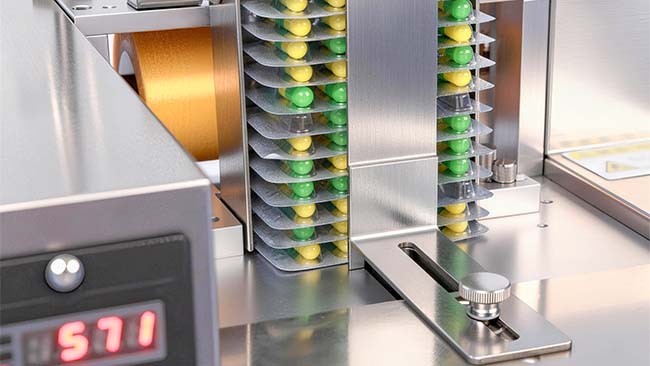
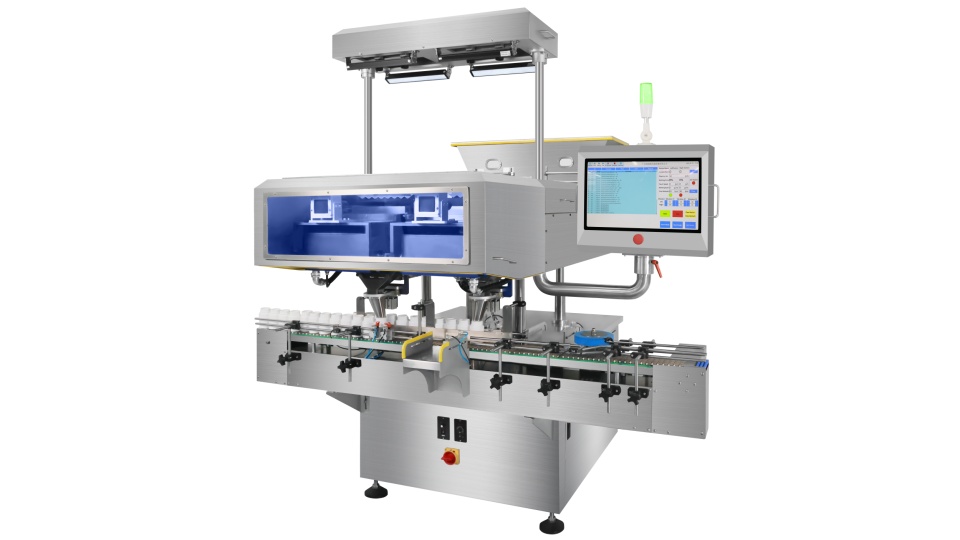
capsule counting machine
  • May 08, 2026 Deblistering Machine Guide: Recover Products from Rejected Blister Packs
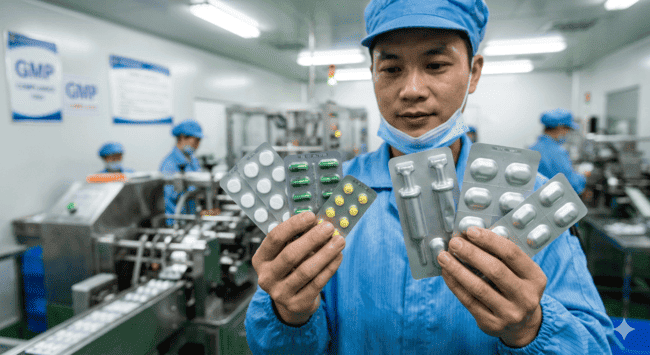
    Blister packaging lines can produce rejected blister packs during sealing checks, printing changes, batch setup, product feeding issues, or changeover. If the product inside is still acceptable under the manufacturer’s quality rules, throwing away the full pack wastes material, labor, and finished tablets, capsules, softgels, candies, or similar solid-dose products.   A deblistering machine separates usable products from rejected blister packs. It helps recover products from aluminum-plastic or aluminum-aluminum blister cards while keeping waste packaging separate from the recovered material.   This guide focuses on deblistering for pharmaceutical, nutraceutical, candy, and similar solid-dose blister products. The purpose is not to replace quality control or release procedures. The purpose is to explain where deblistering fits, how it works, and what buyers should check before choosing equipment for blister pack recovery.     What Is a Deblistering Machine?   A deblistering machine is auxiliary equipment used to remove products from blister packs. It is commonly used when tablets, capsules, softgels, candies, or similar solid-dose products need to be recovered from rejected blister cards.   It is different from a blister packaging machine. A blister packaging machine forms cavities, fills products, seals the lidding material, and cuts finished blister cards. A deblistering machine works in the opposite direction. It separates the product from the finished or rejected blister pack so the product and waste packaging can be handled separately. Typical use cases include: ● rejected blister packs from sealing, printing, or feeding problems; ● setup or changeover packs that cannot be sold; ● QC sampling or controlled recovery work; ● recovery of high-value products where manual removal is slow or risky.   For buyers, the main value is not only speed. A good deblistering process should reduce product damage, separate waste cleanly, fit the blister format, and support safe handling before the next approved step.   Why Rejected Blister Packs Need Product Recovery   Rejected blister packs are common in production. A blister card may fail because of poor sealing, wrong batch printing, missing products, damaged cavities, or setup waste during changeover. In some cases, the product inside remains usable, but the pack itself cannot be released.   Manual recovery may work for a few cards, but it becomes slow and inconsistent when the volume increases. Operators may press products out by hand, which can damage tablets, deform capsules, or create handling risks. Manual work also makes it harder to separate products and waste packaging cleanly.   A deblistering machine helps recover products from rejected blister cards while keeping the discarded packaging separate. This is especially useful when the products are high-value, fragile, or produced in repeated batches.   The main reasons comp...
    View More
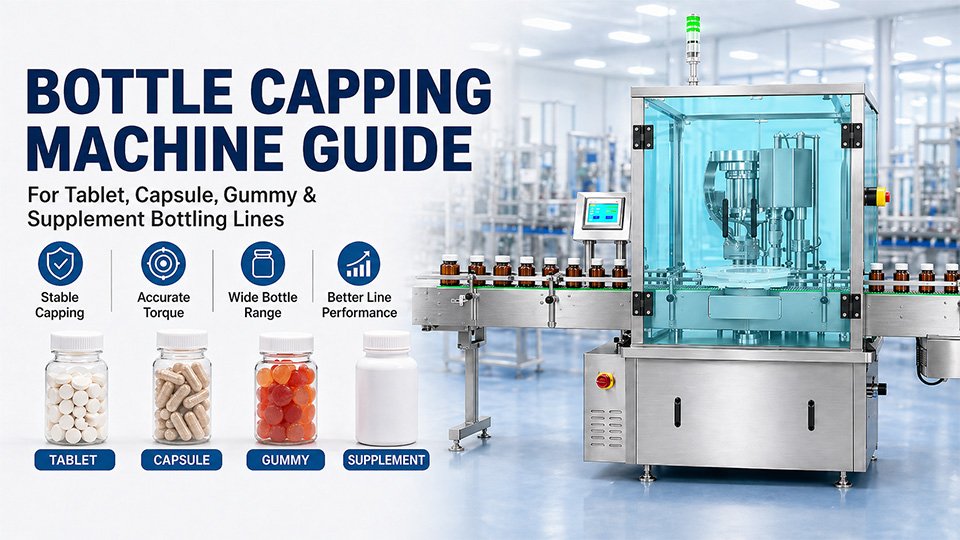
  • Apr 29, 2026 Bottle Capping Machine: The Complete Guide for Tablet, Capsule & Gummy Bottling Lines
    A bottle capping machine is used across many packaging lines, including food, beverages, cosmetics, chemicals, supplements, and pharmaceuticals. Its job is to place and tighten caps so bottles can move safely to sealing, labeling, cartoning, or shipping.   This guide focuses on a narrower but common application: tablet, capsule, gummy, and supplement automatic counting bottling lines. In these lines, the capping machine usually works after counting or filling and before induction sealing, labeling, and cartoning.     Capping quality affects line stability. A loose cap may cause sealing problems. An over-tight cap can damage the bottle thread or make the bottle difficult to open. An unstable cap feeder can slow the line even when the counting section is running well.   For buyers, the key point is clear: a bottle capping machine should match the bottle, cap type, output target, torque range, and downstream equipment.     What Is a Bottle Capping Machine?   A bottle capping machine is packaging equipment that places, tightens, presses, or secures caps onto bottles. It is used after tablets, capsules, gummies, softgels, powders, liquids, or other products have already entered the container.   In the tablet, capsule, gummy, and supplement bottle range covered here, the machine usually sits after counting or filling. The bottle moves into the capping area, a cap feeder delivers the cap in the correct direction, and the capping head applies the cap to the bottle mouth.   Its core job is to close each bottle consistently. For that to happen, several actions must stay stable: ● the bottle should enter the capping station without shaking or tilting; ● the cap should be correctly oriented before placement; ● the capping head should apply suitable pressure or torque.   For screw-cap bottles, torque control is especially important. If the cap is too loose, the bottle may fail later sealing checks or become less stable during handling. If the cap is too tight, the cap thread or bottle neck may be damaged, and the user may find the bottle difficult to open.   In many tablet, capsule, and gummy bottling lines, capping also affects the next process. If an induction seal liner is used, the cap helps hold the liner against the bottle mouth before induction sealing. Poor cap placement or uneven tightening can make the sealing step less reliable.   The capper can work as a standalone unit, but in most production settings it is part of a connected line. A typical line may include bottle unscrambling, tablet counting machine or capsule counting machine, gummy counting machine, desiccant inserting, capping, induction sealing, labeling, and cartoning.   So, the capper is not only a closing device. It is one of the stations that keeps the bottle packaging line moving from counted product to sealed, labeled, and finished bottle.     Bottle Capping Machine in a Bottling Line   In...
    View More

  • Apr 27, 2026 2026 Startup Blister Packaging Guide:DPP vs DPH
        Introduction   In the quickly evolving pharmaceutical and nutraceutical environment of 2026, agility has become the ultimate competitive advantage for startups. For many founders, the journey from a successful R&D formula to a market-ready product is fraught with logistics hurdles. The most critical pivot point? Transitioning from manual processes to an automatic blister packing machine.   However, the "Scaling Trap" is real. Many emerging brands invest heavily in equipment based on price alone, only to find that their machinery cannot adapt to new cleanroom constraints or diverse product formats. In 2026, a high-quality blister packing machine is no longer just a production tool—it is a strategic asset that must balance GMP compliance, factory footprint, and operational efficiency from the initial tablet compression to the final cartoning stage.   One of the most significant shifts in industry standards this year is the move away from vague "rated output" towards cutting frequency as the primary metric for reliability and tool metallurgy for consumer safety. Whether you are scaling up your first tablet press machine output or launching a niche capsule line, understanding the mechanical heartbeat of your packaging system is essential to avoiding costly downtime.   As noted in recent operational benchmarks (Rich Packing 2026), the choice between DPP (Flat-plate) and DPH (Rotary) technology often dictates a startup's ability to remain profitable while minimizing material waste. In this guide, we will explore how to navigate these technical waters—from solving the "narrow elevator" dilemma with modular split-body designs to achieving surgical precision with DC53 tooling and optimizing your long-term ROI through advanced seamless line integration.   The Architectural Crossroads: Flat-Plate (DPP) vs. Rotary (DPH)     Before diving into specific models, every startup founder must understand the fundamental mechanical divergence in blister packing machine technology. In 2026, the choice is about matching the machine's "motion logic" to your product's DNA. At Rich Packing, we categorize these into two distinct technological paths:   I. The Flat-Plate Logic (DPP Series): Intermittent Precision   The DPP series operates on an intermittent motion principle. Imagine a "stop-and-go" rhythm: the film moves, stops for forming, moves, stops for sealing, and moves again for cutting. The Advantage: Because the film is stationary during the sealing process (Area Sealing), it provides a larger "dwell time" and uniform pressure. Best For: Complex blister shapes, deep-draw packaging (like syringes or large capsules), and liquid filling where stability is paramount to prevent splashing.   II. The Rotary Logic (DPH Series): Continuous Velocity   The DPH series operates on a continuous motion principle. There is no stopping. The film and foil pass between two synchronized, heat...
    View More
  • Apr 22, 2026 Tablet Deduster Machine: Why Dust Removal Matters for Bottling and Blister Packaging
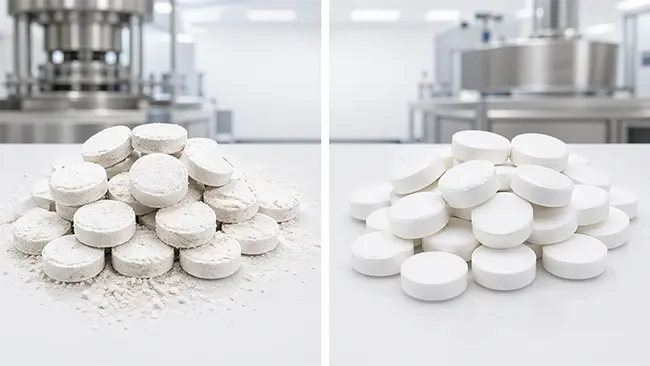
    Introduction   A tablet deduster machine removes loose powder and burrs from tablets after compression and before downstream handling. Residual dust can enter the packaging area, build up on contact parts, and affect packaging consistency. In tablet bottling lines, excess powder can interfere with counting accuracy, container cleanliness, and cap sealing conditions. In blister lines, it can affect sealing surfaces and increase the risk of packaging defects.   Tablet dedusting belongs to process control, not just product appearance. Cleaner tablets usually move through the next stage with fewer contamination-related interruptions, and the packaging area stays easier to control. In both bottling and blister packaging, dust removal helps support more stable handling after compression.     What Does a Tablet Deduster Machine Do?   A tablet deduster machine cleans tablets after they leave the tablet press by removing loose surface powder and small burrs created during compression. Most machines do this through vibration, gentle conveying, and dust extraction, so the tablets can move forward with less surface residue and less loose particulate entering the rest of the line.   Its role becomes clearer when the next process is packaging. Dust does not remain limited to the tablet surface. It can spread into guides, contact zones, sensors, sealing areas, and other parts of the line. Once that happens, the effect is no longer limited to product appearance. It can show up as line contamination, added cleaning work, unstable handling, or packaging defects.   This is why the machine is usually placed as a practical bridge between compression and downstream processing. Tablets leave the press, pass through dust removal, and then move to the next stage in a cleaner condition. In a bottling route, that supports more controlled transfer into counting and filling. In a blister route, it helps reduce powder carryover before sealing and final pack formation.     Why Do Tablets Need Dust Removal After Compression?   Tablet compression naturally creates some loose powder. Even when a formulation runs well, tablets can leave the press with fine dust on the surface, around the edges, or near embossed areas. Small burrs may also appear, especially when tooling condition, compression force, granule flow, or formulation behavior is not fully balanced.   That residue becomes a bigger issue once tablets move beyond the press. Dust can collect on transfer parts, fall into guide rails, and spread into the next machine. A light layer of powder at the press outlet can become a larger cleaning and process-control problem later in the line.   Dust removal also separates two questions that are often mixed together. One is tablet appearance. The other is packaging performance. A tablet may still look acceptable while carrying enough surface powder to create trouble during counting, filling, sealing, or inspection....
    View More
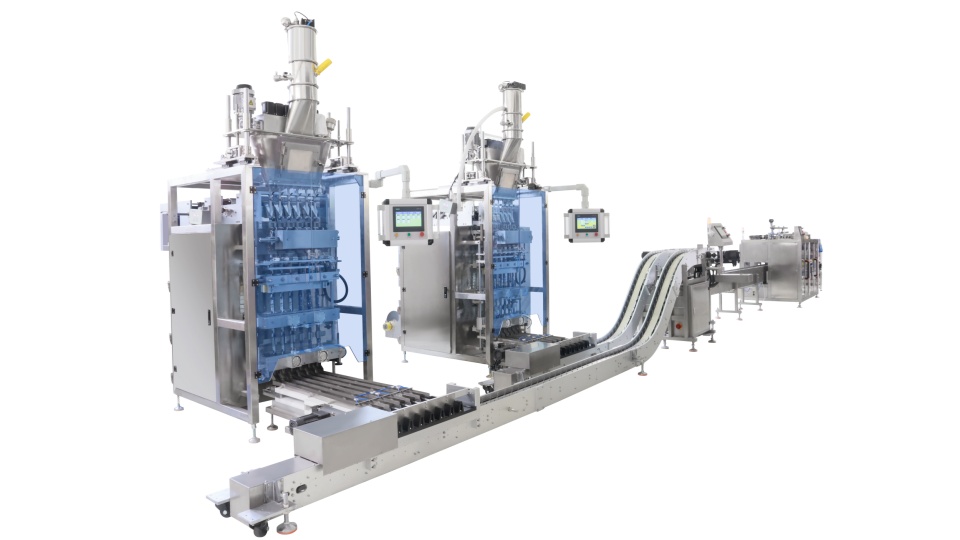
  • Apr 16, 2026 Stick Pack Machine Explained: Your Ultimate Solution for Stick Pack Packaging Machine
    Intro   Struggling with slow manual packaging, inconsistent dosing and high material waste that reduce your profitability? For pharmaceutical, supplement, coffee and cosmetic businesses, hygienic single-serve packaging is in strong demand. To scale your production, you need a high-performance stick pack machine or sachet packing machine.   What makes stick pack and sachet packet so popular worldwide?   Stick packs and sachet packets are the top choice for modern consumers: portable, easy to tear, and perfect for on-the-go use. For manufacturers, they bring a wide range of key advantages: ● Lower material costs: Reduce packaging expenses by 30-40% compared to traditional bottles and jars, greatly cutting operating costs. ● Precise dosing: Eliminate product waste and meet strict compliance standards in pharmaceuticals, nutraceutical products, and other regulated industries. ● Enhanced brand exposure: Support full-custom printing on packaging film, turning every single package into a mobile advertising medium. ● Wide compatibility: Work seamlessly with powder, liquids, granules, gels and more, covering nearly all industry requirements.     Fig 1. Rich Packing Stick Pack Packaging   1 What is a Stick Pack and Sachet Packet?   1.1 The Definition of Stick Pack and Sachet Packet A Stick Pack is a narrow, elongated single-serve package, while a Sachet Packet is a small, flexible, usually a rectangular or square package specially designed for powders, granules, liquids, and pastes. If offers three core advantages: portability, hygiene, and precise dosing, along with easy-tearing, and convenient carrying. Widely used in pharmaceuticals, nutraceuticals, food, beverages, and cosmetics, stick packs and sachet packets are among the fastest-growing small packaging formats worldwide.   1.2 The Applications of Stick Packs and Sachet Packets From daily necessities to personal care, stick packs and sachet packets are compact, convenient and indispensable in modern life. Instant coffee stick packs for a quick and refreshing morning boost, and many customers are asking for 3-in-1 instant coffee mix stick pack packaging machines or 2-in-1 instant coffee mix stick pack packaging machines;   Milk tea powder and protein powder sachet packets for enjoyable leisure time; Health supplement stick packs including probiotics, vitamin C and collagen, offering precise dosing for better wellness, hence a lot of enterprises start to use food supplement powder stick pack packaging machines;   Pharmaceutical granule stick packs that are portable and accurate for both home and travel use, as a result, pharmaceutical powder sachet packaging machines are in high demand; Condiment stick packs such as salt, sugar and chili powder for clean and easy seasoning; Facial mask sample stick packs that are lightweight and ideal for on-the-go skincare. The st...
    View More
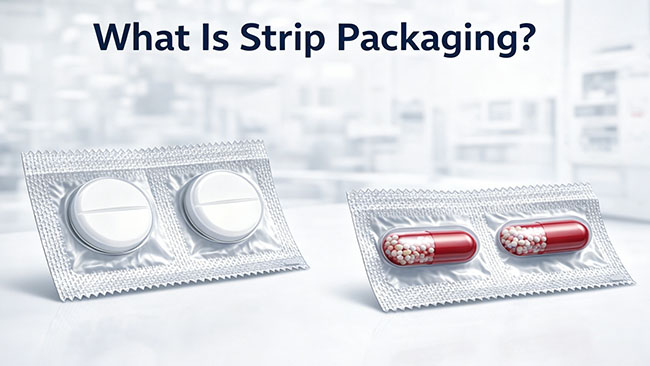
  • Apr 14, 2026 What Is Strip Packaging in Pharma? A Clear Guide to Uses, Materials, and Machines
    Introduction   Strip packaging operates as a unit-dose packaging solution, with primary applications for solid oral doses like tablets and capsules. Instead of placing the product in a formed cavity, it seals each dose between two layers of flexible packaging material, often foil or laminate. This structure gives the format a clear role in pharmaceutical packaging, especially when barrier protection, compact pack size, and dose separation matter. It is not the right choice for every product. Blister packaging often offers better visibility and a more defined cavity-based presentation. Even so, strip packs remain important because they can protect moisture-sensitive products, support dose-level handling, and fit certain packaging routes well. To judge where they fit, it helps to start with the format itself before moving on to materials, comparisons, or machine selection.     What Is Strip Packaging?   In pharmaceutical packaging, the strip packaging process encloses tablets or capsules by bonding them directly between two webs of flexible material. Each dose is enclosed within the sealed area rather than placed inside a pre-shaped pocket. In many pharmaceutical applications, the material is foil-based or laminate-based so the pack can help protect the product from moisture, light, and outside contamination. Compared with blister packaging, the difference is straightforward. A blister pack usually uses a formed cavity to hold the tablet or capsule before lidding material is sealed over it. Strip packaging does not rely on a preformed cavity. The product sits between two webs, and the seal is made around it. That structural difference affects both packaging performance and line design. The format is commonly used when compact unit-dose presentation, barrier protection, and simple separation between doses are important. It is often associated with tablets and capsules where product protection and practical handling matter more than product visibility through the pack. Strip packs are useful, but they are not a universal replacement for blister packs. Like any packaging route, their value depends on the product, the barrier requirement, and the downstream packaging plan.   How Does Strip Packaging Work?   A strip pack line usually begins with a lower web of packaging material moving through the machine. Tablets or capsules are fed onto that web at a controlled pitch. A top web then covers the product, and the machine applies heat and pressure to seal the two materials together around each dose. After sealing, the line cuts or perforates the web into single-dose packs or short strips. Many systems also add batch coding or other printed information before discharge. The key point is simple: the package is created by sealing around the product, not by forming a cavity first. That is why strip packs look flatter than blister packs and why material choice matters so much. If the web does not seal consistently, ...
    View More
  • Apr 13, 2026 Tablet Counting Machine Purchasing in 2026 - Key Factors for Buying a Capsule Tablet Counting Machine
    Intro Tablet Counting Machine and Capsule Counting Machine are the core counting devices for pharmaceutical, health product and food processing production lines, directly shaping product quality and compliance. As a critical equipment in pharmacy tablet counting machine and capsule counting machine applications, tablet counter machine plays an irreplaceable role in ensuring production efficiency and regulatory compliance. In 2026, tighter industry oversight and smart technological advancements have transformed purchasing decisions. Enterprises look for counting machines no longer settle for basic counting functions, but prioritize pharmcy tablet counting machine accuracy, regulatory compliance and smart performance - key indicators of high-quality tablet counting machines. Below we dive into the most crucial factors enterprises focus on when buying a pharmacy tablet counting machine or capsule counting machine.   1. High Precision and Stable Tablet Counting Machine Performance: Top Priority for Purchasers 1.1 Tablet Counter Machine Precision as Primary Procurement Indicator 89.7% of pharmaceutical enterprises rank long-term and stable counting accuracy as the top priority when purchasing a tablet counting machine / capsule counting machine according to the 2025 survey by the China Pharmaceutical Industry Information Center. Purchasing decisions have been shifted from single performance pursuit to a comprehensive evaluation system focusing on tablet counter machine reliability and long-term durability.   1.2 Core Value of a Tablet Counting Machine Tablet Counter Machine accuracy and operational stability are the key factors for customers to choose an automatic tablet counting equipment, and also the core value. Laboratory ideal data is no longer enough for production. Customers pay more attention to the auto tablet counting machine’s accuracy stability in long-term continuous operation under high dust, high humidity and other complex working conditions. With over ten years of experience, Rich Packing ‘s counting machines are designed to maintain stable accuracy above 99.99%, even in harsh environment, meeting the strict requirements for supplement counting, automatic tablet counting machine, capsule counting machine and various high-standard counting production scenarios.   1.3 Rejection System of an Automatic Tablet Counting Machine For pharmaceutical applications, zero missing grains and zero extra grains are mandatory standards. The built-in automatic rejection module of the tablet counting machines can accurately remove broken grains and foreign objects, reducing quality risks.   Anti-bridging, anti-jamming and anti-static designs are standard, and the no-count without bottle function is added to adapt to tablet counter machine, capsule counting machine and machines of other materials, eliminating m...
    View More
  • Apr 09, 2026 Continuous Manufacturing in Pharma: What It Really Changes in Production and Packaging
    Introduction   In continuous manufacturing, materials move through connected production steps in a steadier flow, rather than being made in clearly separated batches. In a batch setup, material gets processed, held, and transferred between stages. In a continuous setup, those stages link up more closely. That means the whole line depends on stable flow from one step to the next.   This change affects more than just speed. It also changes how operations stay balanced, and how downstream tasks like inspection, buffering, and packaging need to match upstream output. For oral solid dosage manufacturing, it’s better to think of continuous manufacturing as a different production structure, not just running machines longer.     What Continuous Manufacturing in Pharma Means   Think of continuous manufacturing as a production model built around connected flow. Materials move through linked unit operations with fewer breaks between major stages. Instead of treating each stage as a mostly independent block, the line is arranged so each step feeds more directly into the next.   In batch production, material often sits between stages. Those pauses give you separation between operations. In continuous production, that separation shrinks. Feeding, blending, granulation, drying, milling, and tablet compression need to work more like parts of one coordinated system. The goal shifts from finishing one isolated step and transferring material later, to keeping material flow stable enough for the whole line to stay in balance.   This model puts more weight on consistency. Stable feeding, coordination between operations, and output rhythm all matter more. If one part of the line becomes unstable, the effect reaches later steps faster—because the process is more tightly linked than in batch production. So continuous manufacturing changes production logic before it changes any single machine.   That’s why this topic naturally extends to packaging. A more connected upstream process changes what downstream equipment has to handle. Tablet compression output, inspection timing, buffer capacity, and packaging-line matching become easier or harder depending on how steady the upstream flow is. Once you get the production concept clear, the packaging discussion becomes much easier to follow.   How Is Continuous Manufacturing Different from Batch Manufacturing?   The main difference isn’t that one model is old and the other is new. It’s how the process is structured. Batch manufacturing splits production into separate stages with stops, transfers, and intermediate hold points. Continuous manufacturing reduces those breaks and treats the line more like one connected train.   That structural difference changes what operators and engineers focus on. In batch production, you can often fix one step before the next stage starts. In a continuous line, upstream variation moves forward much fas...
    View More
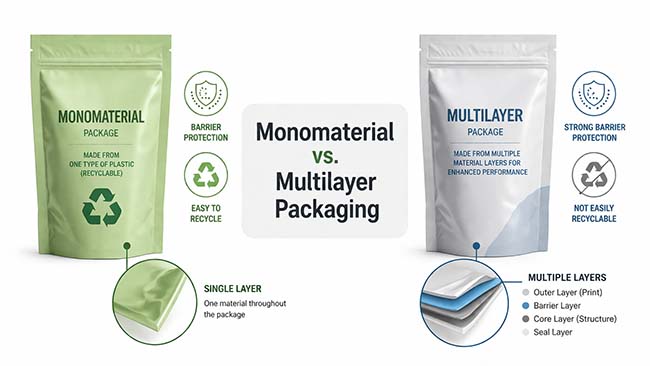
  • Apr 05, 2026 Monomaterial Packaging vs. Multilayer Packaging: What to Compare Before You Choose
    Packaging decisions now carry more pressure than before. A pack has to protect the product, support shelf life, control cost, fit the market, and respond to growing expectations around recyclability. That is why Monomaterial Packaging vs. Multilayer Packaging has become a common discussion across packaging development, sourcing, and production teams. A monomaterial structure is often easier to explain and easier to connect with material simplification goals. A multilayer structure is often kept because it can combine barrier performance, sealability, stiffness, appearance, and process stability in one pack. Neither route is automatically better. The better choice depends on the product, the protection target, the market, and the production conditions.     Why Monomaterial Packaging Is Getting More Attention   Monomaterial packaging is receiving more attention because packaging teams are being pushed to reduce structural complexity. A pack built mainly from one material family is easier to describe in recyclability discussions than a structure made from several functional layers. That gives brand teams a clearer sustainability message and makes it easier to align packaging development with design-for-recycling goals. Another reason is that more packaging projects now begin with a simplification question. Instead of assuming that a multilayer structure is the default answer, teams increasingly ask whether a less complex construction can still do the same job. That shift does not guarantee a switch, but it changes the starting point. Monomaterial packaging enters the discussion earlier, and in more categories, than it did a few years ago. A simpler structure also carries an internal advantage. Non-technical stakeholders can understand it more easily. When a company wants to show progress on reducing material complexity, a monomaterial pack is easier to present than a pack built from several layers with separate roles. That communication value does not settle the technical question, but it helps explain why interest has spread beyond sustainability teams into procurement, development, and management discussions.   Why Multilayer Packaging Is Still Widely Used   Multilayer packaging remains common because it solves several packaging problems at once. One layer may support barrier protection, another sealability, another stiffness, puncture resistance, print quality, or appearance. That combined performance is often harder to match with a simpler structure when the application is more demanding. This matters most when moisture, oxygen, light, or aroma control is critical. In those situations, the structure is not chosen only because of material preference. It is chosen because the product has to remain stable during storage, transport, retail handling, and normal use. A less complex pack may still fail if it cannot hold the same protection level long enough. Shelf-life targets keep many multilayer formats in place for the ...
    View More
1 ... 4 5 6 7 8 ... 25

A total of 25 pages

Leave A Message
Leave A Message
Please tell us your requirements such as product, model, speed, etc. We will contact you immediately and give you equipment information and quotation。

Service Online

WhatsApp

Email