






 Home
Home Products
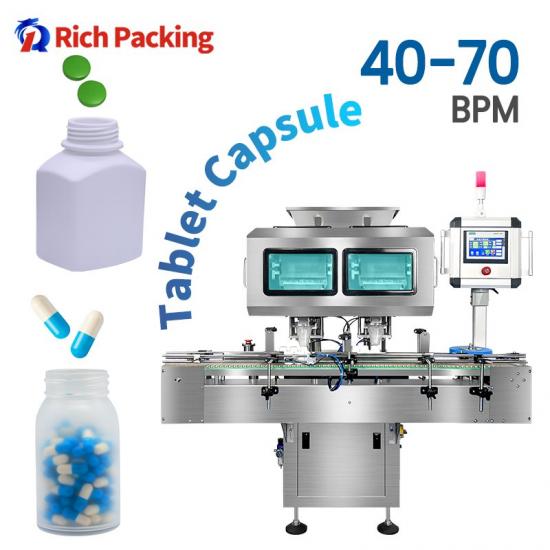





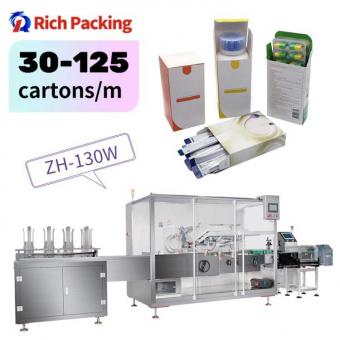
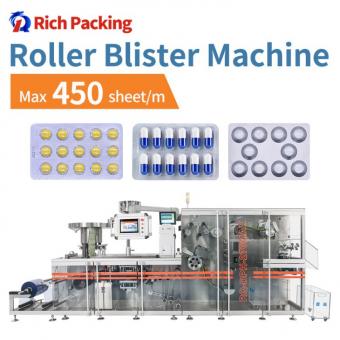
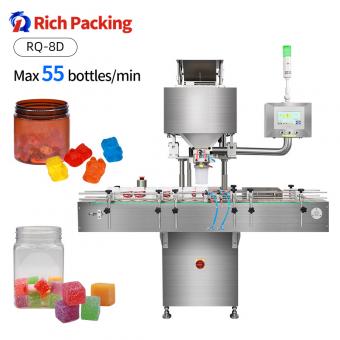
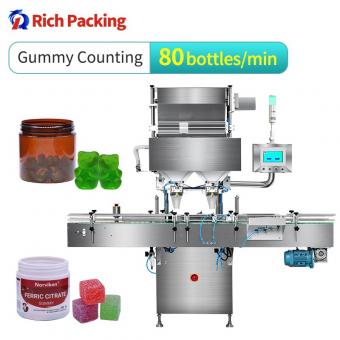


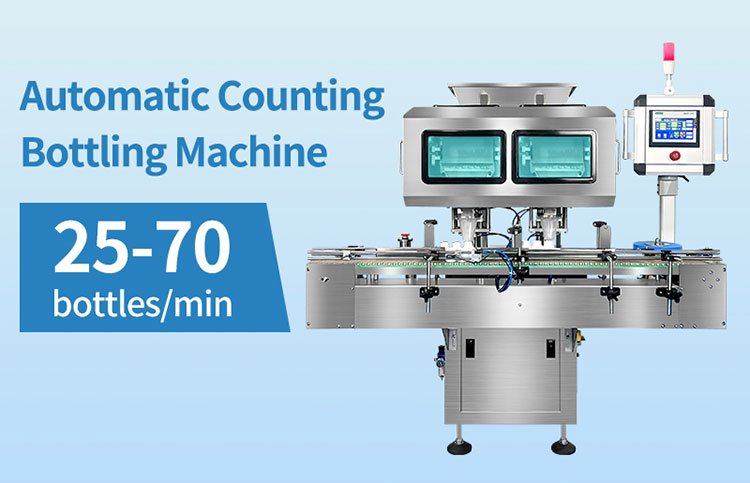
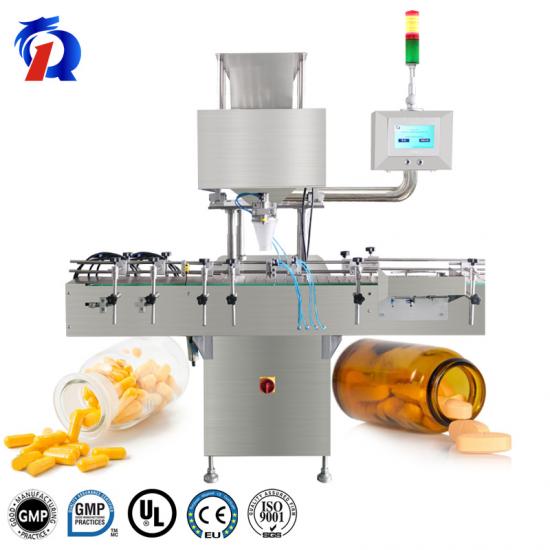
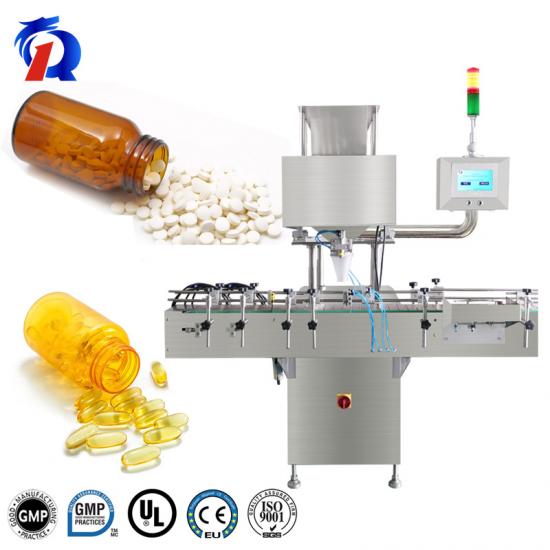
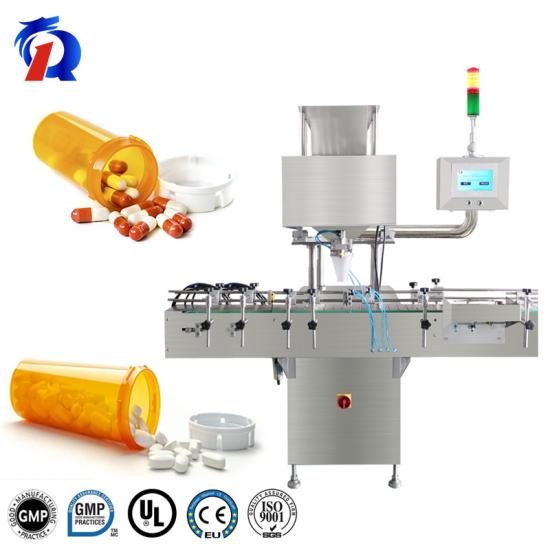
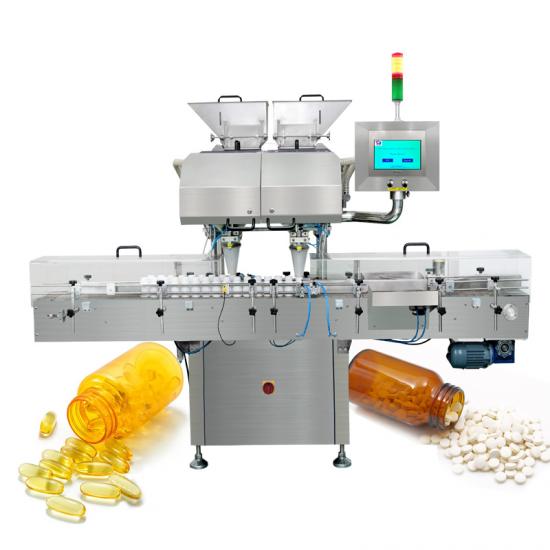
RQ-16C Capsule Tablet Counting Machine








*** Technical parameter
|
Production capacity |
Max 70 bottles/min |
|
accuracy rate |
>99.8% |
|
Applicable target |
Tablet Capsule Gummy |
|
Applicable bottle type |
10-500ml round, square bottle |
|
voltage |
380/220V 50Hz |
|
power |
1.2KW |
|
pressure |
0.6Mpa |
|
gas consumption |
36~45L/min |
|
weight |
550kg |
|
Outline dim.(mm) |
1600×1650×1500mm |
Want to know about this product?
SEND A MESSAGE
Something isn’t Clear?
Feel free to contact me, and I will be more than happy to answer all of your questions.
Capsule Tablet Counting Machine: 5 Powerful Upgrades to Eliminate Costly Packaging Errors
Introduction: The High Cost of the "Acceptable" Error Margin
In the highly regulated ecosystem of pharmaceutical and nutraceutical manufacturing, the packaging line is the final guardian of product integrity. At the center of this critical stage sits a piece of equipment where absolute precision is non-negotiable: the tablets and capsule counting machine. Even a fraction of a percent in counting discrepancy can trigger severe consequences, ranging from regulatory compliance fines and expensive product recalls to the erosion of consumer trust.
Historically, facility managers have had to accept a certain degree of "sensor fatigue." Many standard machines perform flawlessly during a 20-minute factory acceptance test but begin to lose accuracy deep into an 8-hour shift due to heat generation, microscopic dust accumulation, and mechanical vibration.
To confront and resolve these persistent industry bottlenecks, Rich Packing introduces the highly engineered RQ-16C. This comprehensive technical guide provides a deep dive into the scientific principles, operational workflow, and customer-driven upgrades of the RQ-16C capsule tablet counting machine.
Part 1: Defining the Purpose of the RQ-16C
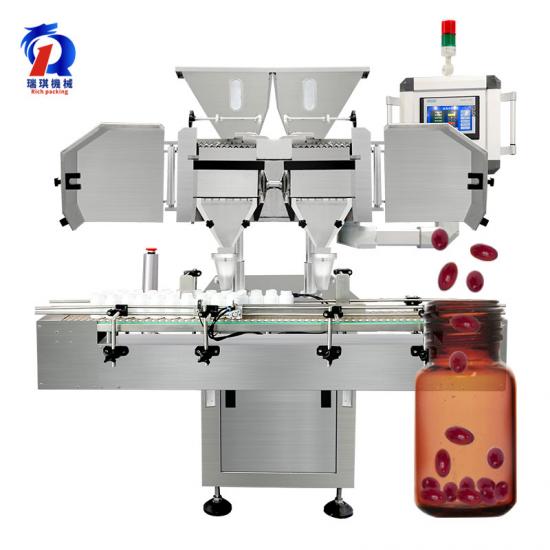
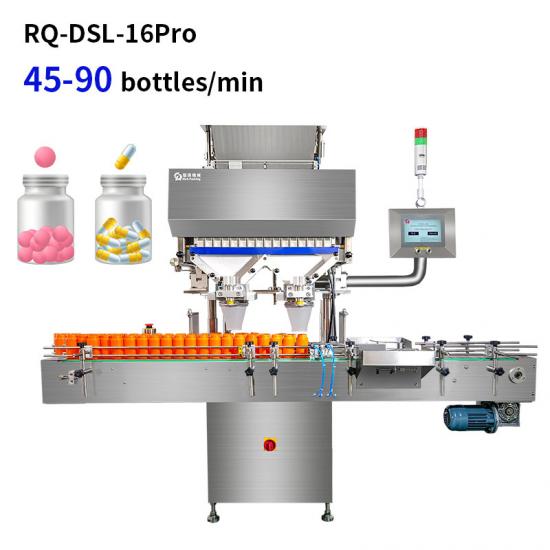
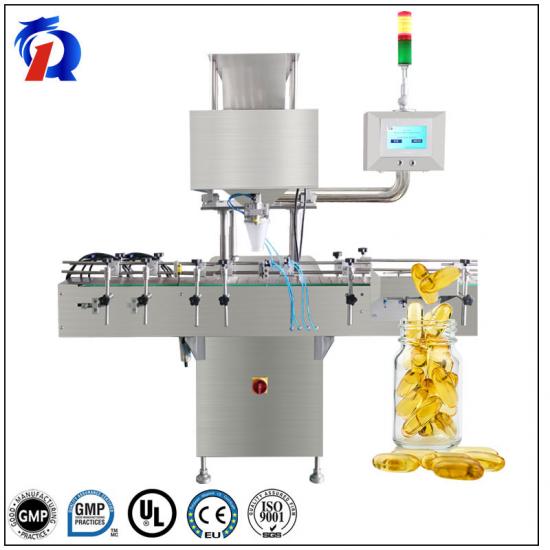
The RQ-16C capsule tablet counting machine is an advanced, fully automated multi-channel photoelectric detection system. Its primary industrial purpose is to rapidly separate, individually count, and precisely dispense solid dosage forms into rigid packaging (bottles, jars, or vials).
Unlike legacy mechanical template counters that force manufacturers to buy and swap expensive counting plates for every different pill size, the RQ-16C relies on a highly sophisticated photoelectric scanning matrix. This makes it an incredibly versatile capsule counting filling machine, capable of adapting to almost any product geometry through simple software adjustments.
Key Formats Handled by the RQ-16C:
● Hard Gelatin & HPMC Capsules: Reliably handles all standard sizes from #000 down to #5.
● Tablets & Caplets: Processes coated, uncoated, effervescent, and irregularly shaped tablets without jamming.
● Softgels & Gummies: Excels as a soft capsule counting machine for sticky, translucent omega-3 oils or gummy vitamins, utilizing specialized corrugated vibration tracks that prevent adhesion.
Operating as the intelligent core of a complete tablet bottle filling machine line, the RQ-16C acts as the ultimate quality control gatekeeper, guaranteeing that every single bottle leaving your facility matches its label claim perfectly.
Part 2: The Scientific Workflow: Physics in Motion
To understand why the RQ-16C capsule tablet counting machine achieves superior precision, one must look at the physics of its internal workflow. The process is a meticulously synchronized operation involving electromagnetics, optics, and pneumatics.
Step 1: Three-Stage Electromagnetic Separation
Bulk product dumped into the main hopper cannot be counted accurately if it is clumped together. The machine uses a 3-stage electromagnetic oscillation profile to decouple the materials.
1. Primary Staging: The bulk load is gently vibrated out of the hopper onto the initial plate.
2. Linear Alignment: As the frequency shifts, the chaotic pile is forced to align into single-file rows along 16 independent tracks.
3. Gap Generation: The final vibratory stage accelerates the pills, creating a precise physical gap between each unit. This spatial gap is mathematically necessary to ensure the optical sensors can register them as discrete objects.
Step 2: High-Speed Photoelectric Matrix Scanning
As the product free-falls from the ends of the 16 channels, it enters the "counting tunnel." Here, the 16C utilizes an array of infrared light emitters and receivers. When a falling pill breaks the infrared beam, the central processing unit (CPU) registers a count.
Step 3: Pneumatic Memory Gating
Once the target count (for example, 30 softgels) is registered, the flow must be halted instantaneously. The RQ-16C uses high-speed pneumatic memory flaps. These flaps snap shut in milliseconds, physically holding the 31st pill in a temporary buffer zone while the accurate batch of 30 drops through the dispensing funnel into the waiting bottle.
Step 4: Intelligent Container Indexing
Working in harmony with the counting head, a cylinder gating system on the conveyor belt clamps the empty bottle precisely under the dispensing funnel. It releases the bottle the exact microsecond the drop is complete, moving the next empty container into position.
Part 3: Solving the "Accuracy Paradox" in Long-Term Operations
The true test of a high-end capsule tablet counting machine is not its accuracy in the first ten minutes, but its precision at hour twelve of a continuous, high-volume production shift. Conventional machines suffer from the "accuracy paradox"—the tendency for precision to degrade over time.
Overcoming Thermal Drift
In standard photoelectric equipment, electronic components generate heat over hours of continuous operation. This "thermal drift" subtly alters the sensitivity threshold of the infrared receivers. The machine might start experiencing "ghost counts" (counting a dust particle as a pill) or missed counts (failing to register a fast-moving tablet).
The RQ-16C capsule tablet counting filling machine eliminates this physics problem using a Dynamic Baseline Compensation Algorithm. The internal Siemens PLC continuously monitors the baseline voltage of the optical sensors in real-time. If thermal drift occurs, the software autonomously recalibrates the sensitivity threshold without human intervention. This ensures that the capsule tablet counting machine maintains a verified 99.98% accuracy rate, identical to its first minute of operation, even during exhausting 24/7 production cycles.
Part 4: The Aerodynamics of Dust Prevention
If heat is the invisible enemy of optical precision, dust is the highly visible one. The friction generated by uncoated tablets and herbal supplements creates a fine, electrostatically charged powder that naturally clings to optical lenses, effectively blinding a standard capsule counting and filling machine.
Rich Packing engineers tackled this with a dual-layer aerodynamic defense system:
1. High-Power Penetration: The RQ-16C is equipped with a high-power photoelectric detection system. Its intense photoelectric beams can penetrate the barrier of fine dust particles present within the production workshop, thereby ensuring long-term counting stability.
2. Vacuum Extraction Integration: Below the vibratory tracks, strategic dust extraction ports pull the heavy particulate matter away before the product even reaches the infrared beams.
Even when processing the most challenging, heavily dusting herbal formulations, this capsule tablet counting machine remains completely "clear-sighted,".
Part 5: Customer-Driven Engineering: 3 Major Upgrades
Based on extensive feedback from pharmaceutical engineers and facility managers, the RQ-16C capsule tablet counting machine features three critical upgrades designed specifically to solve real-world operator pain points and maximize Overall Equipment Effectiveness (OEE).
Upgrade 1: Tool-Less Modularity for Rapid Changeovers
The Pain Point: In a Contract Manufacturing Organization (CMO) facility, switching production from a large size tablet to a small vitamin D softgel used to require specialized mechanics, wrenches, and hours of downtime to clean the machine.
The Solution: The entire vibratory track system, hopper, and dispensing funnels of the RQ-16C are completely modular. Utilizing secure, quick-release pneumatic clamps, a single operator can dismantle the entire contact-part assembly for cleaning in under 10 minutes without a single tool. This dramatically reduces downtime, turning this capsule tablet counting machine into an agile asset for high-mix production environments.
Upgrade 2: Intelligent Rejection of Deformed Product
The Pain Point: Fragmented or broken tablets often pass through standard sensors. The machine counts the "half-tablet" as a full unit, resulting in an under-dosed bottle that violates quality control standards.
The Solution: The RQ-16C capsule counter counting machine utilizes photoelectric footprint analysis. It measures not just the break in the light beam, but the duration of the break. If a broken tablet falls through, the beam break is too short. The PLC instantly flags the error and activates an independent pneumatic rejection valve. This valve diverts that specific, inaccurate bottle to a waste lane, allowing the rest of the production line to continue without triggering a full system shutdown.
Upgrade 3: Anti-Jamming Downstream Logic
The Pain Point: Lightweight plastic bottles can tip over on high-speed conveyors, or back up if the capping machine malfunctions, causing massive spills.
The Solution: An intelligent photoelectric tracking matrix is integrated into the conveyor belt of this capsule tablet counting machine. If it detects a fallen bottle or a downstream bottleneck, it automatically pauses the counting and dropping sequence. Once the operator clears the jam, the tablet capsule counting machine resumes automatically, preventing material waste and saving operator frustration.
Conclusion: Securing Your Packaging Integrity
Investing in the right solid dosage packaging machinery is one of the most critical decisions a facility can make to safeguard both its product quality and its profit margins. The RQ-16C is far more than a standard counter; it is a meticulously engineered solution to the industry's most frustrating operational errors.
With its unparalleled long-term accuracy algorithms, robust positive-pressure anti-dust system, and tool-less changeover design, the RQ-16C capsule filling counting machine stands as the premier choice for manufacturers demanding zero-defect production.
Stop accepting errors as part of the process. Contact the engineering team at Rich Packing today to discover how the RQ-16C can optimize your yield and eliminate packaging bottlenecks once and for all.
Frequently Asked Questions (FAQ)
To assist procurement managers in evaluating their pharmaceutical counting equipment options, we have compiled answers to the most common inquiries regarding the RQ-16C.
Q1: How fast can the machine run?
A: Output speed depends heavily on the bottle size and the pill count per container. However, for a standard 60-count bottle of size #0 capsules, the 16-channel RQ-16C can comfortably and consistently achieve speeds of 40 to 70 bottles per minute.
Q2: Does the machine meet cGMP and FDA compliance standards?
A: Absolutely. Every single component of the capsule tablet counting machine that comes into contact with your product is manufactured from SUS 316L stainless steel or FDA-approved inert materials. The seamless welding prevents cross-contamination and bacterial harborage, making it fully compliant with international cGMP standards.
Q3: Do we need to purchase extra molds when changing to a different bottle size?
A: No. A primary advantage of this capsule tablet counting machine is the elimination of change parts. The vibratory channels accommodate everything from tiny 3mm pills to large 25mm oblongs. For varying bottle neck sizes, the dispensing funnels can be easily adjusted or swapped out without tools.
Q4: What happens if the machine makes an error during an unattended shift?
A: The machine is equipped with a robust fault-alarm system. If the capsule tablet counting machine detects an anomaly—such as an empty hopper, a blocked dispensing funnel, or a sensor failure—it will instantly trigger an audible and visual alarm while automatically pausing the conveyor belt to prevent any defective products from moving downstream.


 IPv6 network supported