






 Home
Home Products
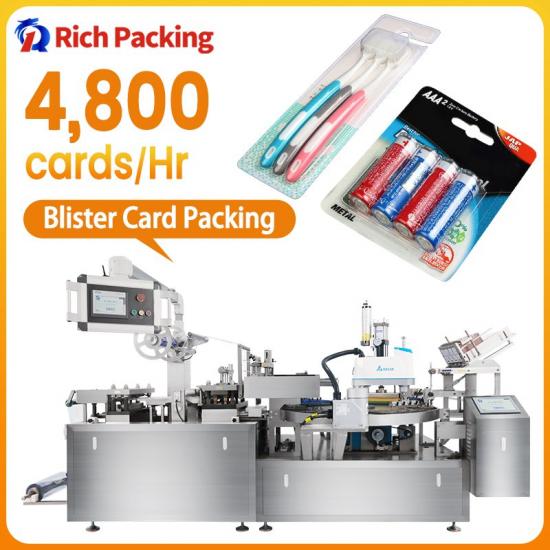
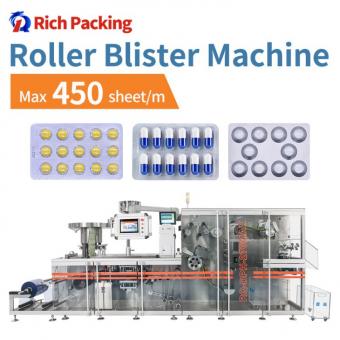
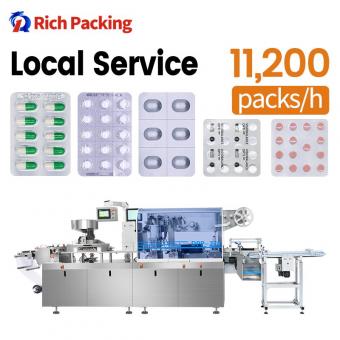
Blister Card Packing Machine
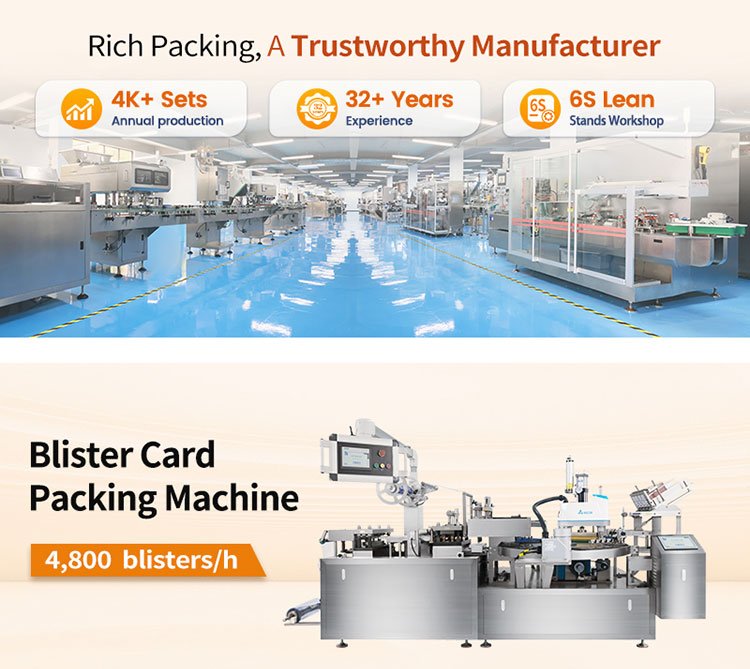
| Max Capacity | 4,800 packs/hour |
| Traction Range | 30-220 mm |
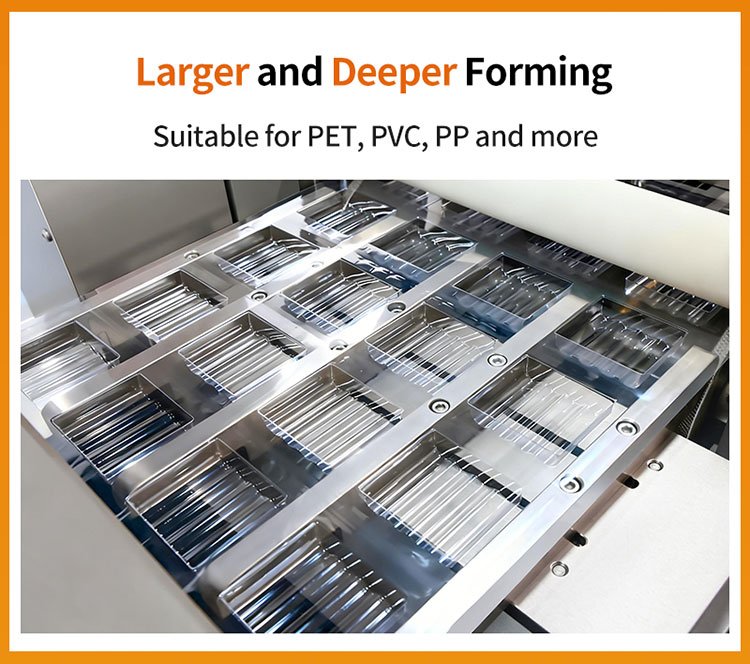
| Max Forming Area | 330*180 mm |
| Max Forming Depth | 40 mm |
| Heat Sealing Power | 3.5 kW |
| Power Supply | AC380V 220V 50Hz/60Hz |
| Dimension | 3500*1500*1800 mm |
Want to know about this product?
SEND A MESSAGE
Something isn’t Clear?
Feel free to contact me, and I will be more than happy to answer all of your questions.
Blister Card Packing Machine: Workflow & Core Advantages for Industrial Packaging
In the global pharmaceutical, 3C electronics, and small hardware industries, blister card packaging has become an indispensable packaging solution due to its excellent product protection, clear display effect, and convenient transportation. According to Market Research Future, the global blister packaging market is expected to grow at a CAGR of 5.2% from 2023 to 2030, with pharmaceutical and consumer electronics applications accounting for over 70% of the demand. For manufacturers seeking efficient, compliant, and stable packaging solutions, a high-performance Blister Card Packing Machine is a core investment that directly impacts production efficiency, product quality, and market competitiveness.
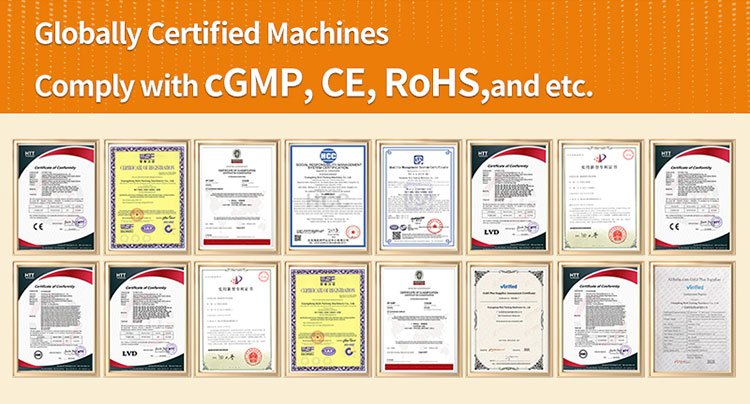
As a leading pharmaceutical and packaging machinery manufacturer with 32+ years of expertise, Guangdong Rich Packing Machinery Co., Ltd. has engineered a state-of-the-art Blister Card Packing Machine that integrates advanced automation technology, strict compliance standards, and versatile applicability. This machine not only meets the GMP requirements of the pharmaceutical industry but also adapts to the packaging needs of batteries, electronic components, small tools, and other industrial products. Below, we delve into the core applications, scientific workflow, technical advantages, and industry value of this Blister Card Packaging Machine, providing a comprehensive guide for global manufacturers and buyers.
Core Applications of the Blister Card Packing Machine: Beyond Pharmaceutical Packaging
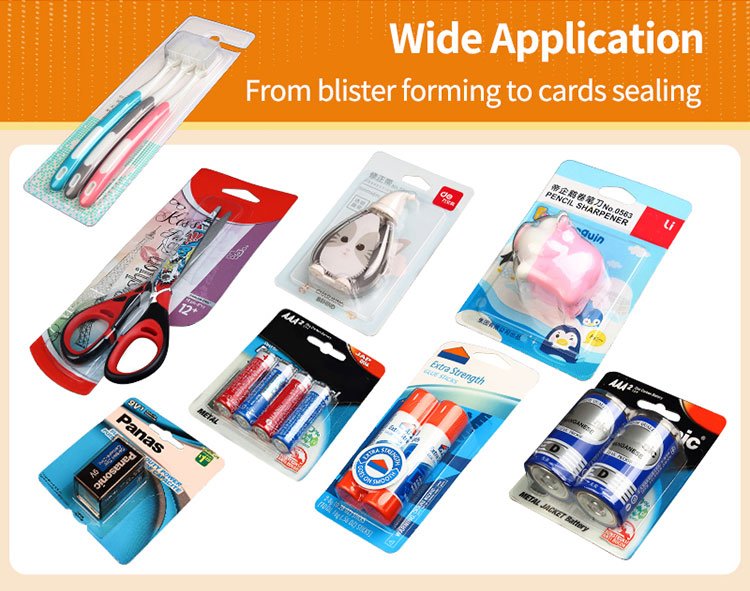
The Blister Card Machine is a versatile packaging equipment designed to seal products in plastic blisters (PVC/PET) and paper cards, forming a tight, protective package. Its applications span multiple industries, with core use cases including:
1. 3C Electronics & Battery Industry
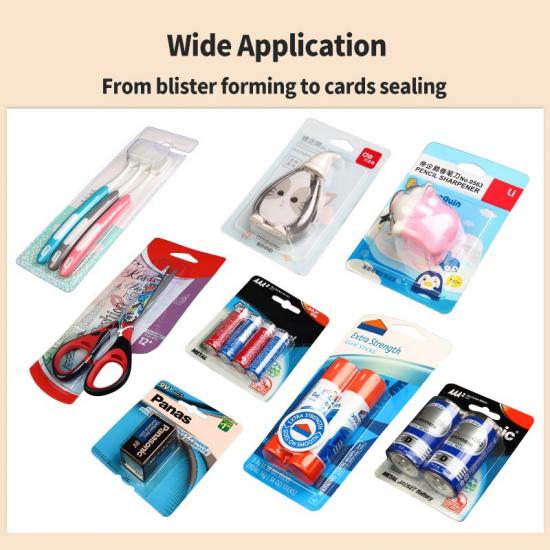
A reliable solution for packaging small electronic components (e.g., connectors, resistors, diodes) and various batteries (button batteries, lithium-ion batteries, cylindrical batteries). As a specialized Battery Card Sealing Machine, it forms a moisture-proof, anti-static seal that protects sensitive electronic components and batteries from environmental damage, ensuring product performance during storage and transportation. The rigid blister card also prevents product deformation or short circuits caused by collision.
2. Small Hardware & Daily Necessities Industry
Suitable for packaging small hardware (screws, nuts, bolts), stationery (pins, staples), and daily necessities (cosmetic sponges, small tools). The machine’s customizable molds allow for the packaging of irregularly shaped products, while the tight blister-card seal prevents loss or scattering of small items, improving packaging efficiency and product presentation.
3. Food & Beverage Industry
Used for packaging small food items such as candy, chewing gum, and instant coffee sachets. The machine’s food-grade materials and precise sealing technology ensure food safety, isolate oxygen and moisture, and maintain product freshness. The blister card packaging also enhances product visibility on store shelves, boosting consumer purchase willing.
The Scientific Workflow of the Blister Card Packing Machine: 11 Steps to Perfect Packaging
The Blister Card Packing Machine achieves automated, standardized packaging through a precise, sequential workflow. Each step is engineered to ensure blister formation quality, product placement accuracy, and sealing reliability. Below is a detailed breakdown of the 11-core step workflow:
Step 1: Unwinding of PVC/PET Roll Material
The process begins with unwinding the raw packaging material—typically PVC or PET roll film—from the material rack. The machine is equipped with a tension control system that maintains stable film feeding speed, preventing wrinkles or tears in the film. This ensures consistent thickness and flatness of the blister, laying the foundation for subsequent forming. PVC is preferred for its low cost and good formability, while PET is suitable for high-temperature-resistant or environmentally friendly packaging needs.
Step 2: Pre-Heating
The unwound PVC/PET film is fed into the pre-heating zone, where it is heated to a temperature of 80-120℃ (adjustable based on material type). Pre-heating softens the film, enhancing its plasticity and preparing it for the molding process. The temperature is precisely controlled by a PLC system, with an error margin of ±1℃, to avoid material degradation or poor forming.
Step 3: Molding (Blister Formation)
The pre-heated film enters the molding station, where it is pressed into the desired blister shape using a mold and vacuum suction. The mold is customized according to the product’s size and shape—whether it’s a single cavity for large products or multiple cavities for small items (e.g., multiple tablets or batteries). The vacuum suction force (adjustable via the touchscreen) ensures the film adheres tightly to the mold, forming a smooth, precise blister with clear edges and no deformation. This step is critical for ensuring the blister can securely hold the product during subsequent processes.
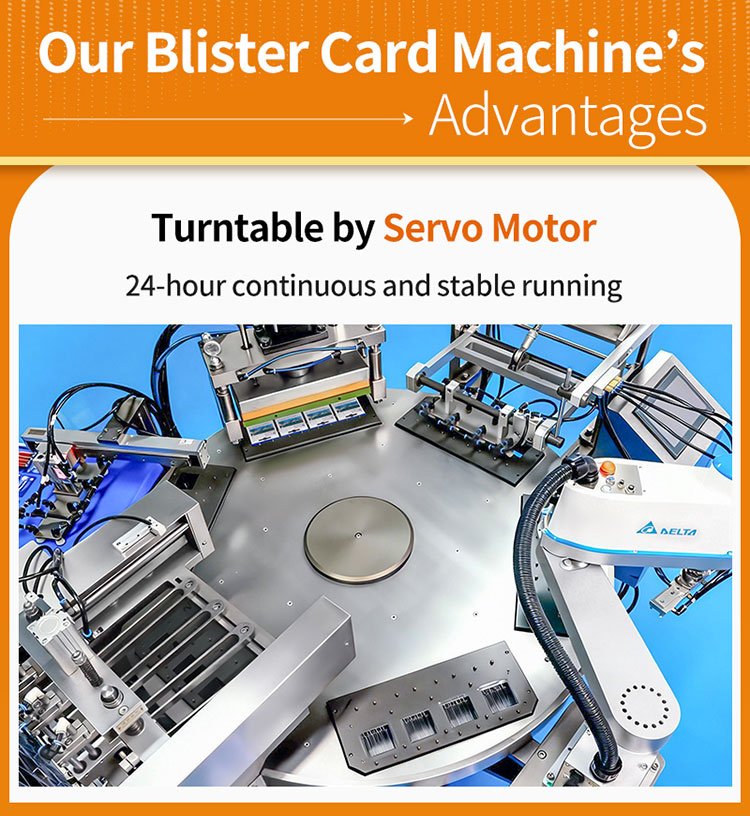
Step 4: Servo Motor Traction
After molding, the blister film is pulled forward by a servo motor-driven traction system. The servo motor provides precise, stepless speed control, synchronizing the film feeding speed with the molding, punching, and sealing processes. This synchronization eliminates film slack or stretching, ensuring each blister is positioned accurately relative to the subsequent processing stations. The servo motor’s high precision (positioning error ≤0.02mm) guarantees consistent blister spacing and packaging uniformity.
Step 5: Waste Roll Collection
During the molding process, excess film (waste) around the blisters is separated and collected by a waste roll system. The machine’s automatic waste collection design avoids waste accumulation on the production line, reducing manual cleaning frequency and improving workshop hygiene. The collected waste can be recycled, reducing material waste and environmental impact—aligning with sustainable production trends.
Step 6: Plastic Blister Punching
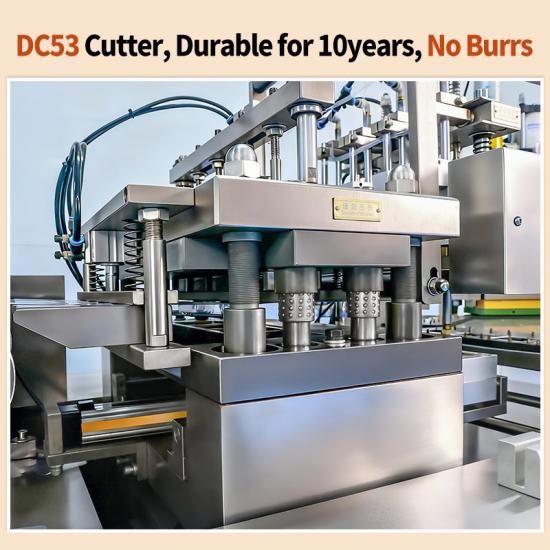
The blister film with formed cavities is then fed into the punching station, where a precision die cuts the film into individual blister units. The punching process is synchronized with the servo motor traction, ensuring clean, burr-free edges on each blister.
Step 7: Robot Arm Picks Blisters into Track Molds
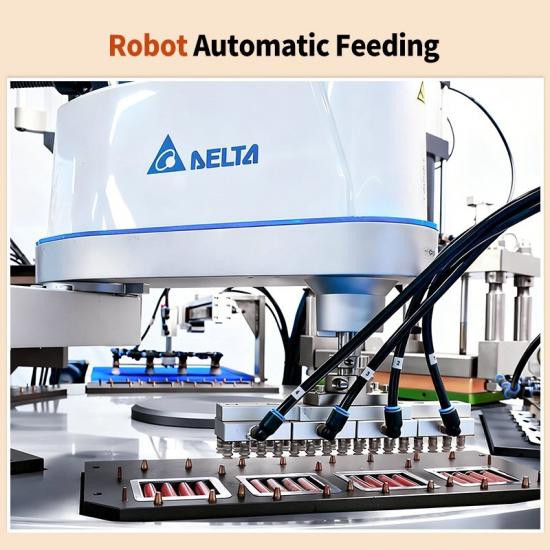
An automated robot arm with vacuum suction cups picks up the punched blisters and places them into pre-positioned track molds. The robot arm operates with high precision (repetitive positioning accuracy ≤0.1mm), ensuring each blister is correctly aligned in the track—avoiding misalignment during product placement and sealing. This step replaces manual blister placement, reducing labor costs and human error, while improving production efficiency.
Step 8: Manual Loading Area
At the manual loading station, operators place products (tablets, batteries, components) into the blister cavities. The station is designed with an ergonomic layout, reducing operator fatigue during long shifts. For high-volume production, the machine can be optionally equipped with an automatic feeding system (customizable based on product type) to further enhance automation and reduce labor dependency.
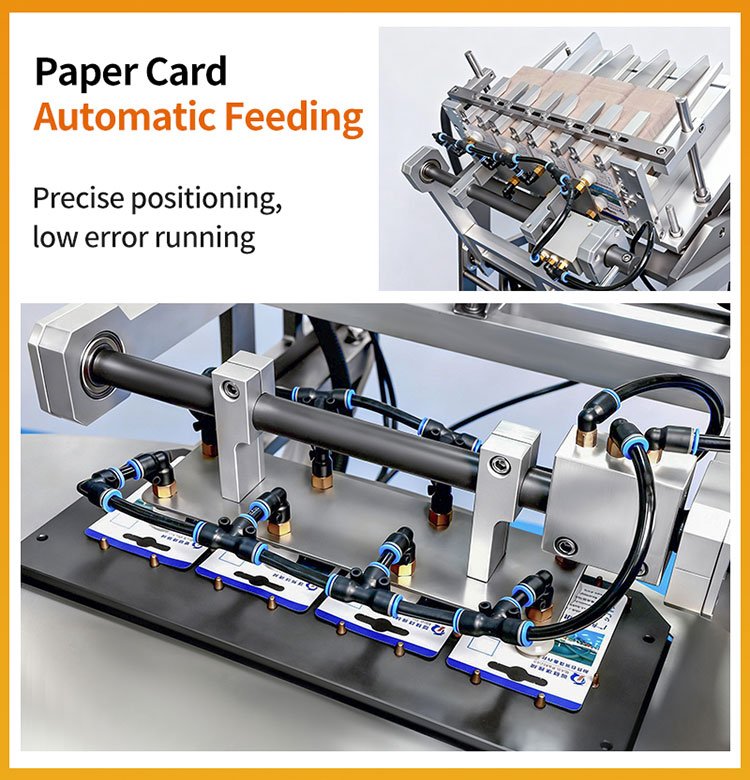
Step 9: Automatic Paper Card Feeding
While products are loaded into blisters, the machine’s automatic paper card feeding system dispenses pre-printed paper cards (with product information, logos, or barcodes) into the sealing station. The paper card feeding speed is synchronized with the blister and product flow, ensuring each blister is paired with one paper card. The system uses a photoelectric sensor to detect paper card availability, preventing misfeeds or missing cards.
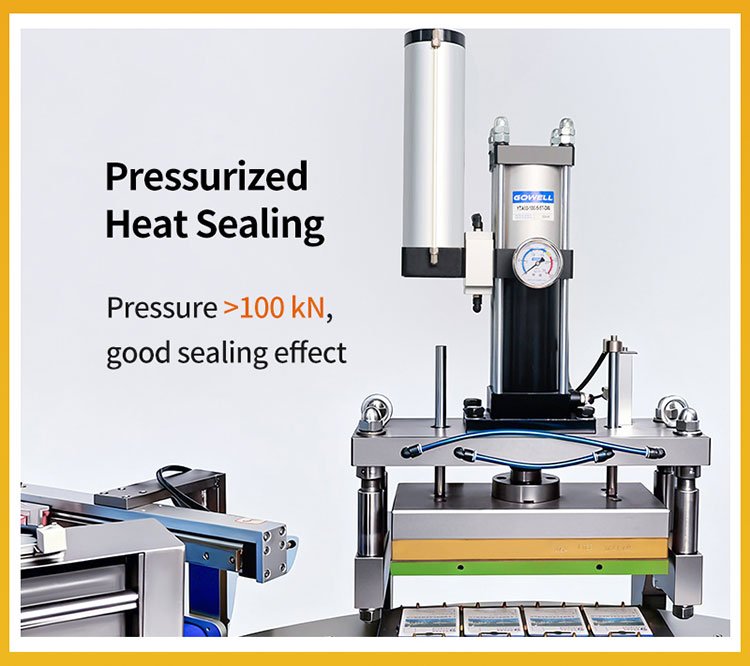
Step 10: Sealing of Plastic Blisters & Paper Cards
The blisters (with products) and paper cards are transported to the sealing station, where they are sealed together using heat and pressure. The Blister Card Sealing Machine adopts a precise temperature and pressure control system, with sealing temperature adjustable between 100-160℃ and pressure between 0.3-0.6MPa. The sealing time is controlled by the PLC, ensuring a tight, uniform seal that resists peeling or leakage. For battery packaging, this step forms a moisture-proof barrier that protects the battery from environmental factors, while for pharmaceuticals, it ensures tamper-proof protection and compliance with regulatory standards.
Step 11: Robot Arm Picks Finished Products to Conveyor Belt
After sealing, the robot arm picks up the finished blister card packages and places them onto a conveyor belt, which transports the products to the next process (e.g., cartoning, labeling, or inspection). The conveyor belt speed is adjustable to match downstream production needs, ensuring a smooth workflow. The finished packages feature neat seals, clear product visibility, and consistent dimensions—meeting the quality requirements of retail and industrial applications.
7 Core Technical Advantages of the Blister Card Packing Machine: Efficiency, Compliance, and Versatility
The Blister Card Packing Machine from Rich Packing stands out in the market due to its advanced technical design, strict compliance standards, and user-friendly operation. Below are its key advantages, engineered to solve real-world production pain points:
1. 304 Stainless Steel Housing: GMP-Compliant & Easy to Clean
The machine’s exterior and product-contact parts are constructed from high-quality 304 stainless steel, which meets the GMP requirements of the pharmaceutical and food industries. The smooth, gap-free surface of the stainless steel prevents material accumulation and bacterial growth, making cleaning and sanitization simple (wipeable with disinfectant).
2. Imported Inverter Speed Control & PLC Touchscreen: Automated & User-Friendly
Equipped with an imported inverter, the machine offers stepless speed adjustment (0-50 cycles per minute), allowing manufacturers to match packaging speed to production needs. The color touchscreen (human-machine interface) and PLC control system simplify operation—operators can set parameters (temperature, speed, pressure), monitor production data (output, error rate), and troubleshoot via intuitive icons and prompts. The PLC system also supports data logging and export, enabling batch traceability and compliance with regulatory audits.
3. Servo Motor Stepless Stroke Control: Easy Mold Change & Adjustment
The machine adopts a servo motor-driven stroke control system, allowing for quick adjustment of blister size and sealing pressure without complex tools. Mold changes can be completed in 15-20 minutes, making the machine suitable for small-batch, multi-specification production. This flexibility is particularly valuable for manufacturers producing multiple product lines, as it reduces downtime and improves production efficiency. The servo motor’s high precision also ensures consistent stroke control, maintaining packaging quality across different batches.
4. Photoelectric Control & Alarm System: Prevent Production Interruptions
Equipped with high-sensitivity photoelectric sensors, the machine automatically detects the availability of PVC/PET film and paper cards. If the film runs out, the paper card supply is exhausted, or a jam occurs, the machine immediately stops operation and triggers a buzzer alarm, preventing empty packaging, material waste, or equipment damage. This intelligent monitoring system reduces manual supervision requirements and ensures continuous, stable production.
5. Split Design: Convenient Transportation & Installation
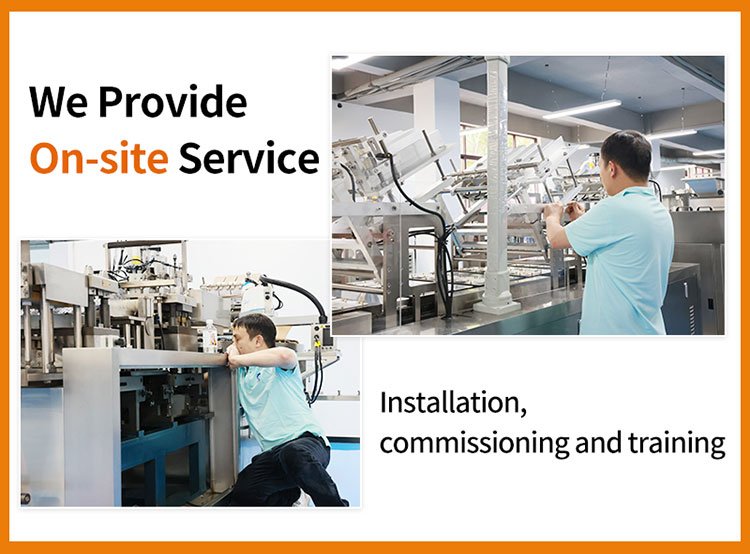
The machine features a split structure, dividing the main body into 2-3 modules that can be easily disassembled and assembled. This design reduces the overall size and weight of each component, making transportation convenient—even for narrow workshop doorways or long-distance shipping. The split design also simplifies on-site installation and debugging, with Rich Packing’s technical team providing global on-site support to ensure quick setup and commissioning.
6. Wound Film Feeding Device: Material Saving & Cost Reduction
The machine uses a wound-type plastic film feeding system that minimizes material waste compared to sheet-fed systems. The tension control and precise traction ensure full utilization of the film, reducing scrap rates to ≤0.5%. For manufacturers with high production volumes, this translates to significant material cost savings over time. Additionally, the system is compatible with various film thicknesses (0.2-0.8mm), adapting to different packaging strength requirements.
7. Customizable Molds & Feeders: Versatile Adaptability
Rich Packing offers fully customizable molds and automatic feeders based on user needs. Molds can be designed for products of any shape or size—from small button batteries to large medical devices—while automatic feeders can be tailored to specific product types (e.g., vibratory feeders for tablets, vacuum feeders for batteries). This versatility allows the Blister Card Packing Machine to adapt to the packaging needs of multiple industries, eliminating the need for specialized equipment for each product line and reducing capital investment.
Conclusion: Blister Card Packing Machine – The Cornerstone of Efficient, Compliant Packaging
In today’s competitive manufacturing landscape, the Blister Card Packing Machine is more than just a packaging tool—it is a strategic asset that enhances product protection, improves production efficiency, and ensures regulatory compliance. Rich Packing’s Blister Card Packing Machine, with its 11-step scientific workflow, 7 core technical advantages, and versatile applicability, meets the diverse needs of pharmaceutical, electronic, hardware, and food industries.
Whether you are a pharmaceutical manufacturer seeking GMP-compliant packaging, an electronics company needing moisture-proof battery packaging, or a hardware producer looking to streamline small-item packaging, this Blister Card Packaging Machine delivers consistent performance, cost savings, and market competitiveness. Backed by Rich Packing’s 28 years of expertise, global support, and strict quality control, it is the ideal choice for manufacturers aiming to scale production and expand into global markets.
To learn more about the Blister Card Packing Machine, request a customized quote, or view a live production demo, visit Rich Packing’s official website, our professional sales and engineering team will work with you to create a tailored packaging solution that meets your production scale, product specifications, and regulatory requirements.
FAQ: Common Questions About the Blister Card Packing Machine
Q1: What materials can the Blister Card Packing Machine handle?
A: The machine is compatible with PVC and PET roll films (thickness 0.2-0.8mm) for blister formation, and various paper cards (coated paper, cardboard, aluminum-plastic composite cards) for sealing. For special needs (e.g., environmental protection), it can also be adapted to biodegradable PLA films.
Q2: Can the machine be used for battery packaging?
A: Yes, the machine is an ideal Battery Card Sealing Machine that adapts to button batteries, lithium-ion batteries, cylindrical batteries, and other types. Its moisture-proof sealing, anti-static design, and customizable molds ensure safe, stable packaging for sensitive battery products.
Q3: How long does it take to change molds for different products?
A: Thanks to the servo motor’s stepless stroke control and tool-free mold design, mold changes can be completed in 15-20 minutes. Rich Packing provides detailed mold replacement instructions and on-site training to ensure operators can quickly switch between product specifications.
Q4: What is the production capacity of the Blister Card Packing Machine?
A: The machine’s production speed is adjustable via inverter, with a maximum capacity of 50 cycles per minute (depending on product size and number of cavities per blister). For example, a 4-cavity mold for tablets can produce up to 200 packages per minute.
Q5: Is the machine easy to maintain?
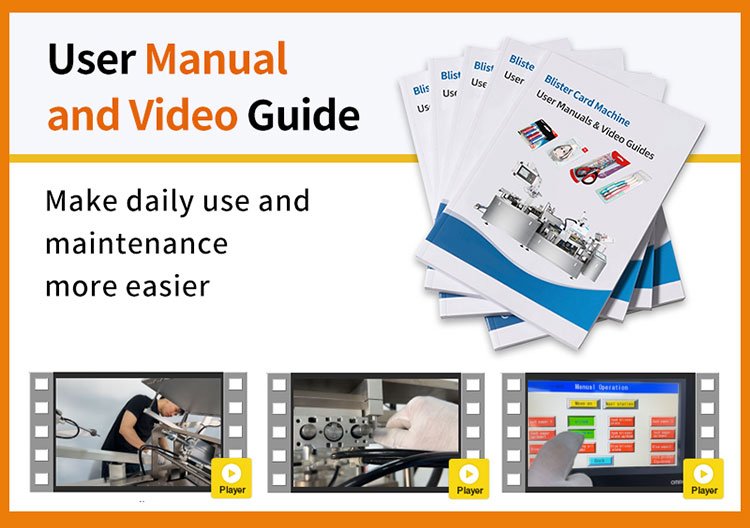
A: Yes. The machine’s modular design and simple structure make daily maintenance straightforward—regular tasks (cleaning, lubrication, sensor calibration) can be completed in 30 minutes. Rich Packing provides a detailed maintenance manual and 24/7 technical support to resolve any issues.
Q6: Can the machine be integrated with other packaging equipment?
A: Yes, the machine features reserved interfaces for seamless integration with cartoning machines, labeling machines, and inspection equipment. Rich Packing can provide a turnkey packaging line solution tailored to your production workflow.

 IPv6 network supported