






 Home
Home Products
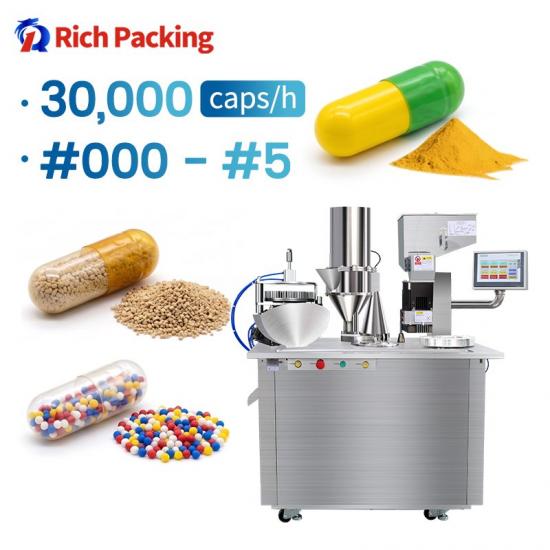
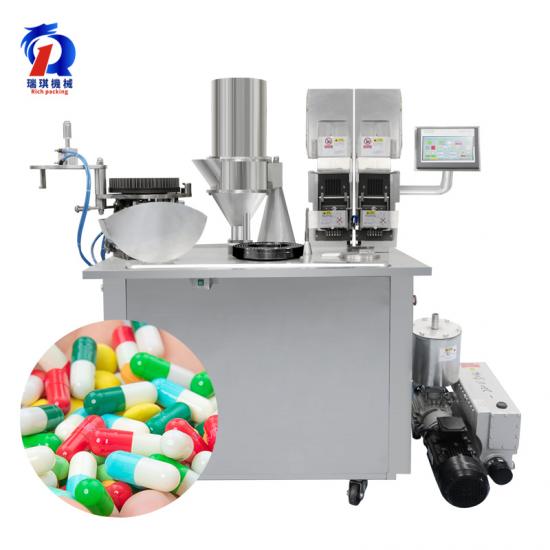
cGMP Capsule Filling Machine Semi Automatic
When evaluating secondary solid-dosage machinery, procurement teams are frequently forced into a difficult choice. On one side, investing in a high-speed, fully automatic encapsulation machine requires massive capital expenditure, takes up a large cleanroom footprint, and demands hours of tool-intensive downtime for a complete size changeover. On the other side, relying on manual encapsulation plates or outdated, poorly engineered machinery creates significant quality control risks.
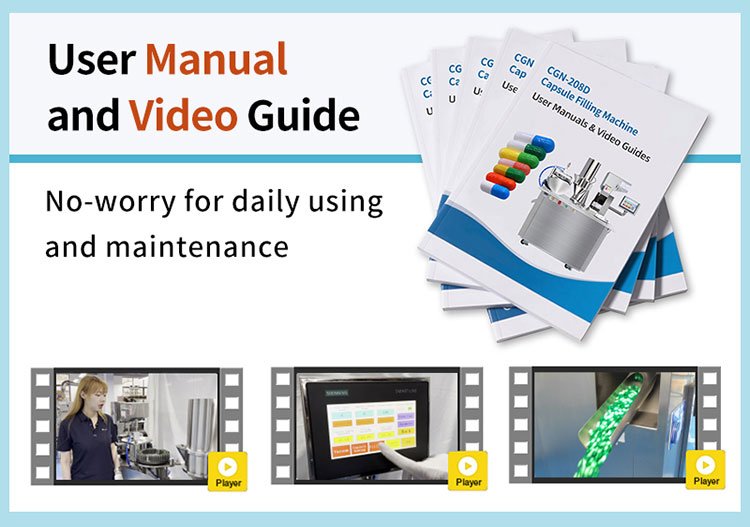
*** Technical parameter
|
Model |
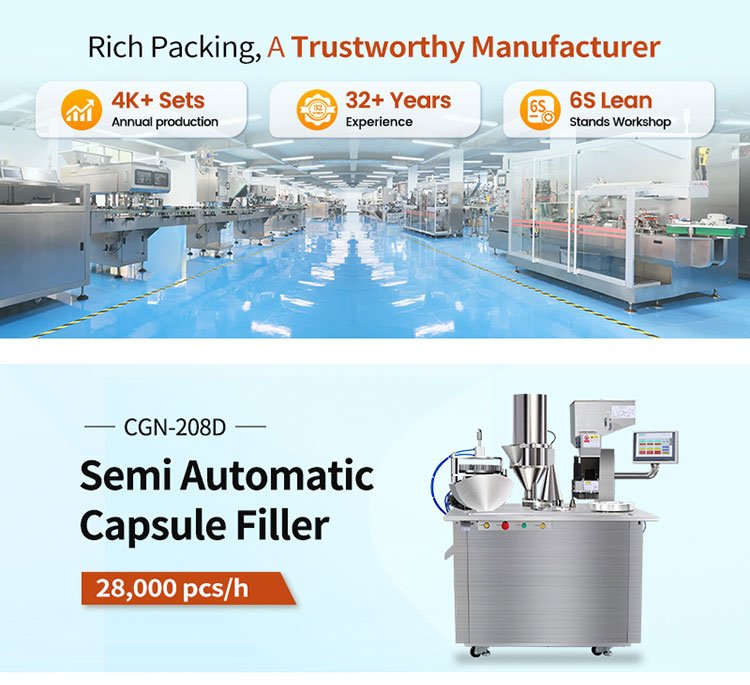
CGN-208D |
|
Max.Capacity |
30,000pcs/h |
|
Applicable capsule |
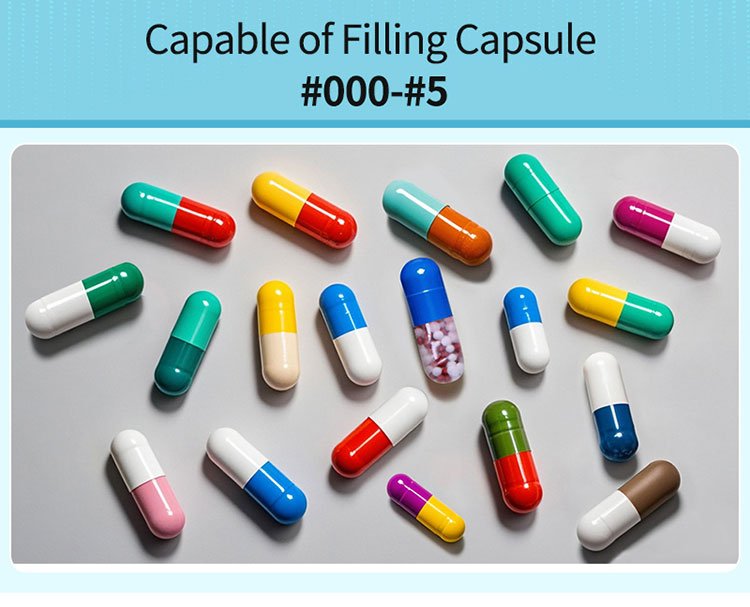
000#, 00#、0#、1#、2#、3#、4#、5# |
|
Power supply |
2.12kw |
|
Outline dim. |
1300*800*1750mm |
|
Net weight of machine |
400kg |
|
Gross weight of machine |
500 kg |
|
Packing size |
1640*720*1700mm |
Want to know about this product?
SEND A MESSAGE
Something isn’t Clear?
Feel free to contact me, and I will be more than happy to answer all of your questions.
Semi-Automatic Capsule Filling Machine: 7 cGMP Upgrades to Slash Changeover Time and Stop Capsule Damage
Introduction: Balancing Flexibility and Regulatory Rigor in Small-Batch Encapsulation
Traditional entry-level systems frequently cause unacceptable weight variations, loose powder leakage, and high capsule rejection rates due to mechanical misalignment. For operations handling expensive active pharmaceutical ingredients (APIs) or delicate organic powders, these structural inefficiencies quickly lead to material waste and risk failing strict regulatory audits.
The solution to this operational challenge is to find an efficient middle ground that bridges the gap between massive industrial output and high-mix flexibility. Implementing a robust, highly responsive semi automatic capsule filling machine allows manufacturing facilities to secure the exact benefits of automated dosing consistency without sacrificing rapid changeover agility.
The Rich Packing smart series represents a major upgrade in mid-tier solid-dosage manufacturing. Engineered to handle a wide variety of powder characteristics and empty shell materials, this industrial platform provides the precise mechanical control needed to protect product margins and simplify cleanroom validation.
Decoupling the Modern Semi-Automatic Capsule Filler: Mechanical Architecture & Workflow
To truly appreciate the operational reliability of an advanced semi automatic capsule filler machine, one must look past its exterior sheet metal and analyze the synchronized sub-systems that govern its cycle. A standard, low-cost capsule machine semi automatic filler often relies on unassisted manual levers, open drive chains, and basic analog timers. These legacy designs struggle to maintain consistent processing speeds and lack the precise mechanical control needed to prevent material contamination.
In contrast, an elite, production-grade semi automatic capsule filling machine utilizes a decentralized, modular mechanical layout where each phase of the encapsulation process is driven by independent, electronically synchronized stations. The complete processing cycle is divided into three distinct, high-efficiency stages:
1. The Capsule Feeding and Sorting Stage
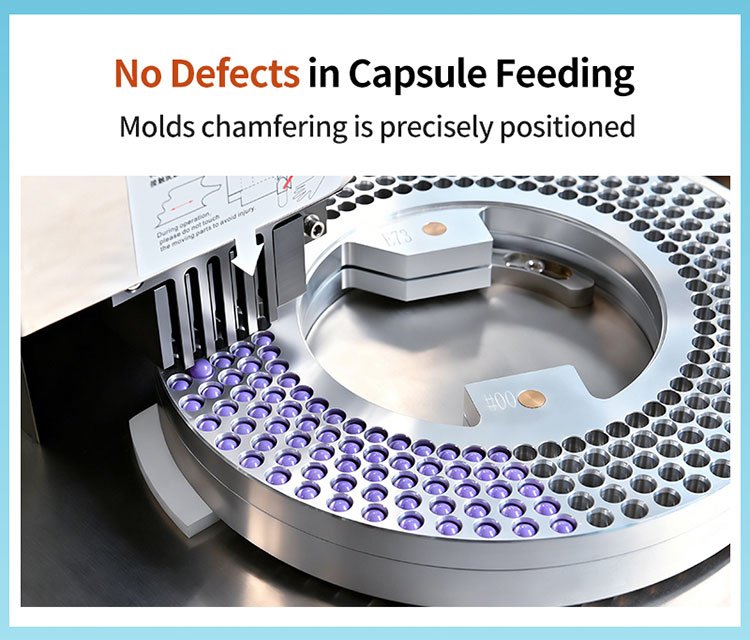
The encapsulation cycle begins at the orientation station. Empty, unseparated hard gelatin or vegetable capsules are loaded into a high-capacity supply hopper. Guided by a customized, multi-lane sorting track, the shells slide downward into an indexing mechanism. Here, directional alignment fingers mechanically orient every shell so that the cap always faces upward.
Once aligned, the shell rows pass over an integrated high-vacuum separation block. A precisely calibrated air pressure differential pulls the capsule bodies downward into the lower section of the dual-layer filling disc, while the caps are retained in the upper section. Our smart semi auto capsule filler platform achieves a separation success rate exceeding 99.9%, effectively eliminating the risk of crushed shells during this initial phase.
2. The Volumetric Material Filling Stage
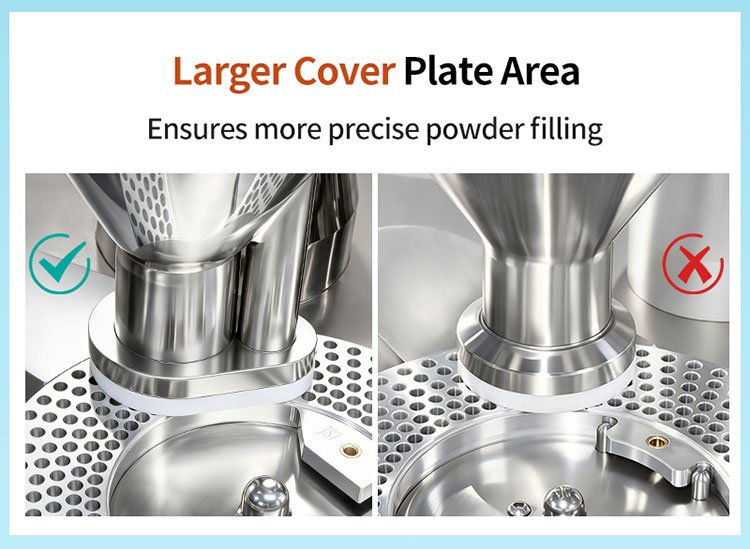
Once separated, the operator transfers the lower segment of the filling disc, containing the open capsule bodies, onto the variable-speed rotary dosing platform. This stage functions as a precise semi automatic capsule filler mechanism. Located directly beneath the powder hopper is a vertical auger screw paired with an independent, continuous-motion stirring paddle.
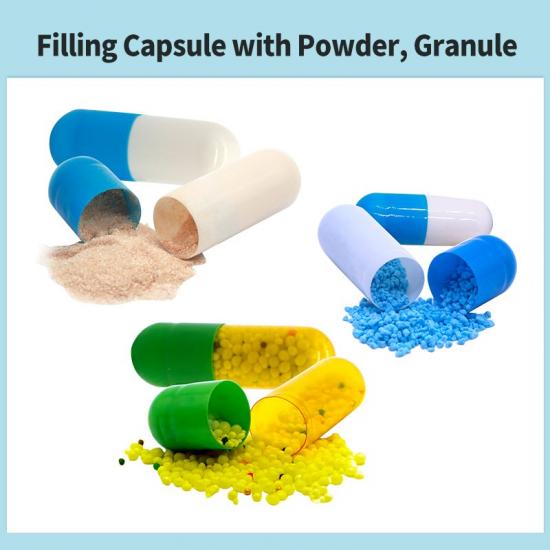
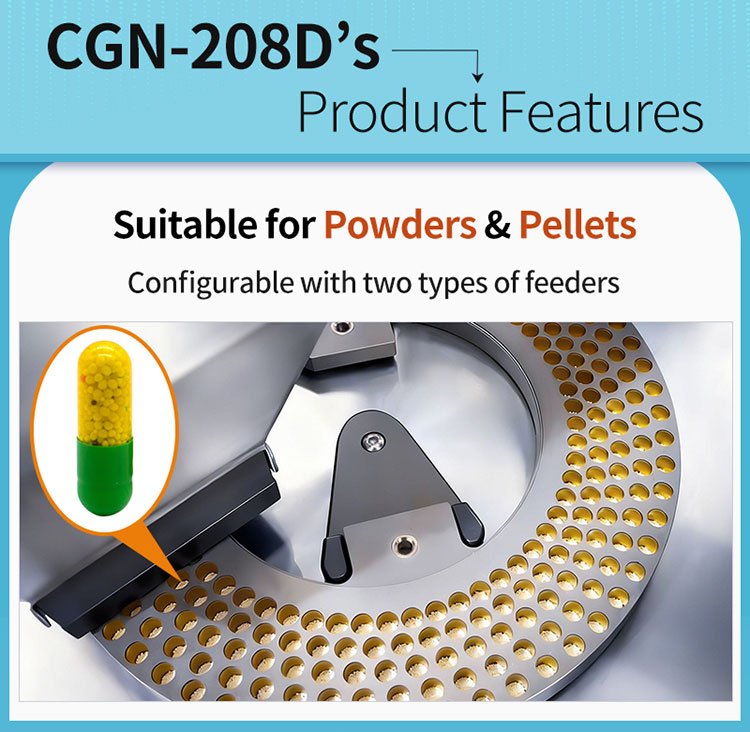
As the filling disc rotates beneath the dosing nozzle, the auger screw injects a mathematically precise volume of material into the capsule bodies. Because the rotation speed of the filling disc and the driving speed of the auger are managed by independent variable frequency drives (VFDs), the operator can fine-tune the volumetric fill level with incredible accuracy. This setup ensures an even, dense material distribution, even when handling complex, non-free-flowing herbal extracts or sticky hygroscopic powders.
3. The Horizontal Locking and Ejection Stage
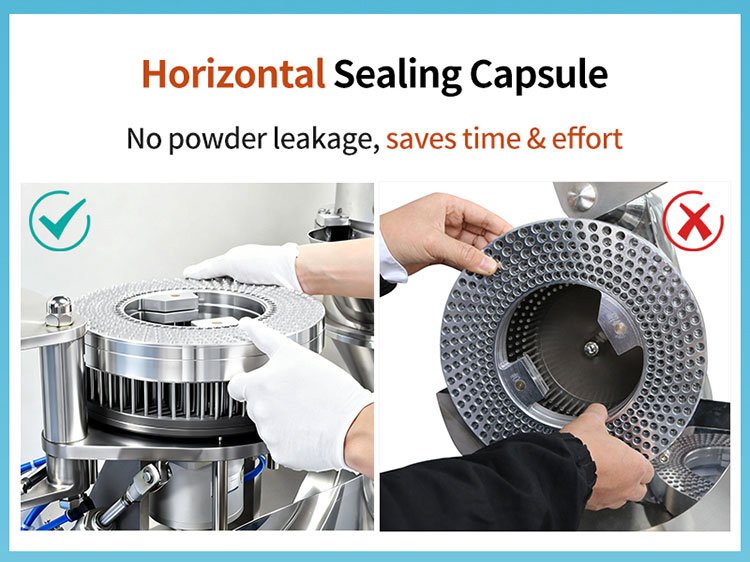
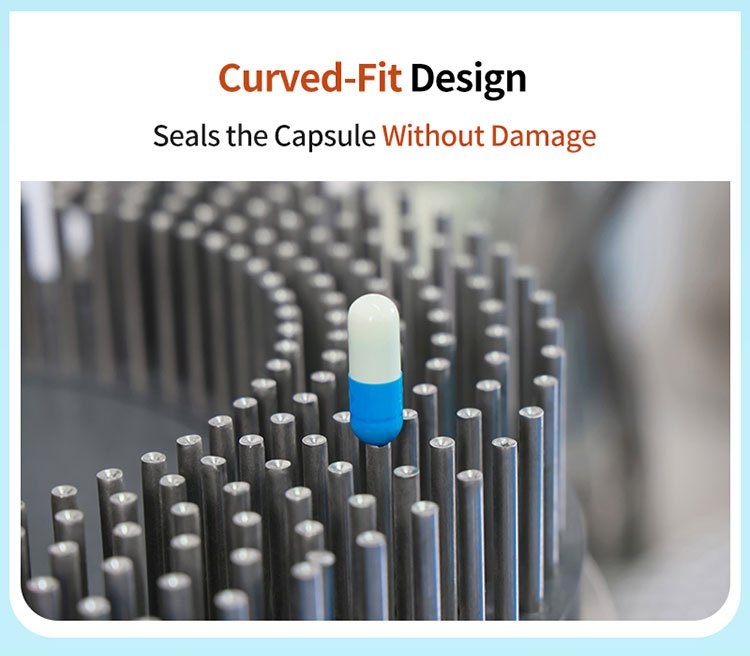
Following the dosing phase, the operator places the upper cap disc back onto the filled body disc and transfers the combined assembly to the pneumatic closing station. In traditional legacy equipment, this step requires the operator to pull a heavy vertical mechanical lever. This manual process frequently applies uneven force, which can buckle the thin capsule walls and cause loose powder leaks.
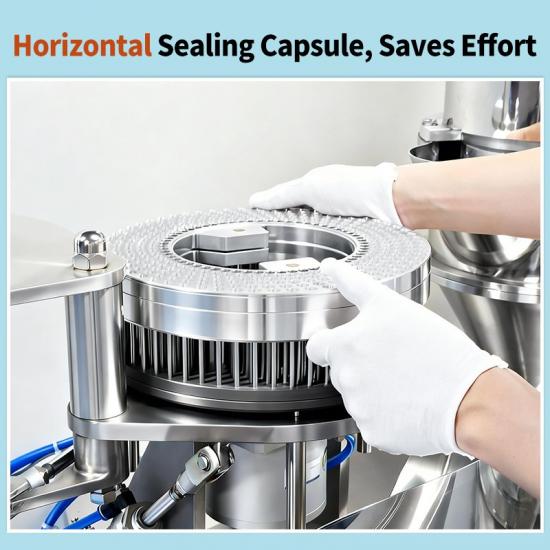
Our modernized semi auto capsule filler machine updates this sequence by employing a specialized horizontal pneumatic ram. When the operator triggers the dual safety buttons, the pneumatic cylinder extends horizontally, applying a perfectly uniform clamping force across the entire face of the filling disc. This balanced pressure pushes the capsule bodies securely into the caps, locking them to their precise pre-set engagement depth. The locked capsules are then automatically discharged via a guide chute into a collection bin, completely dust-free and ready for secondary polishing.
7 Architectural Advantages of Our Smart Semi-Automatic Series Capsule Machine
The overall output and reliability of the Rich Packing semi automatic capsule filling machine are rooted in deliberate material choices and precise manufacturing tolerances. Below is an in-depth analysis of the 7 core engineering upgrades designed to enhance line performance, protect fragile shells, and ensure strict compliance with cleanroom standards.
1. 316L Stainless Steel & Full cGMP Compliance
Operating in highly audited pharmaceutical and nutraceutical cleanrooms requires machinery built with premium, non-reactive materials that withstand aggressive sanitization protocols.
● The Structural Design: Every component that comes into direct contact with your active powders or empty shells is machined from medical-grade SUS316L stainless steel, while the supporting external framework is forged from heavy-duty SUS304.
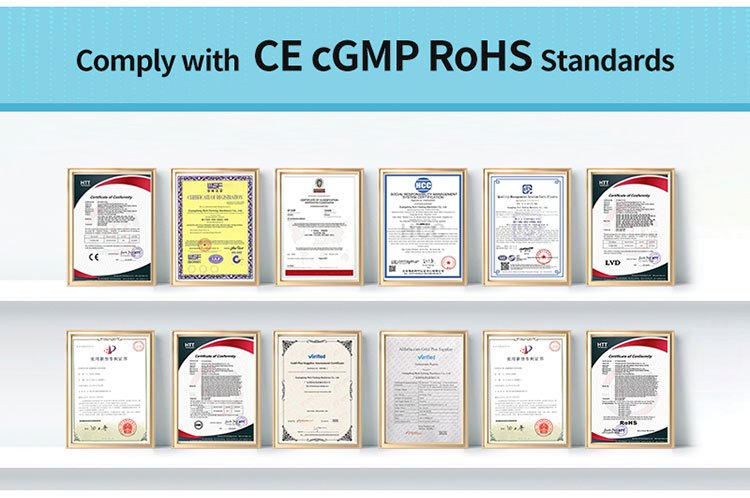
● The Operational Edge: The machine features a clean, open balcony layout with a perfectly flat, crevice-free workspace. This seamless design completely eliminates material trapping points, allowing for rapid, trace-free washdowns and helping your facility pass strict FDA and European EMA sanitary audits with ease.
2. Variable Frequency Dosing Speed (±3% Verified Accuracy)
Handling powders with poor flow characteristics, varying bulk densities, or high static charges can easily cause uneven filling weights across batches.
● The Structural Design: The powder dosing station uses an independent, continuous-motion stirring paddle paired with a vertical auger feeding screw, both driven by premium variable frequency drives (VFDs).
● The Operational Edge: By keeping powder density uniform within the hopper and allowing precise, digital adjustments to the auger speed, our advanced semi automatic capsule making machine keeps filling weight variations within a tight ±3% margin. This exceptional consistency protects your margins on premium formulas and prevents costly product overfill giveaway.
3. 15-Minute Tool-less Format Changeover Design
For contract manufacturers managing high-mix, small-batch schedules, wasting hours of valuable production time on mechanical line changeovers can severely hurt profitability.
● The Structural Design: The entire format set—including the capsule sorting plate, orientation tracks, and dual-layer filling discs—utilizes a specialized quick-change configuration secured by precision-machined dowel alignment pins.
● The Operational Edge: A single operator can complete a full format size changeover (from size #00 down to #4) in just 15 minutes flat, without needing specialized wrenches or complex calibration tools. This rapid swap capability minimizes downtime and maximizes your daily line agility.
4. Brittle-Shell Protective HPMC Vegetable Capsule Friendly System
Organic HPMC (hydroxypropyl methylcellulose) and pullulan vegetable capsules are highly popular in Western markets, but they are more brittle, fragile, and prone to static cling than standard gelatin shells.
● The Structural Design: The directional alignment fingers, orientation forks, and sorting lanes are micro-polished and treated with a specialized anti-static chromium barrier layer.
● The Operational Edge: This smooth, low-friction pathway ensures that fragile vegetable capsules are oriented and split without scratching, splitting, or pinching. This protection lowers your shell scrap rate and saves you money on expensive empty capsule materials.
5. Decentralized PLC Touchscreen Control Architecture
Legacy equipment relying on basic physical toggle buttons and analog dials makes it difficult for operators to duplicate precise processing parameters between shifts.
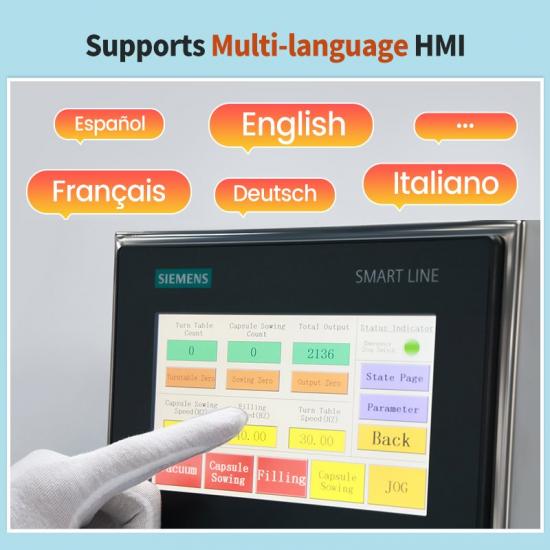
● The Structural Design: The physical buttons are replaced with a centralized, pivot-mounted touchscreen HMI linked to an industrial Omron or Siemens PLC system.
● The Operational Edge: Operators can manage filling disc speeds, auger rotation rates, and vacuum cycle intervals digitally through a single unified interface. Storing these precise parameters as digital recipes ensures absolute process repeatability across different batches, making it a highly reliable semiauthomatic capsule making machine platform for modern facilities.
6. Cylinder Pneumatic Horizontal Capsule Closing Station
Traditional vertical closing levers put a lot of strain on operators and frequently cause uneven force distribution, which leads to buckled capsule walls and loose powder leaks.
● The Structural Design: The closing station features a heavy-duty, double-acting horizontal pneumatic cylinder that delivers perfectly distributed clamping pressure across the entire face of the mold disc.
● The Operational Edge: This horizontal pressing design ensures that every capsule is closed to its exact, non-distorted locking depth without spilling powder. The automated cycle reduces operator fatigue, keeps your workspace exceptionally clean, and functions as an efficient, modern semi-automatic capsulator.
7. Centralized Modular Electronic Cabinet with Global Standard Components
Using non-standard, unbranded electrical parts can lead to catastrophic line downtime if a minor control component fails and requires a long international shipping wait.
● The Structural Design: All electronic controls, frequency inverters, and safety relays are neatly organized within a sealed, centralized IP55-rated modular electrical enclosure.
● The Operational Edge: By integrating globally recognized components from leading brands like Schneider, Omron, and Siemens, Rich Packing ensures total electrical reliability. Spare components are easy to source locally anywhere in the world, eliminating the risk of extended downtime due to hard-to-find custom parts.
Technical Comparison Matrix: Manual Plates vs. Semi-Automatic Series vs. Fully Automatic
To help procurement teams make an informed capital investment decision, the comparison matrix below breaks down the performance, labor, and footprint metrics of different encapsulation methods.
|
Operational Performance Metric |
Manual Encapsulation Plates |
Rich Packing Semi-Automatic Series |
|
|
Hourly Output Range |
1,000 to 3,000 pcs/h |
10,000 to 30,000 pcs/h |
40,000 to 500,000+ pcs/h |
|
Dosing Weight Accuracy |
±7.0% to ±10.0% (high variation) |
Within ±3% verified margin |
±1.0% to ±2.0% precision |
|
Format Changeover Time |
5 to 10 minutes (limited accuracy) |
15 minutes (tool-less dowel pins) |
30 to 50 minutes (highly complex) |
|
Labor Allocation Ratio |
100% manual reliance (high fatigue) |
1 dedicated operator required |
0.5 operator (requires specialized tech) |
|
Empty Shell Compatibility |
Stretches & cracks brittle materials |
Anti-static HPMC/Gelatin fully friendly |
Strict tolerance (demands high-end shells) |
|
Validation Capability |
Cannot pass strict medical validation |
Full cGMP and IQ/OQ/PQ supported |
Full 21 CFR Part 11 database |
Total Cost of Ownership (TCO) and Cleanroom Validation Support
When purchasing a new secondary solid-dosage line, experienced pharmaceutical and nutraceutical manufacturers look past the upfront purchase price and focus on the Total Cost of Ownership (TCO). Equipment that seems like a bargain initially can quickly become a financial burden if it requires expensive field engineering support, custom change parts, or causes long delays during regulatory cleanroom validation audits.
Rich Packing optimizes your long-term TCO by streamlining the compliance process. We understand that preparing for an audit by the FDA, Health Canada, or European national medicines agencies can be time-consuming and expensive for your internal quality assurance (QA) teams.
To eliminate this hurdle, every premium semi automatic capsule filling machine we build ships factory-direct with a comprehensive, fully articulated validation documentation package. This includes clear, native-English templates for IQ, OQ, and PQ compliance.
By giving your technical team ready-to-use protocols for sensor calibration, emergency-stop loops, and material batch tracking, we help you save thousands of dollars in external consulting fees and accelerate your time-to-market.
Summary & Call to Action: Secure Factory-Direct Pricing
Investing in the Rich Packing smart semi automatic capsule filling machine platform means choosing precision, versatility, and long-term reliability. By combining an advanced SUS316L stainless steel balcony layout with a variable frequency volumetric auger system, a 15-minute tool-less changeover design, and a flat horizontal pneumatic closing mechanism, this machinery eliminates the common issues of capsule wall damage, loose powder leaks, and erratic filling weights.
Whether you are launching a boutique nutraceutical brand, scaling up a clinical trial laboratory, or optimizing a high-mix contract packaging facility, our equipment provides the structural control and validation support needed to secure your production yields.
Technical FAQ for Cleanroom Procurement Teams
Q1: Can this semi-automatic capsule filling machine run both gelatin and HPMC vegetable capsules?
A: Yes, absolutely. Our advanced feeding, alignment, and sorting mechanisms undergo precision micro-polishing and are treated with specialized anti-static layers. This low-friction design ensures that fragile, brittle organic HPMC plant-based capsules are oriented and split smoothly without pinching, cracking, or fracturing.
Q2: What is the average changeover time when switching between different capsule sizes (e.g., #00 to #1)?
A: Thanks to our advanced tool-less change parts utilizing precision dowel-pin alignment, a single operator can complete a complete format mold changeover. The removal of the sorting plate, alignment tracks, and dual-layer filling discs—along with the micro-alignment configuration—takes under 15 to 20 minutes flat.
Q3: How does the machine maintain a dosing accuracy of within ±3% for low-fluidity powders?
A: The machine combines an independent, variable-speed rotary powder stirrer within the hopper with an independent, Siemens PLC-driven vertical auger feeding screw. This continuous dual-motion setup keeps material density uniform and eliminates powder bridging, ensuring a highly consistent volumetric fill weight across all rows of the capsule bodies.
Q4: Do you provide standard regulatory validation documentation for international medical audits?
A: Absolutely. Every high-efficiency semi automatic capsule filler ships factory-direct with a complete qualification package. This includes comprehensive, fully articulated English templates for Installation Qualification (IQ), Operational Qualification (OQ), and Performance Qualification (PQ) compliance to help you sail through local regulatory checks.
Q5: What are the facility compressed air and utility requirements for this encapsulation machine?
A: The machine requires a stable facility compressed air supply delivering a pressure of 0.6MPa with an appropriate flow capacity to drive the horizontal closing pneumatic cylinders. The internal electrical cabinet can be custom-wired at our factory to match any standard international voltage configuration (e.g., 220V/440V, 3-phase, 50/60Hz).

 IPv6 network supported