






 Home
Home Products
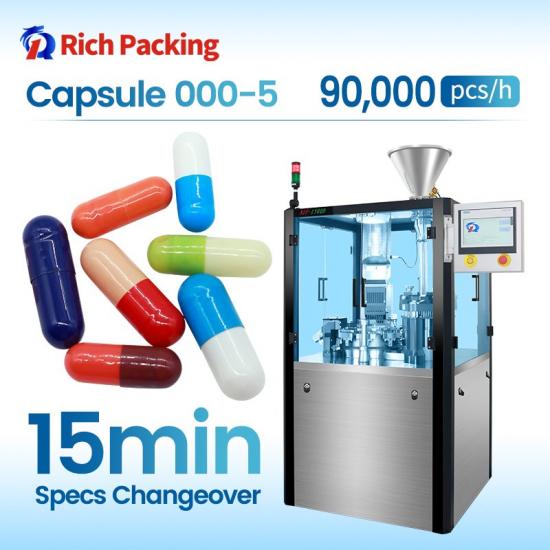
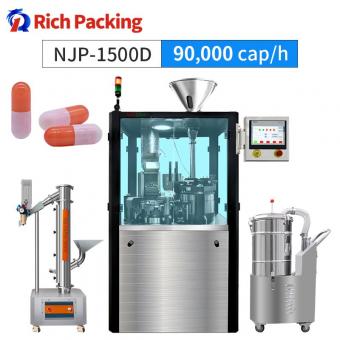
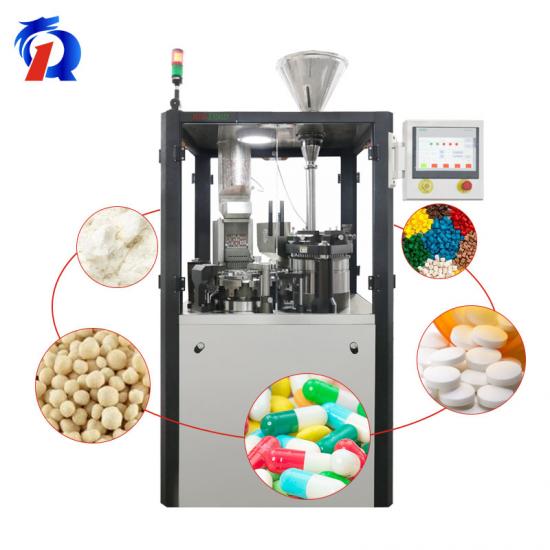
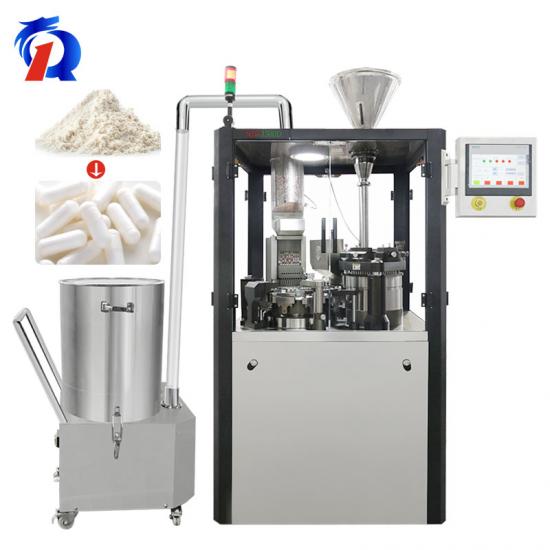
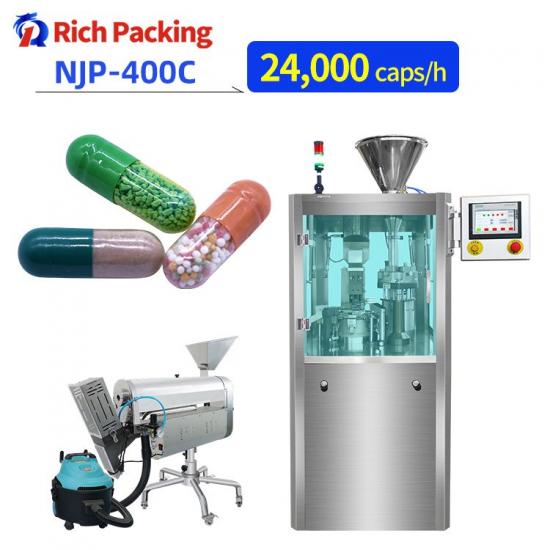
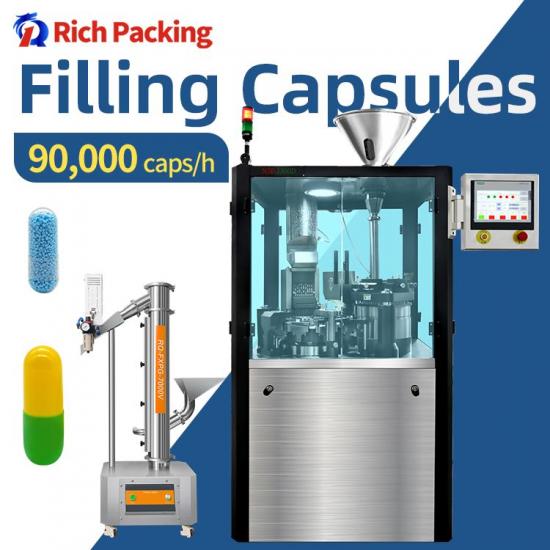
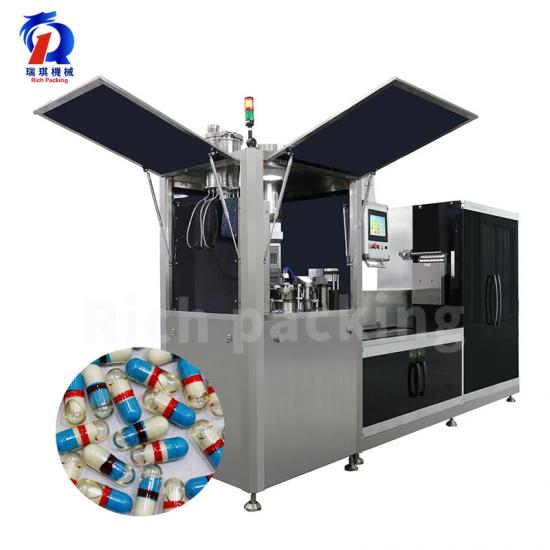
Automatic Encapsulation Capsule Filling Machine
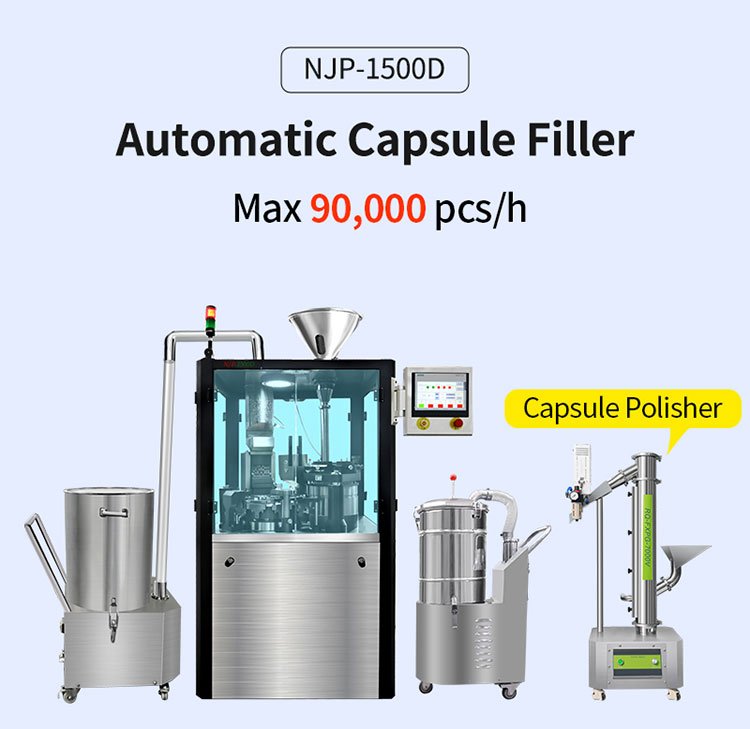
*** Technical parameter of NJP-1500D Automatic Encapsulator
| Name | Encapsulation Capsule Filling Machine Automatic |
|
Production capacity |
90000 pcs/h |
|
Net weight of machine |
1200Kg |
|
Overall size of machine |
900×870×1950mm |
|
Power |
380/220V 50Hz |
|
Total power |
5.5KW |
NJP-1500D Automatic Capsule Filling Machine: 5 cGMP Engineering Upgrades to Guarantee 92%+ OEE and Zero Powder Leakage
Introduction: Overcoming the Triple Bottlenecks in High-Speed Solid Dosage Encapsulation
For manufacturing operations directors, cleanroom validation engineers, and quality assurance (QA) managers running high-output pharmaceutical or nutraceutical facilities, scaling hard capsule encapsulation requires balancing high processing speed with strict dosage consistency. High-volume solid dosage manufacturing leaves no room for mechanical variability. However, facilities producing hundreds of thousands of capsules per shift frequently face three critical operational bottlenecks when utilizing legacy or unoptimized machinery.
First, conventional semi-enclosed indexing turntables allow fine, airborne formulation powder to migrate into internal drive shafts and cam tracks. This powder intrusion contaminates mechanical lubricants, accelerates component wear, and causes unexpected mechanical micro-stoppages.
Second, when processing cohesive herbal extracts, hygroscopic formulations, or low-density active pharmaceutical ingredients (APIs), standard single-stage or poorly synchronized dosing mechanisms struggle to maintain consistent slug density. This inconsistency leads to unacceptable fill-weight variations that cause batch rejections and drive up raw material costs.
Third, format changeovers on older systems often require extensive mechanical disassembly with specialized tools, taking hours of skilled technician time and dragging Overall Equipment Effectiveness (OEE) well below target thresholds.
To eliminate these chronic processing hurdles, modern solid-dosage lines require an advanced, fully enclosed encapsulation platform built on precision mechanics, modular tooling, and decentralized automation. The Rich Packing NJP-1500D Automatic Capsule Machine addresses these challenges directly.
Engineered with a patented 100% fully enclosed rotary indexing turntable, a 5-stage precision tamping pin system, and an open balcony cGMP layout, this industrial-grade machine delivers the structural reliability and dosing precision required to maintain an OEE of 92% or higher in continuous 24/7 manufacturing environments.
Engineering Decoupling: The 10-Station Intermittent Tamping Pin Encapsulation Cycle
To achieve strict fill consistency across continuous production runs, processing engineers must look beyond basic speed ratings and examine the synchronized mechanics of the encapsulation cycle. The Rich Packing NJP-1500D Automatic Capsule Filling Machine utilizes a precision 10-station intermittent indexing platform. Each stage of the capsule handling, volumetric filling, and closing process is driven by dedicated mechanical cams and monitored by real-time electronic sensors.
1. Capsule Separation Stations: Capsule Rectification and Vacuum Separation
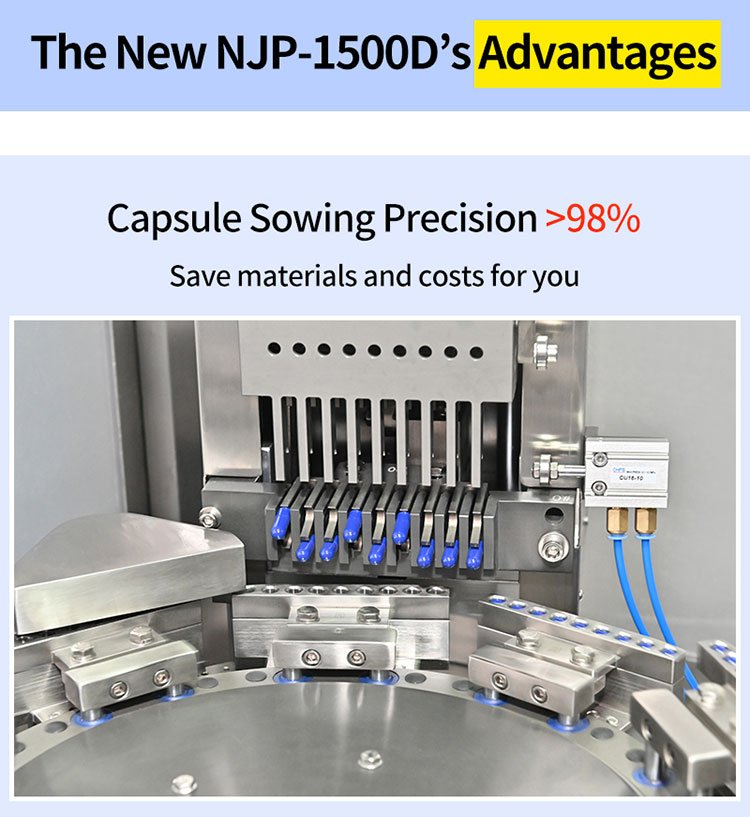
Empty hard gelatin or HPMC vegetable capsules are gravity-fed from the bulk hopper into a precision multi-lane magazine. In Station 1, directional sorting fingers align each capsule so that the cap always faces upward. As the turret indexes to Station 2, a calibrated high-vacuum differential pulls the capsule bodies downward into the lower segment holes while retaining the caps in the upper segment. The NJP-1500D Capsule Filling Machine Automatic achieves a verified separation success rate exceeding 99.9%, virtually eliminating crushed or unseparated shells before they reach the dosing station.
2. Capsule Filling Powder Stations: 5-Stage Precision Tamping Pin Dosing
While the upper and lower segments separate, the open capsule bodies advance beneath the formulation powder dosing disc. Operating as an advanced automatic encapsulation capsule filling machine, the unit employs five sets of vertical tamping pins.
Rather than compressing the powder into a slug in a single rapid stroke, the tamping pins press the formulation incrementally across five distinct stages. This gradual compaction allows trapped air to escape, equalizing powder density across all cavities. At Station 5, the fully formed, uniform powder slug is smoothly transferred into the capsule body, maintaining a tight dosing accuracy of within ±1.5%.
3. Stations 6 to 8: Defect Rejection and Mechanical Locking
At Station 6, an integrated optical sensor identifies any unseparated or improperly seated capsules, automatically ejecting them via focused air jets into a separate reject bin without interrupting the machine cycle.
At Station 8, the filled lower bodies and upper caps align with the closing station. Opposing upper and lower push rods extend simultaneously, applying balanced mechanical force to lock the capsule components together to their exact factory engagement depth, preventing dimpling, splitting, or loose powder leakage.
4. Stations 9 to 10: Finished Product Ejection and Vacuum Cleaning
At Station 9, positive mechanical ejection pins lift the locked, finished capsules out of the segment bores and guide them down a smooth discharge chute.
At Station 10, high-pressure vacuum nozzles sweep the empty segment holes from above and below, removing any residual micro-dust before the turret indexes back to Station 1. This continuous automated cleaning cycle prevents material buildup, ensures smooth capsule infeed, and prevents cross-batch contamination.
5 Core Engineering Breakthroughs of the NJP-1500D Series
The performance advantages and cleanroom reliability of the Rich Packing NJP-1500D Automatic Capsule Filler Machine are rooted in robust mechanical design, advanced metallurgy, and strict compliance with cGMP standards. Below is a technical breakdown of the 6 core engineering solutions built into the platform:
1. Patented 100% Fully Enclosed Rotary Indexing Turntable
Traditional capsule fillers often feature turntables where airborne powder can settle onto internal indexing mechanisms, requiring frequent stops for cleaning and lubrication.
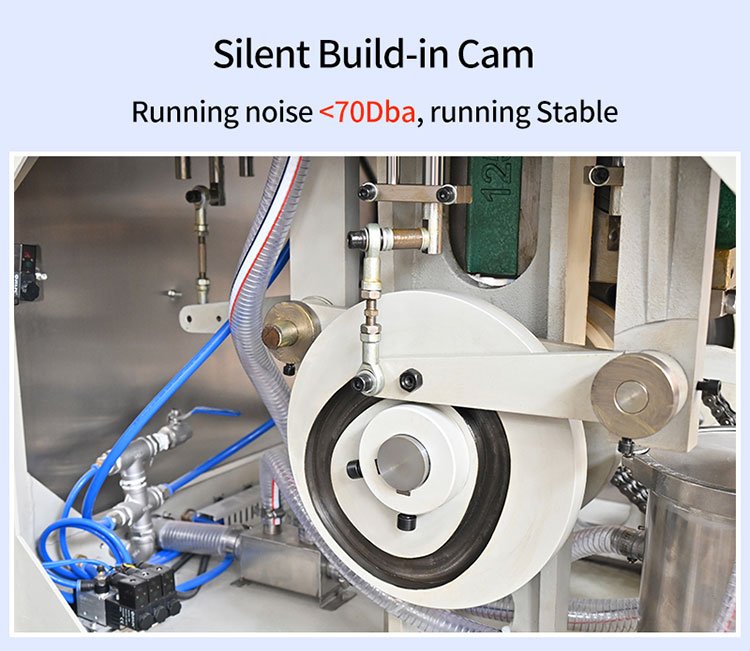
● The Mechanical Solution: The NJP-1500D Automatic Capsule Filling Machine incorporates a fully sealed, monobloc rotary indexing table. All internal driving cams, gears, and heavy-duty bearings are isolated in an oil-tight, self-lubricating lower enclosure.
● The Technical Benefit: This design completely prevents formulation powder from reaching mechanical wear surfaces. It eliminates oil contamination in the cleanroom workspace and removes the need for frequent manual greasing, allowing the machine to run continuously for multi-shift production without unexpected stoppages.
2. 5-Stage Precision Tamping Pin Dosing System (±1.5% Verified Accuracy)
Processing fine chemical APIs, sticky botanical extracts, or low-density nutritional powders often leads to inconsistent fill weights if the material is compressed unevenly.
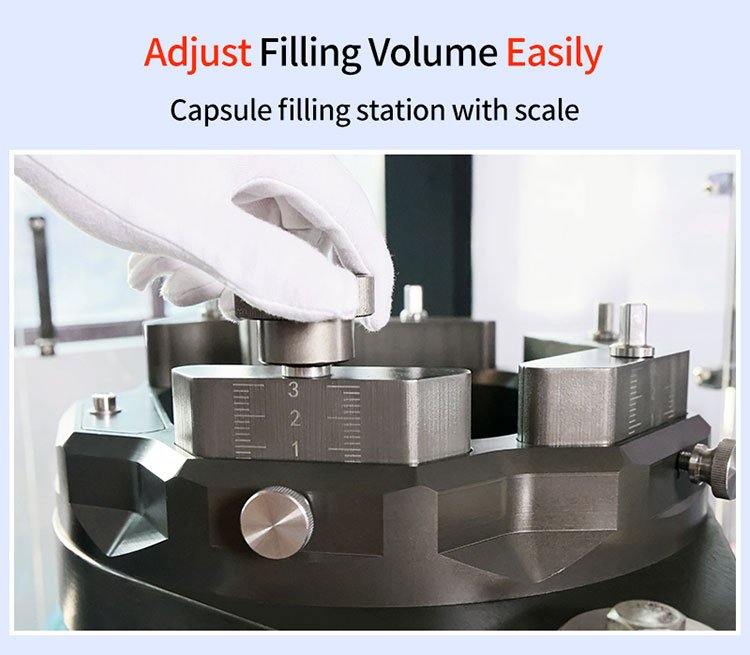
● The Mechanical Solution: The machine uses an patented dosing disc paired with five independently adjustable tamping pin stations, functioning as a high-precision dust-free automatic capsule encapsulator.
● The Technical Benefit: The multi-stage compaction process builds the powder slug gradually, eliminating density variations and ensuring clean transfer into the capsule body. This system holds dosing accuracy within ±1.5%, reducing active ingredient waste, eliminating costly overfill, and keeping every batch within strict pharmacopeial weight specifications.
3. Anti-Static Gentle Separation for Gelatin and HPMC Vegetable Capsules
Organic HPMC and pullulan plant-based capsules are widely used in modern pharmaceutical and health supplement applications, but their brittle walls and vulnerability to static cling can cause splitting on standard machinery.
● The Mechanical Solution: The capsule sorting tracks, orientation fingers, and brass segment bores are precision-machined, mirror-polished, and treated with an anti-static surface layer.
● The Technical Benefit: This low-friction pathway ensures that delicate vegetable capsules slide smoothly through rectification and vacuum splitting without surface scratching, denting, or edge cracking. By keeping shell loss rates below 0.05%, this system saves significant material costs on premium empty capsules.
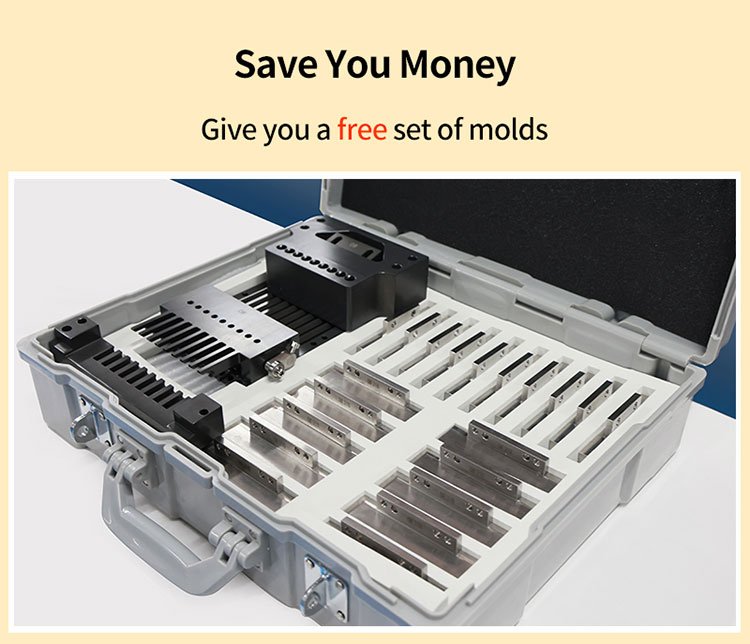
4. 15-Minute Tool-less Format Mold Changeover Design
In high-mix contract manufacturing environments, spending several hours swapping change parts between different capsule sizes directly reduces plant profitability.
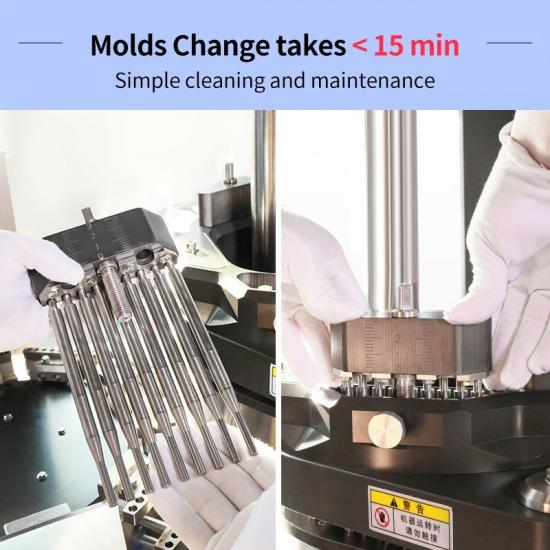
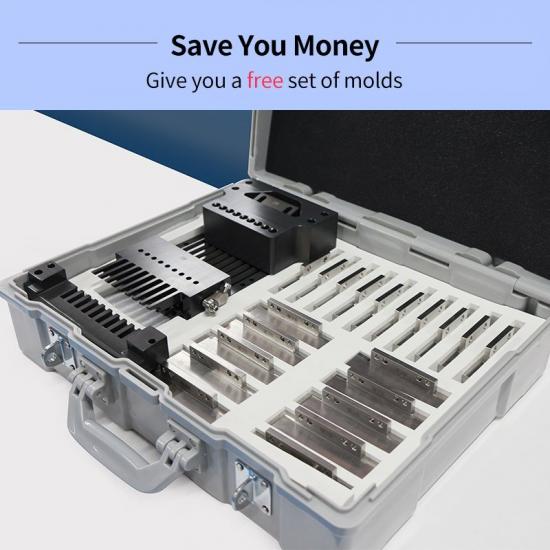
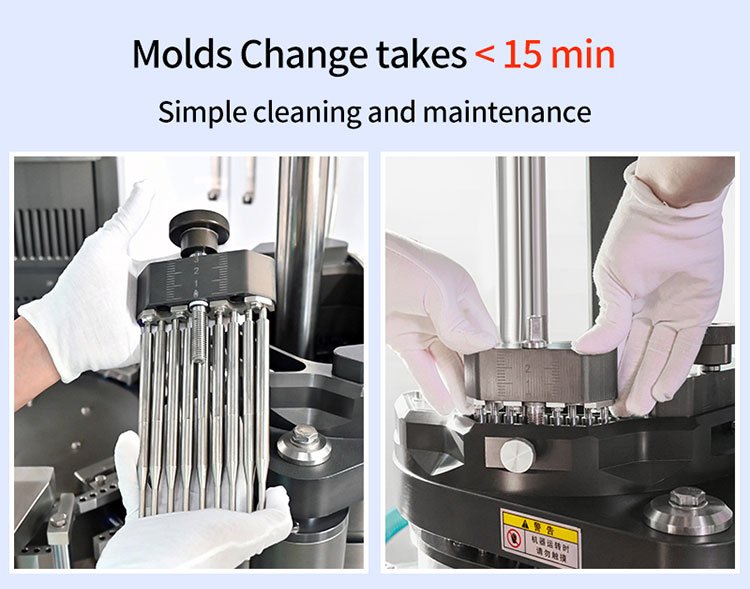
● The Mechanical Solution: The format assembly—including upper and lower segment rings, capsule magazine tracks, and tamping pin blocks—uses precision dowel-pin alignment with quick-release mechanical fasteners.
● The Technical Benefit: A single operator can complete a full format size changeover (from size #00 down to #5) in just 15 to 20 minutes without requiring specialized calibration tools. This rapid swap capability minimizes changeover downtime, helping your facility maintain high production agility.
5. Full SUS316L Contact Metallurgy & cGMP Balcony Open Architecture
Meeting international regulatory standards requires machinery built with premium, non-reactive materials that facilitate thorough, verifiable cleaning procedures.
● The Mechanical Solution: All components that touch formulation powders or empty shells are machined from medical-grade SUS316L stainless steel, while the outer cabinet is constructed from heavy-gauge SUS304.
● The Technical Benefit: The processing zone uses a clean balcony design with a smooth, crevice-free base plate. This open layout eliminates material collection points, allows fast washdowns between production batches, and fully satisfies the sanitary design requirements of the FDA, European EMA, and FSSC 22000 audits.
Technical Specification Matrix: NJP-1500D Performance Data
To assist validation engineers, facility planners, and technical procurement teams during equipment selection, the table below outlines the core manufacturing and operational parameters of the NJP-1500D Automatic Capsule Filling Machine:
|
Technical Performance Parameter |
Rich Packing NJP-1500D Manufacturing Specifications |
|
Maximum Production Capacity |
Up to 90,000 capsules/hour (1,500 capsules/min) |
|
Applicable Capsule Format Sizes |
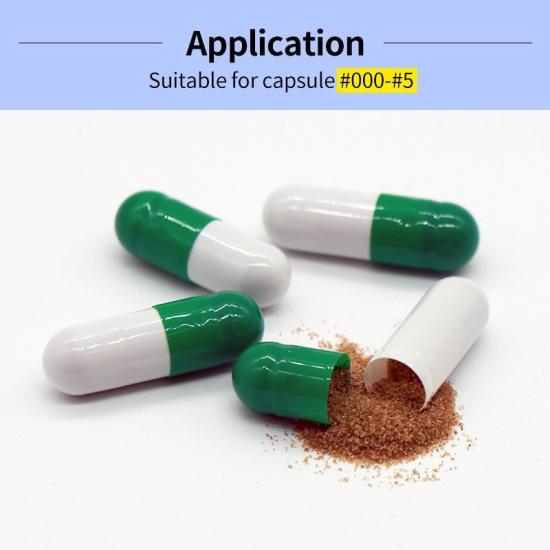
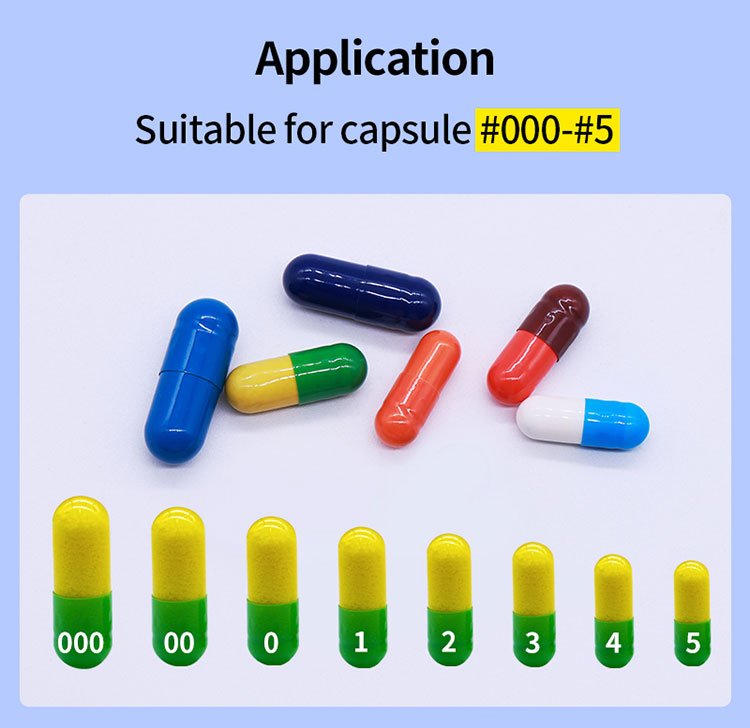
#00, #0, #1, #2, #3, #4, #5 (Hard Gelatin & HPMC Vegetable Shells) |
|
Dosing Weight Accuracy Range |
Within ±1.5% |
|
Capsule Separation Success Rate |
99.9% (High-vacuum differential separation mechanism) |
|
Indexing Turntable Construction |
Patented 100% Fully Enclosed Rotary Indexing Table |
|
Automation & Control Architecture |
Industrial Siemens PLC paired with Color Touchscreen HMI |
|
Product Contact Metallurgy |
Premium Forged SUS316L Stainless Steel (Full cGMP sanitary standard) |
|
Total Electrical Power Demand |
7.5 kW (Standard 380V / 220V 3-Phase, 50/60Hz configurations) |
Total Cost of Ownership (TCO) and Cleanroom Validation Support
When investing in an automatic encapsulation capsule filling machine, experienced pharmaceutical executives evaluate long-term Total Cost of Ownership (TCO) alongside the initial capital expenditure. Low-cost machinery lacking robust zone isolation or precise dosing control often incurs high recurring expenses, including API waste from weight variations, high shell scrap rates, and extended delays during cleanroom validation inspections.
The Rich Packing NJP-1500D Automatic Capsule Filling Machine optimizes capital efficiency by maximizing single-pass yield and minimizing changeover downtime. By keeping dosing weight variations within a verified $\pm1.5\%$ margin and maintaining a capsule separation rate over 99.9%, the system significantly reduces formulation waste. This protection is especially valuable when handling expensive active ingredients or delicate herbal extracts.
Additionally, preparing documentation for regulatory audits by bodies like the US FDA, Health Canada, or European national medicines agencies can place a heavy burden on internal quality teams.
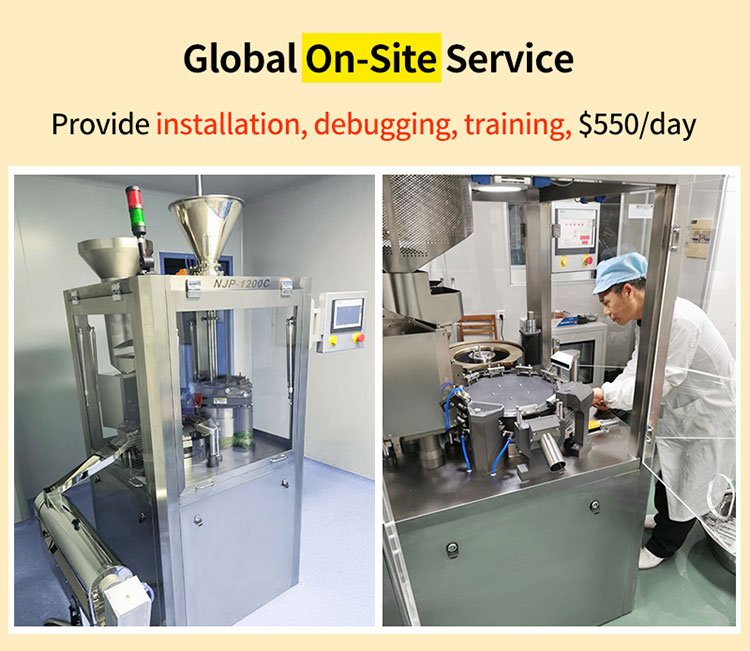
To streamline this process, every system ships factory-direct with a complete qualification documentation package. This includes comprehensive, native-English protocols for Installation Qualification (IQ), Operational Qualification (OQ), and Performance Qualification (PQ).
By providing pre-formatted test protocols for sensor calibrations, emergency-stop circuits, and dosing accuracy verification, we help you save significant consulting fees and accelerate your path to commercial production.
Summary & Call to Action: Secure Factory-Direct Pricing
The Rich Packing NJP-1500D Automatic Capsule Filling Machine delivers a reliable, high-performance solution for modern solid-dosage encapsulation. By combining a patented fully enclosed rotary indexing turntable with a 5-stage precision tamping pin dosing mechanism, anti-static vegetable capsule tooling, and an open SUS316L balcony layout, this platform eliminates the common industry problems of powder leakage, dosing variability, and slow changeovers.
Whether you are expanding a commercial pharmaceutical plant, upgrading a contract manufacturing facility, or scaling a high-output nutraceutical line, the NJP-1500D provides the structural reliability and validation support needed to maintain an OEE of 92% or higher across your operations.
Technical FAQ for Cleanroom Procurement Teams
Q1: How does the NJP-1500D maintain an encapsulation OEE of over 92% in continuous production?
A: The NJP-1500D Automatic Capsule Filling Machine utilizes a patented, fully enclosed rotary indexing turntable that completely isolates internal drive cams and bearings from airborne powder. Combined with an automated closed-loop sensor network, a 99.9% capsule separation rate, and automated fault rejection, it prevents the mechanical jamming and micro-stoppages common on older, open-turret machines.
Q2: Can this automatic capsule filler handle brittle HPMC organic vegetable capsules without cracking them?
A: Yes, absolutely. The machine features mirror-polished sorting tracks, gentle orientation fingers, and anti-static chromium surface treatments across all capsule contact areas. This low-friction path ensures that brittle HPMC and pullulan vegetable capsules are oriented, separated, and closed smoothly without edge chipping or wall cracking.
Q3: How long does a complete capsule size format changeover take on the NJP-1500D?
A: Thanks to precision dowel-pin positioning and quick-release mechanical fasteners, a single technician can complete a full format changeover—including segments, magazine tracks, and tamping pin blocks—in just 15 to 20 minutes without needing specialized calibration tools.
Q4: How does the 5-stage tamping system prevent powder weight variations?
A: Rather than forcing the formulation into a slug in a single rapid compression stroke, the machine compresses the powder gradually over five distinct stages. This incremental compaction allows trapped air to vent smoothly, equalizing density across all dosing holes and holding fill-weight variations strictly within ±1.5%, even when processing non-free-flowing botanical extracts.
Q5: What validation documents are supplied for international pharmaceutical audits?
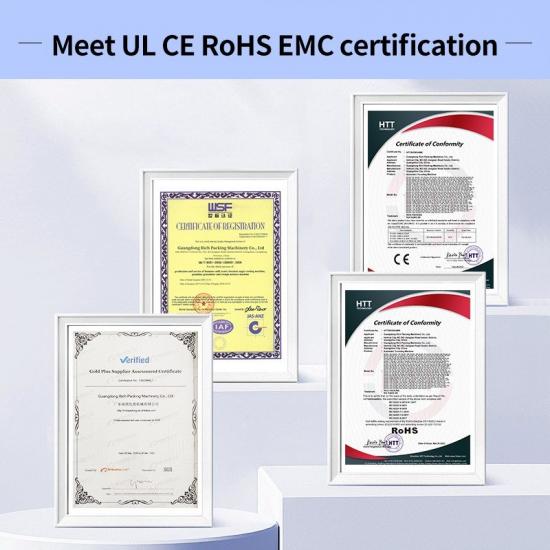
A: Every machine ships factory-direct with a complete regulatory validation package. This includes full CE certification, electrical schematics, materials traceability logs, and comprehensive, native-English templates for Installation Qualification (IQ), Operational Qualification (OQ), and Performance Qualification (PQ).

 IPv6 network supported